
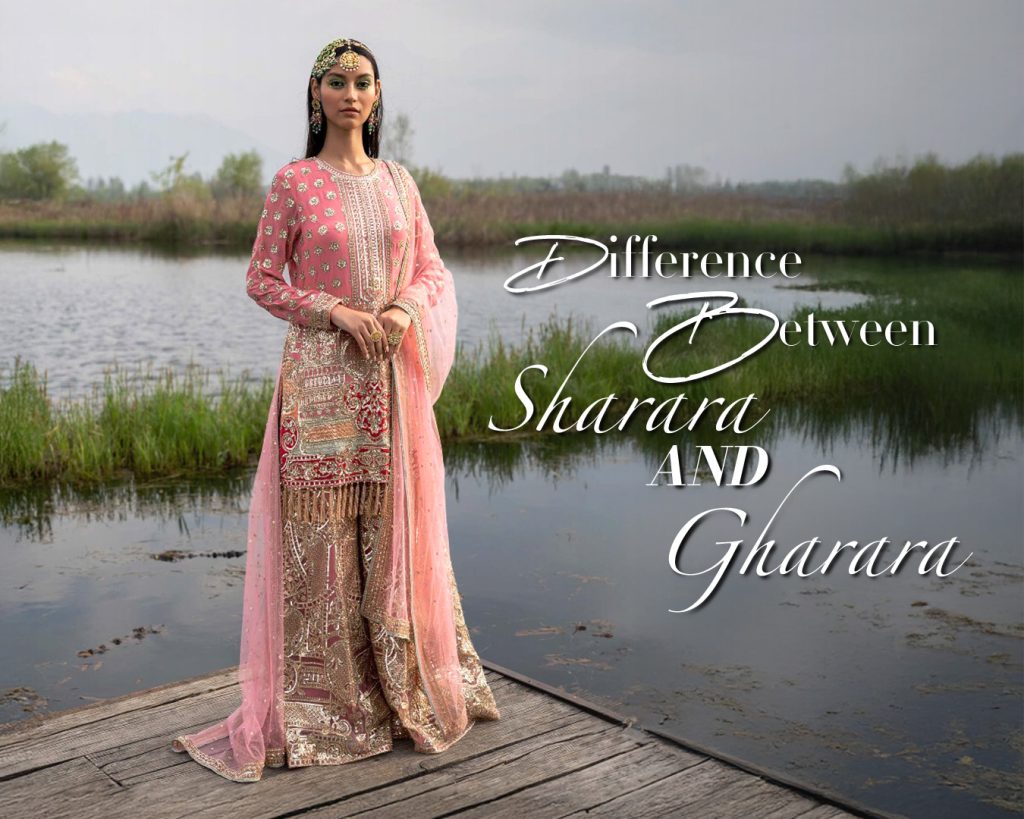
Shararas and ghararas have been a constant in the wardrobes of Indian women. The effortless silhouette and timeless charm of these ancient garments have withstood the test of time and have emerged as crowd pleasers. Today, fashion-loving women resort to shararas and ghararas to get festive-ready in minimal time.
When you look at the two garments, you may not notice much difference. This is the reason why so many people use the two interchangeably. But when you learn about the garments deeply, you find that not only do they feature different cuts, but they also come from different cultural backgrounds.
Come along as we discuss some basic differences that set the two apart and help you make an informed choice.
Understanding the Basics: What is a Sharara and a Gharara?
Most people use the terms ‘sharara’ and ‘gharara’ interchangeably because they don’t know the differences that distinguish the two. If you’re also confused, allow us to throw some light on some key differences between shararas and ghararas.
What is a Sharara?
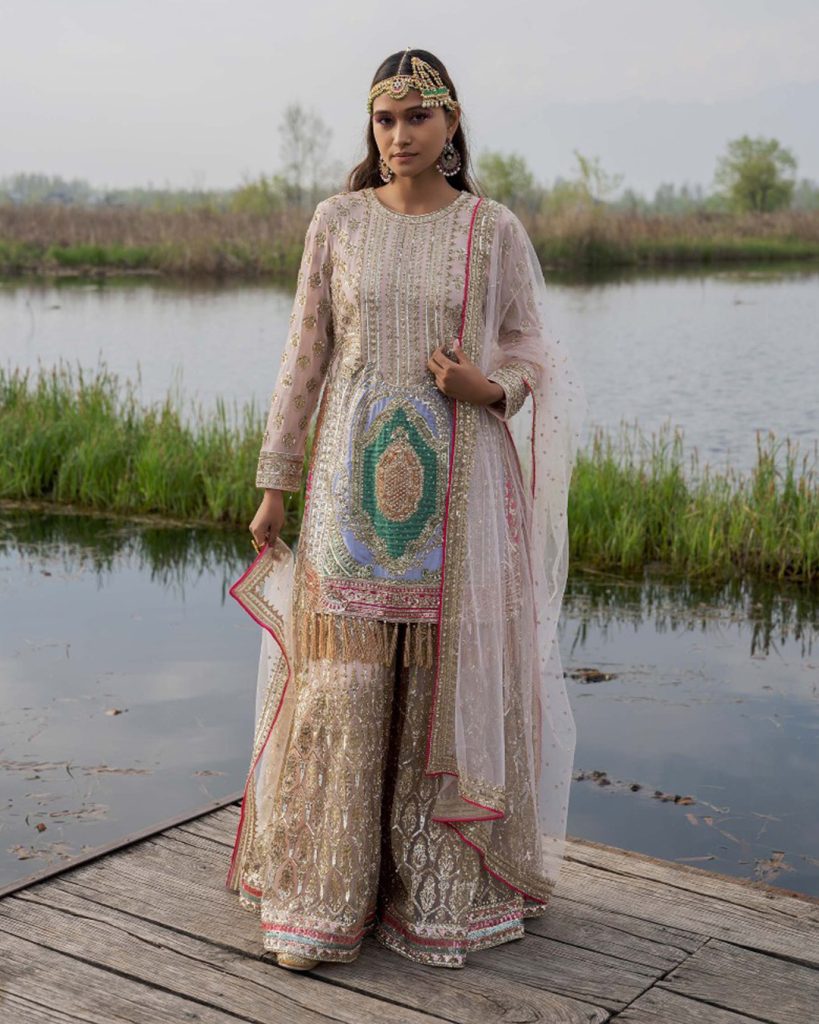
Loved for their versatility and flare, sharara sets are a popular choice for women who love comfort and ease of styling. The traditional outfit comprises a kurta, a sharara, or wide-legged pants, and a dupatta. The pants almost mimic the silhouette of a skirt, with the flare starting right from the waist. The dramatic skirt-like silhouette makes it the perfect outfit for festive occasions where you want to look glammed up but also feel comfortable.
Origin of Shararas
The origin of shararas dates back to the Mughal courts, where women from aristocratic and affluent backgrounds wore the majestic garment. They often wore pieces made from luxurious fabrics like silk, featuring intricate zardozi and zari work. While the attire was exclusive to noblewomen during that time, with time, it was adapted as fashion wear while retaining its regal charm. Today, it is worn by women from all walks of life for celebratory occasions like weddings, parties, and more.
What is a Gharara?
A gharara kurta set is similar to a sharara in silhouette, but with some stark differences. Similar to a sharara, a gharara too comes with a kurta, wide-legged pants and a dupatta. But unlike shararas, a gharara features pants that are fitted on the thigh with ruched detailing on the knee, followed by a dramatic flare towards the ankle. Ghararas are often worn by brides on their wedding day and are often made from luxurious fabrics like silk, brocade and tulle.
Origin of Ghararas
Ghararas originated in the 19th-century Awadh or Lucknow under the Nawabi rule. The present-day ghararas have evolved from the original ghararas worn by affluent Muslim women as an embodiment of status and grandeur. What was once worn by noble women on a day-to-day basis has transitioned into becoming one of the most majestic traditional wears worn by women for celebratory occasions. Compared to a sharara, these feature wide-legged trousers that are fitted on the thigh up until the knee and then flare out dramatically.
Key Difference Between Sharara and Gharara
| Feature | Sharara | Gharara |
| Construction | The sharara bottom features one-piece, wide-legged pants. | The gharara bottom is made in two parts: the fitted thigh part and the ruched flare below the knee. |
| Fit and Shape | Loose-fitted from the waist, up until the hemline with a gradual flare.
| Fitted over thighs with ruching around the knee area, followed by a dramatic flare. |
| Silhouette | Fluid and skirt-like. | Structure and defined. |
| Embellishment Style | Feature embellishments all over the bottom. | The ruching on the knee if often emphasised along with the flare. |
| Cultural Association | Originated during the Mughal era. | Originated during the Nawabi era. |
| Styling | Pairs well with short kurtas, long kurtas, crop tops and tunics. | Best paired with both short and long kurtas, and even bralette blouses. |
| Occasion Suitability | Suitable for festive occasions like Eid, sangeet, engagement, etc. | Best styled for opulent occasions like weddings. |
Common Misconceptions About Sharara and Gharara
- Sharara and Gharara are the same.
Myth: Sharara and gharara are interchangeable.
Reality: A sharara bottom is flared right from the waist down until the hemline. It’s like a skirt split in half through its length. On the other hand, a gharara features a bottom that is fitted on the thigh and flares out sharply from the knee.
- They’re only suitable for weddings.
Myth: These can be worn for fancy occasions only.
Reality: While the opulent bridal sharara and ghararas are best suited for fancy occasions, simpler designs and lighter fabrics make them suitable for small get-togethers, festive celebrations and cultural events.
- They are old-fashioned and outdated.
Myth: They are not as fashionable and trendy.
Reality: Present-day fashionistas are exploring modern cuts, prints, and fusion styling techniques to add a fresh touch to the traditional outfit.
- They are heavy and uncomfortable.
Myth: Hard to move around in
Reality: The modern party wear sharara and gharara are designed keeping in mind comfort and mobility, and thus, are often made from lightweight fabrics like chiffon, georgette, crepe, or tulle.
FAQs Related to Sharara and Gharara
Q: What is the main structural difference between a Gharara and a Sharara?
The key structural difference between the sharara and gharara lies in the pants or bottoms. A sharara features wide-legged pants that almost mimic a skirt. It has a flared silhouette that starts at the waist and flares out dramatically right up to the hem. A gharara features wide-legged pants that are fitted on the thigh up until the knee and then flare out. It features a distinct joint on the knee, creating a dramatic, gathered flare.
Q: Can a Sharara be worn with a long kurti?
Yes, you can wear a long kurta with your sharara. It is one of the most popular and versatile ways to wear and style your sharara. In fact, you can also pair your sharara with short kurtis, crop tops, and blouses, too.
Q: Is a Gharara considered outdated?
Gharara is a traditional wear that has stood the test of time and is a timeless outfit which you can wear for various celebratory occasions. Modern-day gharara designs are tailored to suit the dressing tastes of modern fashionistas and be in sync with the ongoing fashion fads.
Q: Which is more comfortable: Sharara or Gharara?
Typically, shararas are considered more comfortable as they are flowy and allow for easy movement. Also, shararas are often made from lightweight fabrics, offering a breezy feel.
Conclusion
In conclusion, the main difference lies in their structure: shararas are flared from the waist, while ghararas are fitted till the knees and flare below. Both are traditional garments, but ghararas have a more defined, segmented look compared to the fluid fall of shararas.