
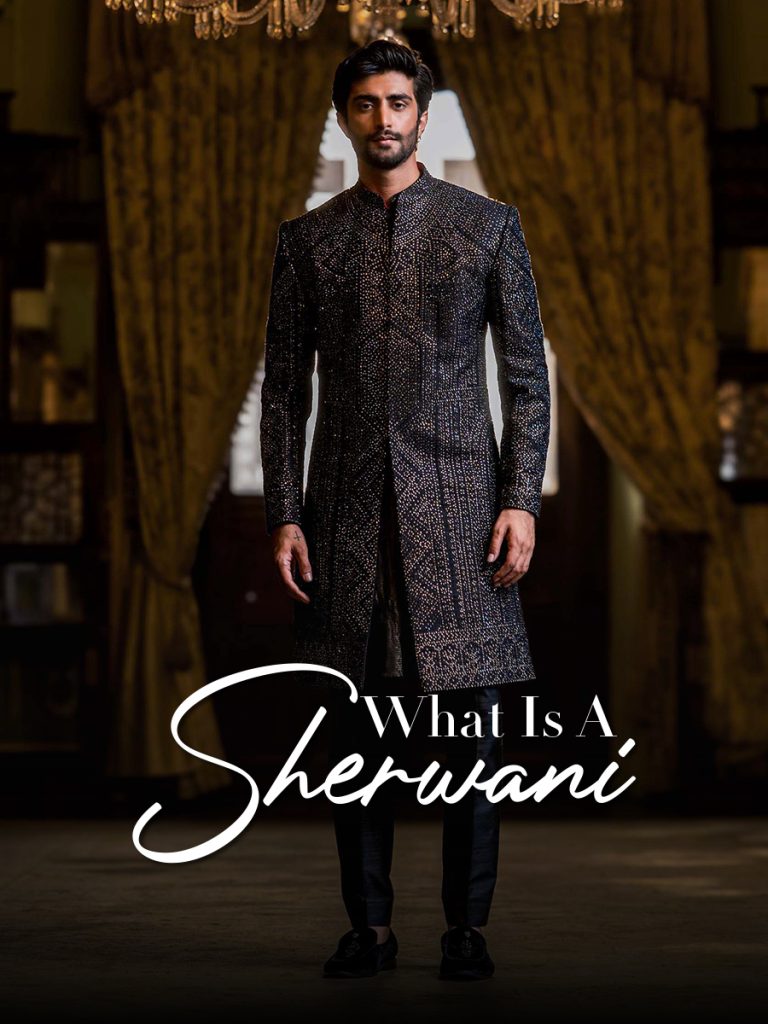
Sherwani is the quintessential wedding attire for Indian men, combining cultural roots, exquisite tailoring, and traditional opulence. It is not only a traditional garment but also a reflection of their personal style. Over the years, the sherwani has evolved to cater to the fashion sense of modern grooms while keeping its traditional aspects intact. An epitome of classical elegance, the designer sherwani continues to showcase Indian culture, skilled craftsmanship and modern sophistication.
What Is a Sherwani?
A sherwani is a long, structured coat-like garment worn by Indian men on their wedding day and other special occasions. Originating in the Mughal era, the sherwani features a knee-length, button-down design and a stand-up collar, often tailored from luxurious fabrics like silk and jacquard, featuring threadwork, zardozi or dabka work.
Sherwani Origin: How This Royal Outfit Was Born
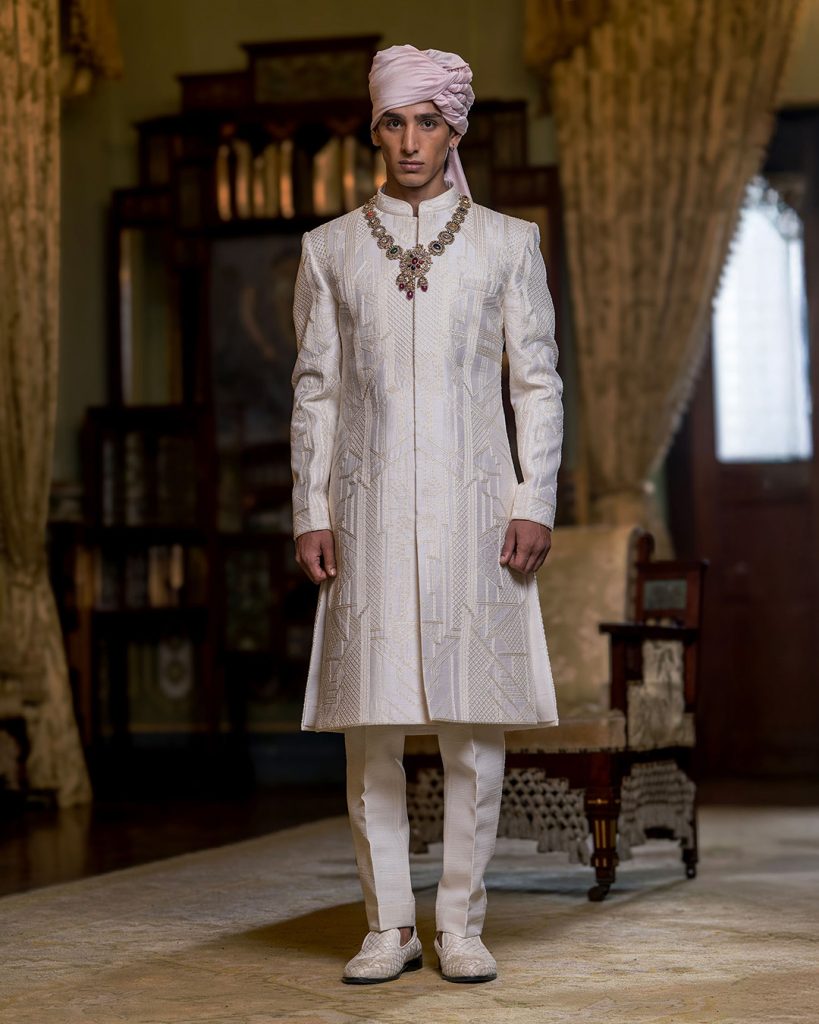
The origin of the modern sherwani dates back to the early 19th-century India. The traditional sherwani design evolved during the British colonial period, giving a modern touch to the original design. The formal attire takes its inspiration from Persian chapkan and Turkic chokha, commonly worn by noblemen, aristocrats, and wealthy landowners. During the early-to-mid 20th century, the garment shifted from being an elite attire to a popular yet regal wedding garment.
Key Features of a Traditional Sherwani
There are some key factors like the fabric, colour and embroidery that define the overall look and wearability of the sherwani.
Fabrics:
Sherwanis can be explored in a wide variety of fabrics, depending on the type of look you want to create.
- Silk: One of the most popular choices for grooms, as it offers a luxurious sheen and structured look to the groom’s sherwani.
- Brocade: A decorative fabric, brocade features woven patterns like floral and geometric, creating a textured and luxurious look.
- Velvet: Ideal for night-time winter weddings, velvet is a great choice if you want to create a vibrant and luxurious look.
- Cotton Blends: Suitable for daytime or summer weddings, cotton blend sherwanis offer a lightweight yet sophisticated choice to modern grooms.
Colours:
The colour of the sherwani is symbolic of cultural significance, creates visual balance, event context and personal expression, making it a key factor to consider.
- Classic tones: Ivory, beige, cream and off-white are traditional colours you cannot go wrong with.
- Royal hues: Deeper hues like maroon, burgundy, emerald green, and navy blue are best for creating dramatic nighttime looks.
- Bold Colours: Bold hues like red and gold are rooted in culture, symbolising purity, prosperity and auspiciousness.
- Pastels: Pastel hues have a soothing vibe and are best suited for daytime weddings and events.
Embroidery:
Embroidery is the decorative aspect of a sherwani, adding to its richness and aesthetic.
- Zari: Zari work involves the use of metallic threads, traditionally gold and silver, for weaving or embroidery to create intricate patterns.
- Zardozi: Zardozi work is more detailed compared to zari, involving the use of pearls, beads, stones, sequins and stones to create detailed patterns.
- Resham work: Resham work or silk thread embroidery is one of the most popular embroidery styles used on sherwanis for engagement, giving them a decorative yet sophisticated look.
- Aari work: This intricate hand-embroidery technique originated in Gujarat and is characterised by the use of a specialised hooked needle to create patterns.
- Sequin or mirror work: For a more festive and glamorous look, sherwanis are adorned with sequin embroidery and mirror work detailing, adding texture and a sparkling look.
How a Traditional Sherwani Is Worn
To achieve a complete look, the sherwani needs to be paired with additional elements. Start by wearing an undershirt as the first layer, followed by a complementary or matching kurta to your sherwani. Choose a churidar or pyjama pants to complement your sherwani. Lastly, slip on the sherwani, buttoning it from top to bottom to finalise the look. You can also add additional elements like a safa, shawl, pocket square and a necklace to make it look more cohesive.
Types of Sherwanis You Should Know
Classic Royal Sherwani:
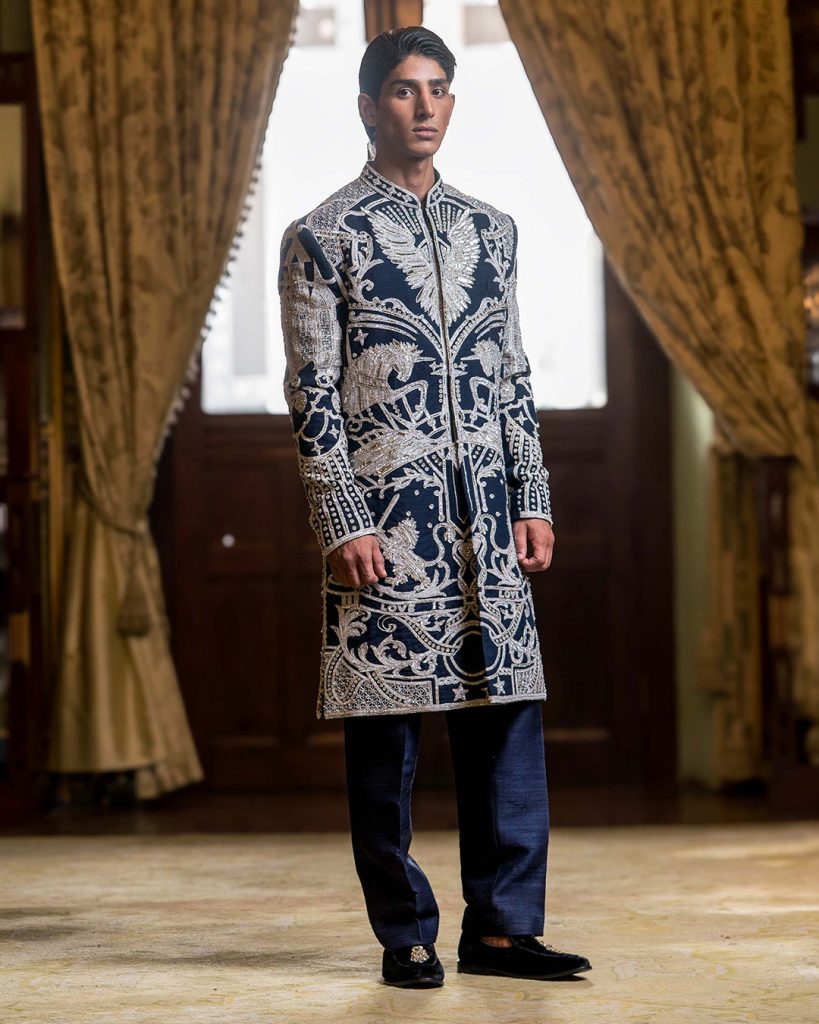
The classic sherwani styles are characterised by their luxurious fabrics, intricate detailing and structured silhouettes. Some of the popular choices include the Jodhpuri, Angrakha, Achkan and Pakistani sherwani styles.
Indo‑Western and Contemporary Sherwani:
Present-day designers have come up with modified versions of the garment, giving it a modern look. Asymmetrical designs, achkans, open-front designs, and layered sherwanis are fairly popular among modern grooms.
Minimal Sherwani Variants:
For intimate or daytime weddings, minimal sherwani designs made from lightweight fabrics, featuring simpler designs, are ideal. Streamlined achkans or bandhgalas made from linen or silk blends in soothing pastels like mint green, blush pink, or powder blue are great picks to create simpler, sophisticated looks.
Cultural Significance of a Sherwani Today
A symbol of tradition and heritage: Sherwanis represent history, nobility and cultural pride. It is often worn during important rituals to honour tradition and keep the modern generation connected to its roots.
Essential wedding attire: Sherwani is the typical South Asian wedding attire for grooms, combining tradition and elegance. These are considered the male counterpart to bridal lehengas, reflecting status, style, and personality.
Fusion of tradition and modernity: The modern reception sherwanis blend classic craftsmanship with contemporary designs. Designers are experimenting with unique cuts, fabrics, and styling, allowing wearers to express individuality while embracing tradition.
Expression of personal style: Modern grooms have a style of their own, and choosing a suitable sherwani that showcases their personality is key to achieving their ideal wedding look.
Styling a Sherwani: Accessories, Footwear and Grooming
Without the right styling, your sherwani look will always lack something. Adding the right accessories, grooming and footwear can elevate the ensemble, creating a well-balanced look.
- Safa: For Indian grooms, wearing a safa on their wedding day is an essential. Choose colours that complement your sherwani and add an embellished kalgi to enhance the royal vibe.
- Stole or shawl: Another non-negotiable is the stole or shawl draped over one shoulder. Depending on the desired look, opt for a simple store or an embroidered shawl.
- Brooches: A statement brooch is a great way to add instant bling and sparkle to your sherwani.
- Footwear: Mojris, juttis, and loafers are comfortable yet elegant footwear picks to style with different sherwani looks – traditional, contemporary and minimal.
FAQs
Where did the sherwani originate, and which communities wore it first?
The sherwani originated in the Indian subcontinent during the Mughal era, evolving from Persian and Central Asian court garments. It was first worn by Muslim nobility and aristocrats, particularly in royal courts, and later adopted as the ideal groom’s wear.
Is a sherwani only for grooms, or can it be worn for other occasions?
A sherwani is not just for grooms and can be worn for many occasions like weddings, festivals, engagements, and formal celebrations. It is a versatile outfit that suits both traditional events and modern functions, depending on its style and design.
What is the difference between a traditional sherwani and an Indo‑Western sherwani?
A traditional sherwani is a classic Indian outfit with a long coat style, usually paired with churidar or pyjama, and follows traditional fabrics, cuts, and embroidery. An Indo-Western sherwani blends Indian and Western styles, featuring modern cuts, asymmetry, or fusion elements like jackets, trousers, and contemporary designs.
How has the sherwani evolved from royal courts to modern weddings?
Originally worn in the royal courts of the Mughal Empire as a symbol of nobility and status, the sherwani featured rich fabrics, intricate embroidery, and regal silhouettes. Today, it has evolved into a versatile wedding outfit with modern cuts, lighter fabrics, and fusion styles, blending tradition with contemporary fashion trends.