
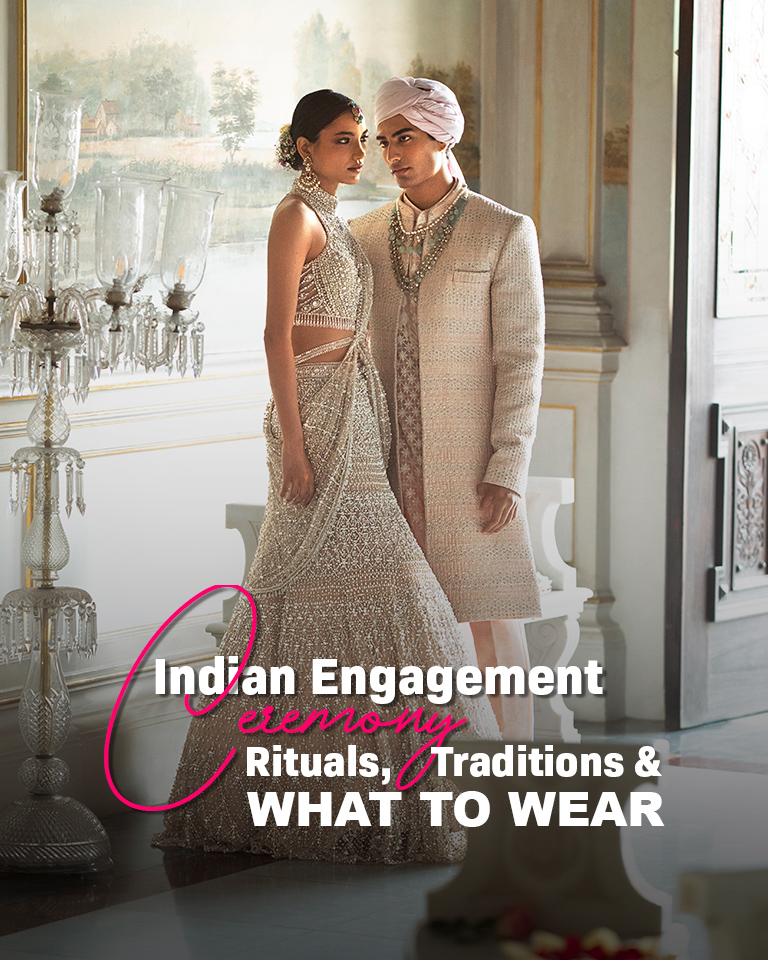
An Indian engagement ceremony is a beautiful celebration that brings two families together before the wedding festivities begin. Filled with meaningful rituals, vibrant traditions, and joyful celebrations, every ceremony reflects the couple’s culture and personal style. This 2026 guide explores the key rituals, traditions, and what to wear for this special occasion.
What Is an Engagement Ceremony in Indian Culture?
In India, the engagement ceremony is a formal pre-wedding event that involves not only the exchange of rings but also several rituals in the presence of both families. Everyone dresses up in their best engagement outfits. The ceremony serves as a public affirmation and social announcement for the upcoming wedding. Often, a priest or spiritual guru is also called to commemorate the ceremony and offer blessings and a prosperous start to the new journey.
Regional & Religious Names for the Engagement Ceremony
In India, an engagement ceremony is not merely about exchanging rings. Different cultures, subcultures, regions, and states follow different rituals and traditions as part of the engagement. Here are some of the popular synonymous terms used to refer to an engagement in India.
North India:
“Sagai” and “Mangani” are two local terms that are used interchangeably in Northern India, referring to the engagement function. More often than not, the occasion is marked by the presence of immediate and extended families, friends, and even acquaintances who gather together to witness the joyful occasion and bestow on the couple best wishes, blessings, and gifts.
A “roka” is slightly different from the above two. It can be defined as a more intimate ceremony that takes place prior to the engagement customs, signifying the acceptance or confirmation of the relationship by both families. The ceremony often takes place at the bride’s or groom’s home, often in the presence of immediate families and close friends.
South India:
The “Nischayam” ceremony is the equivalent of an engagement ceremony in South Indian culture, specifically in Kerala and Tamil Nadu. The ceremony serves as the official announcement of the wedding in the presence of both families. In arranged marriage settings, the priest verifies the couple’s compatibility using astrological charts and suggests an auspicious date for the wedding ceremony to take place.
“Nischitartham” is essentially the same ceremony but in Andhra Pradesh, Telangana, and Karnataka. Both terms utilise the term ‘Nischita’, which means ‘fixed’ or ‘decided’.
East & West India:
Ashirbaad: The actual meaning of the word “Ashirwad”, or as it is locally called “Ashirbaad”, is “blessing”, and the ceremony is native to eastern parts of India, including West Bengal, Odisha, and Assam. This ceremony is more similar to a roka ceremony, where the wedding alliance is officiated, and the couple are blessed for their upcoming life and endeavours. Unlike northern India, it does not involve the exchange of rings and is more focused on formalising the union in the presence of the families.
Sakhar Puda:
A traditional Maharashtrian engagement function that involves the groom’s mother giving a packet of sugar (sakhar) to the bride, symbolising a sweet start to the couple’s new journey. The ceremony always starts with the blessings of Lord Ganesha to remove any obstacles before a fresh start. While the ceremony signifies a symbolic agreement, modern couples are incorporating the exchange of engagement rings as part of the ceremony.
Gol Dhana:
This one is a Gujarati ritual that formalises the wedding alliance. The distribution of Gol (jaggery) and Dhana (coriander seeds) to the guests symbolises a sweet beginning, prosperity, and growth. However, the ceremony is fairly similar to a North Indian engagement ceremony that involves the exchange of rings between the couple, along with gifts.
Key Rituals of an Indian Engagement Ceremony
Indian engagement ceremonies beautifully blend tradition, family, and celebration. From the auspicious ring exchange and tilak ceremony to Ganesh puja, each ritual holds cultural significance, symbolising prosperity and togetherness. Here are some key rituals that are commonly a part of an engagement ceremony.
Ganesh puja:
Most pre-wedding ceremonies start with the blessings of Lord Ganesh for a prosperous and joyful life ahead, and the engagement celebration is no different. In most cultures, the engagement tradition begins with a short prayer led by a priest, followed by the rest of the rituals.
Tilak & Blessings:
Post-prayer comes the tilak ceremony. This one mainly involves the groom and the male relative of the bride. The bride’s father or brother sits down to perform the ritual that starts by applying vermilion on the groom’s forehead, feeding each other sweets and beetle leaves, and presenting the groom with gifts. This ceremony marks the welcome of the groom to the bride’s family.
Ring Exchange:
Next is the exchange of rings between the couple, followed by receiving gifts from relatives and guests. The newly engaged couple also seeks the blessings of their family and older family members.
Muhurat Selection:
Though optional, in some cultures, the families also ask the priest to suggest an auspicious date or muhurat for the wedding to take place. A few dates are suggested, from which a suitable date is then picked and announced as the wedding day.
Roka vs Engagement vs Sagai – Are They the Same?
‘Sagai’ refers to an engagement ceremony in many cultures and subcultures in India. So technically, it is the same thing. Roka, on the other hand, is a more intimate ceremony prevalent in northern India, marking the official acceptance of the couple’s relationship by both families.
What to Wear for an Engagement Ceremony?
An engagement celebration is one of the main pre-wedding events, and the bride, groom, and guests must dress appropriately. The outfits should look opulent enough to match the magnitude of the event and not look underwhelming. But no matter which outfit you choose to wear, it should be in sync with the theme of the event.
Bridal Outfit Ideas
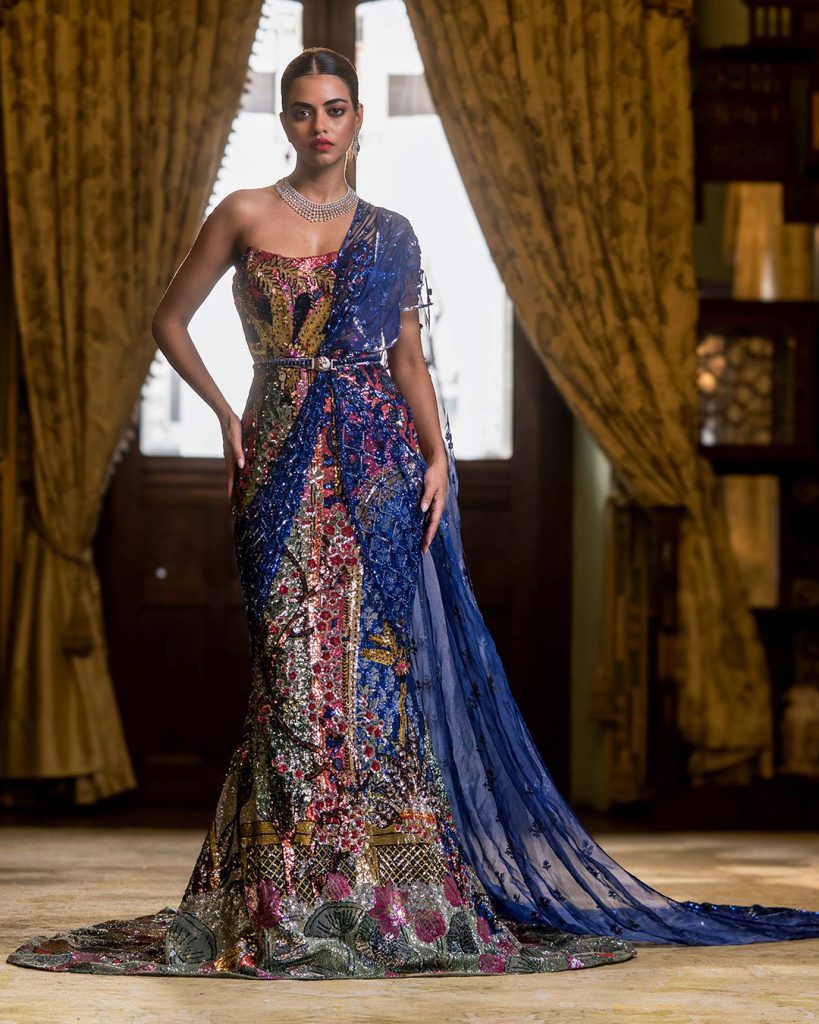
The engagement ceremony is an elaborate event in India, and the bride should dress to match the opulence of the occasion.
Modern lehengas:
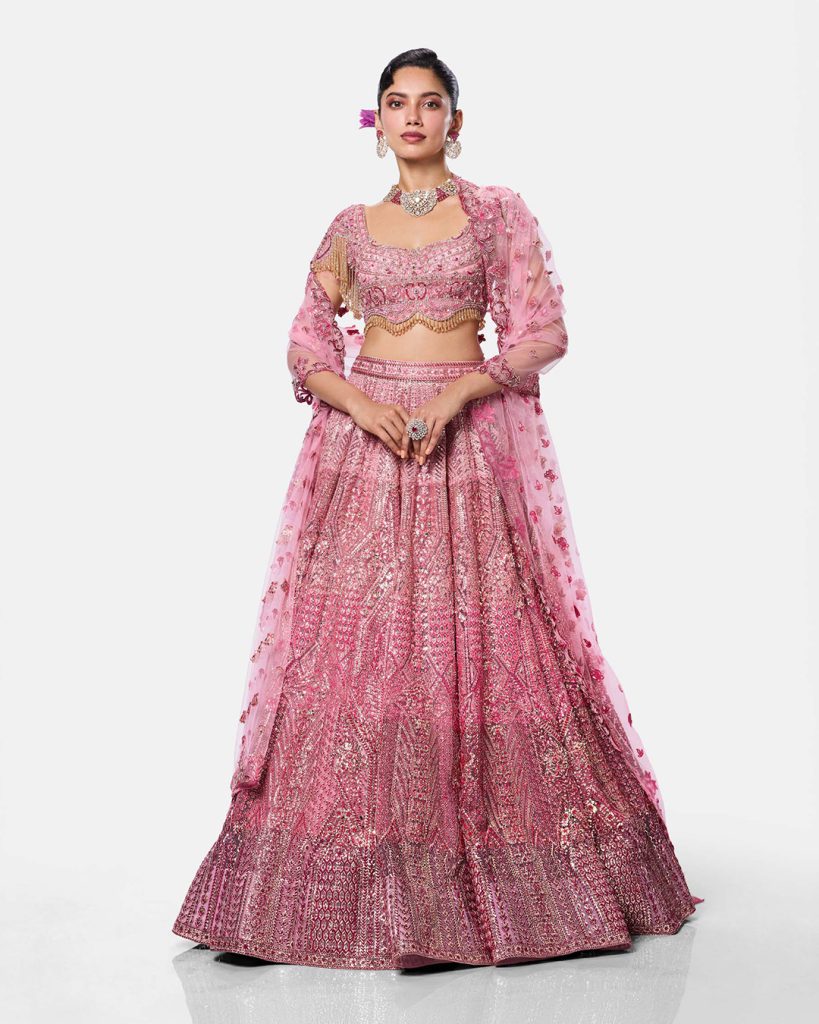
Depending on the scale of the event, choose a luxury engagement lehenga in a suitable colour and fabric to match the time of the day. Feel free to experiment with different silhouettes, embroidery, and embellishments to find a suitable contemporary or traditional lehenga.
Statement gowns:
If you want to explore a different option apart from lehengas, then designer engagement gowns are equally appropriate. From sleek straight-cut and A-line silhouettes to dramatic mermaid-cut and ball gowns, feel free to choose one that suits your style and aesthetic.
Graceful sarees:
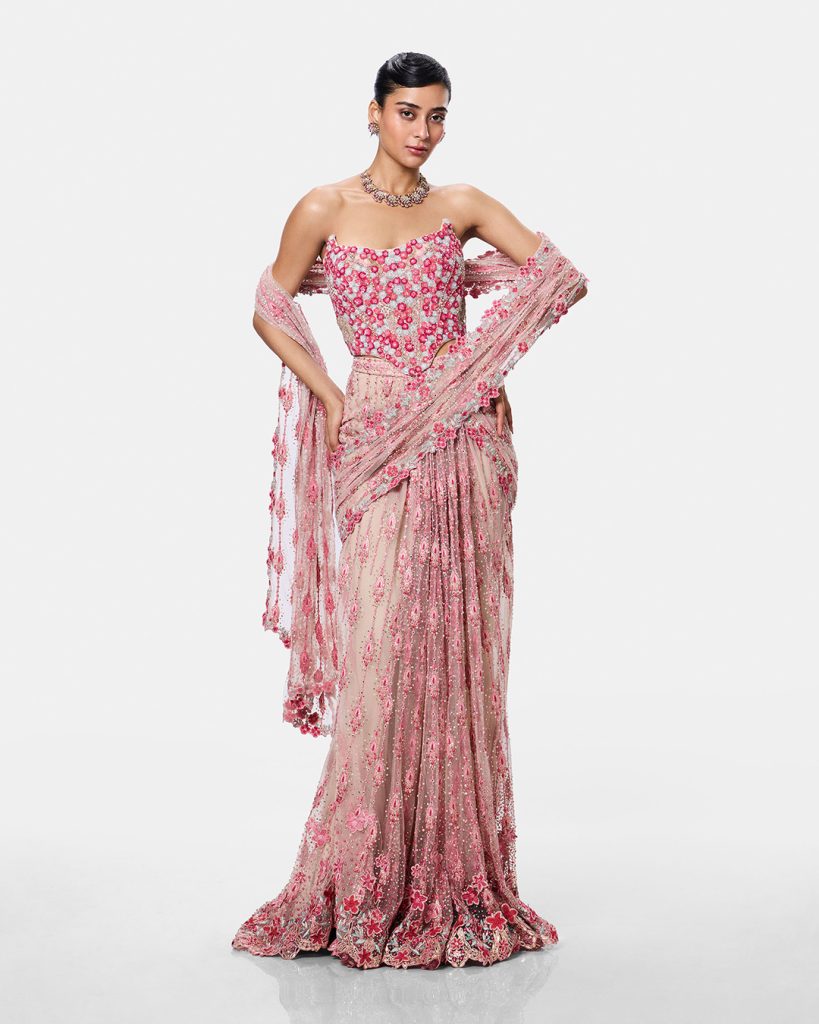
From delicate chiffon to modern tulle to traditional silk, there is a vast array of engagement saree styles to choose from. Opt for designs and colours that match the theme and time of the occasion and suit your personal style.
Elaborate anarkalis:
For intimate engagement ceremonies, elaborate anarkali sets with massive flares, intricate embroidery, and detailed embellishments are best suited. These offer a minimal yet majestic look suitable for an at-home ceremony.
Groom Outfit Ideas
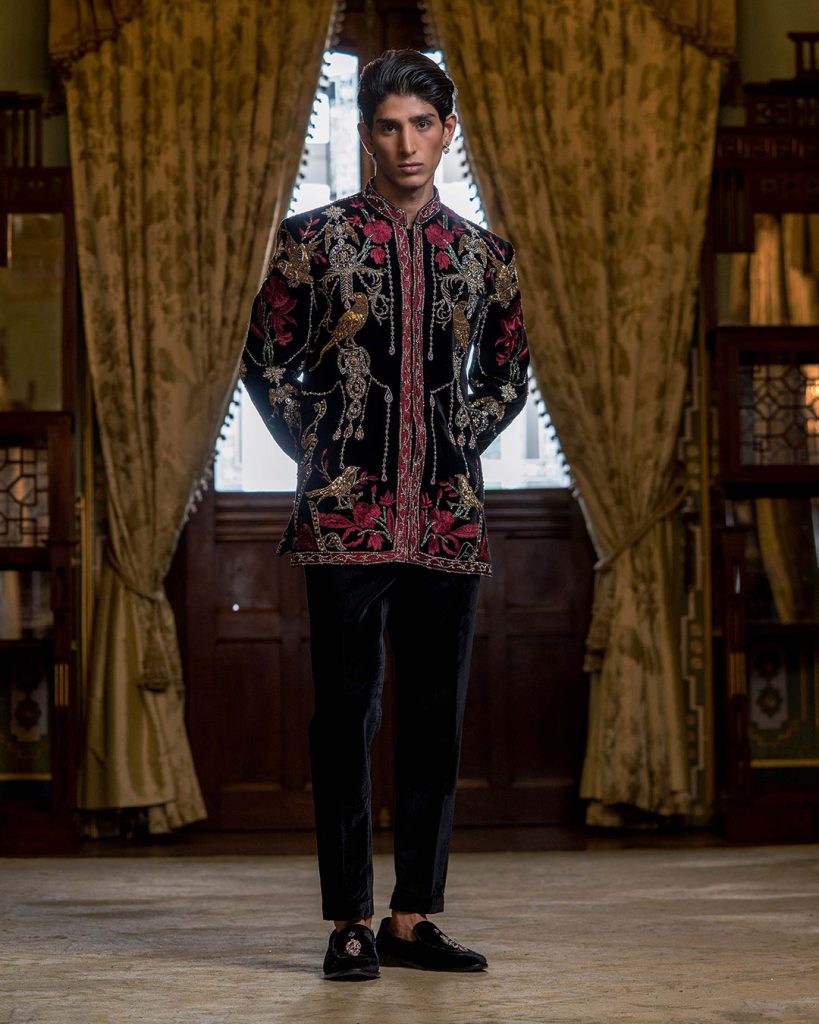
There are multiple options for grooms to choose from. However, the outfit should be in sync with the bride’s outfit to create a harmonious couple’s look.
Classic Jodhpuri:
Jodhpuris are a polished and sleek option as an engagement outfit for the groom. The structured silhouette and standing-collar short jacket ensure a sophisticated ensemble that is timelessly classic.
Dapper bandi set:
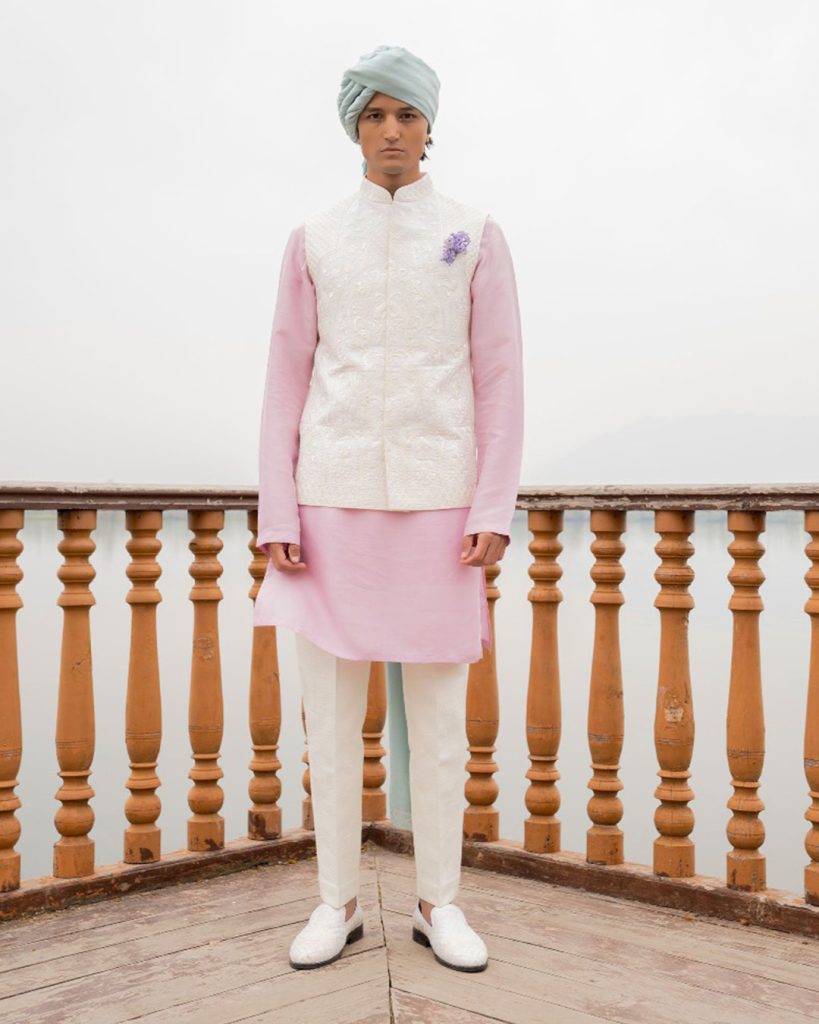
If you don’t want to look over the top, engagement bandi sets or Nehru jackets are the perfect pick for you. A printed or embroidered bandi jacket paired with a plain kurta set is ideal for daytime or intimate ceremonies.
Open-front sherwani:
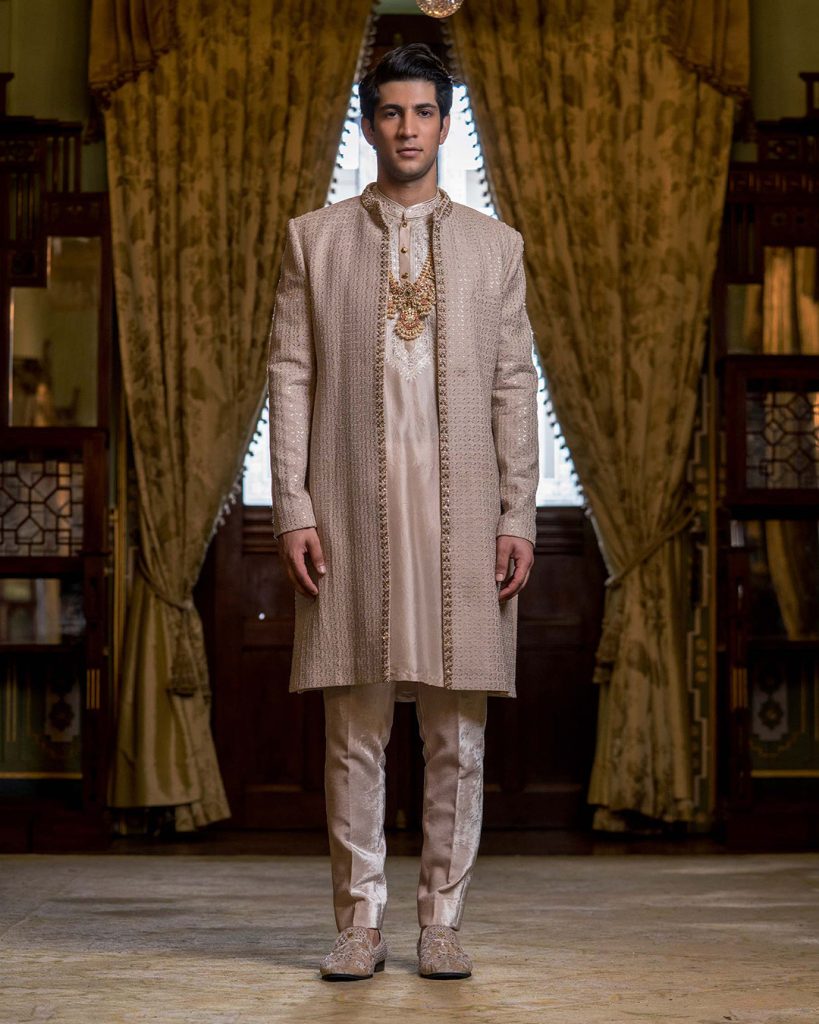
If you want to wear an outfit that combines traditional grace with modern aesthetics, then an open-front sherwani is perfect for you. Opt for minimal silhouettes, a shorter length, and not too heavy embroidery to keep it appropriate for the occasion.
Sophisticated achkan:
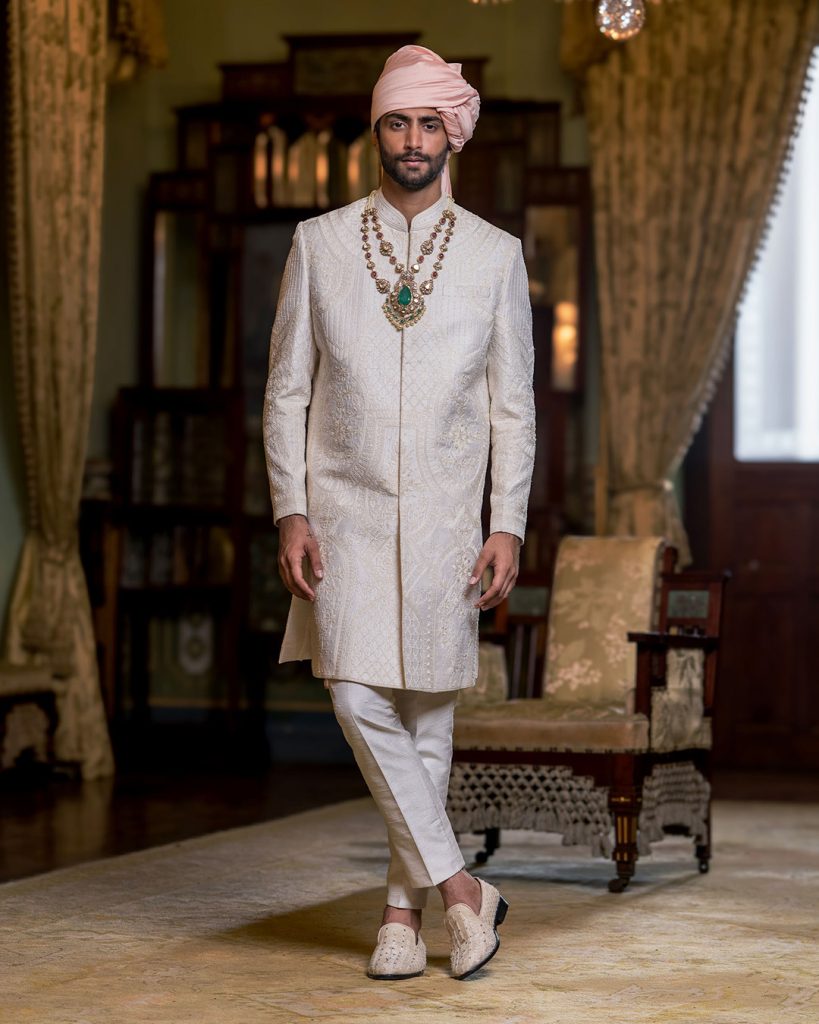
Achkans offer a regal look that is modern and comfortable enough for an engagement ceremony. The slim, structured, and tailored look with a traditional aesthetic strikes the perfect balance for a pre-wedding ceremony.
Guest Outfit Ideas
The guests can wear anything from all the above-mentioned options but should always keep their look as minimal as possible to allow the couple to shine through.
FAQs
What happens during an Indian engagement ceremony?
A typical Indian engagement ceremony involves a prayer, several rituals, and sometimes an exchange of rings.
What are the rituals of an Indian engagement?
The rituals vary depending on the state or region, but most places follow a ritual-centric engagement that formalises the wedding alliance.
Is an engagement ceremony the same as Roka?
No, they are different. A roka ceremony happens before the engagement and is more common in the northern parts of India.
What should the bride wear for her engagement?
Depends on the bride’s personal preferences. However, a lehenga, saree, sharara, anarkali, and gown are equally popular among brides.
Do families consult astrologers before an engagement?
Yes, it is very common for families to consult astrologers before the engagement ceremonies to ensure the couple’s overall compatibility according to their sun signs.