
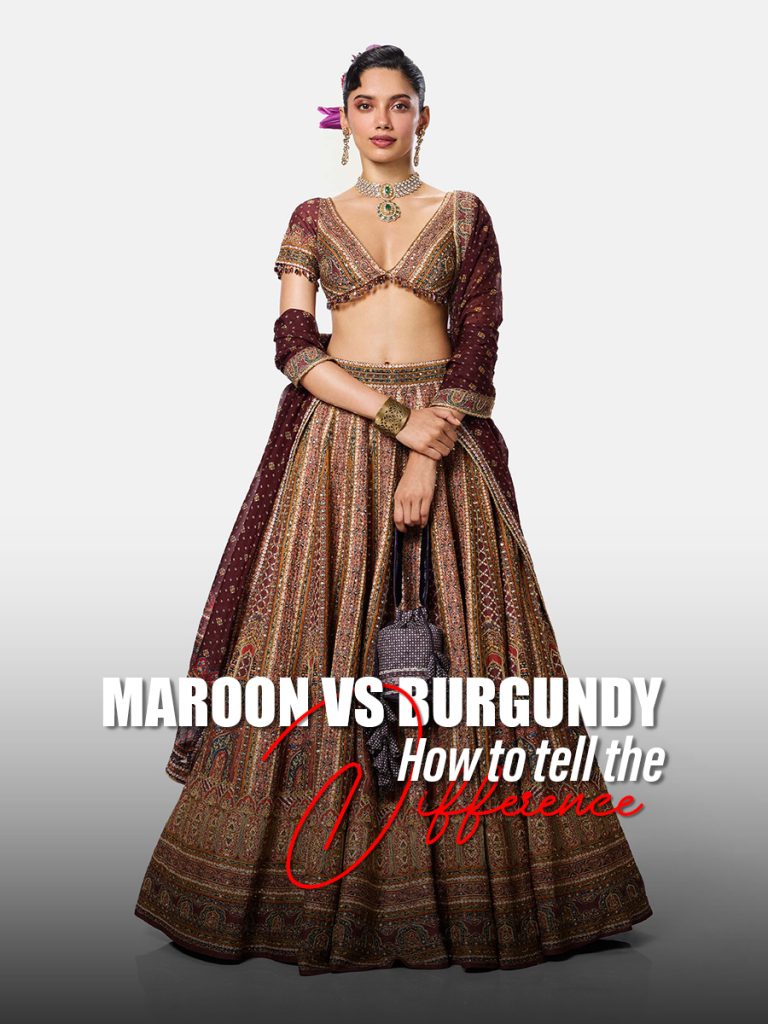
Choosing between maroon and burgundy can be surprisingly difficult. While they may look similar at first glance, maroon is generally warmer and often has subtle brown undertones, whereas burgundy tends to be deeper, cooler, and more wine-like. Understanding these differences can make it easier to choose the right shade for your outfit, accessories, or festive wardrobe.
From elegant Indian designer lehengas to stylish everyday looks, both colours offer plenty of versatility. In this guide, we’ll explore how to tell maroon and burgundy apart and discover the best ways to wear each shade.
What Is Maroon?
Maroon is a colour that belongs to the family of reds. It can be defined as a dark brownish-red or a dark reddish-purple, depending on the undertone. It is a deep, luxurious shade of red that holds great significance in Indian traditional wear.
What Is Burgundy?
Burgundy is another popular one from the red family but with prominent wine and purple undertones. The colour is named after Burgundy, the French wine-producing region, creating a strong association with deep red wine.
Maroon vs Burgundy – What’s The Real Difference?
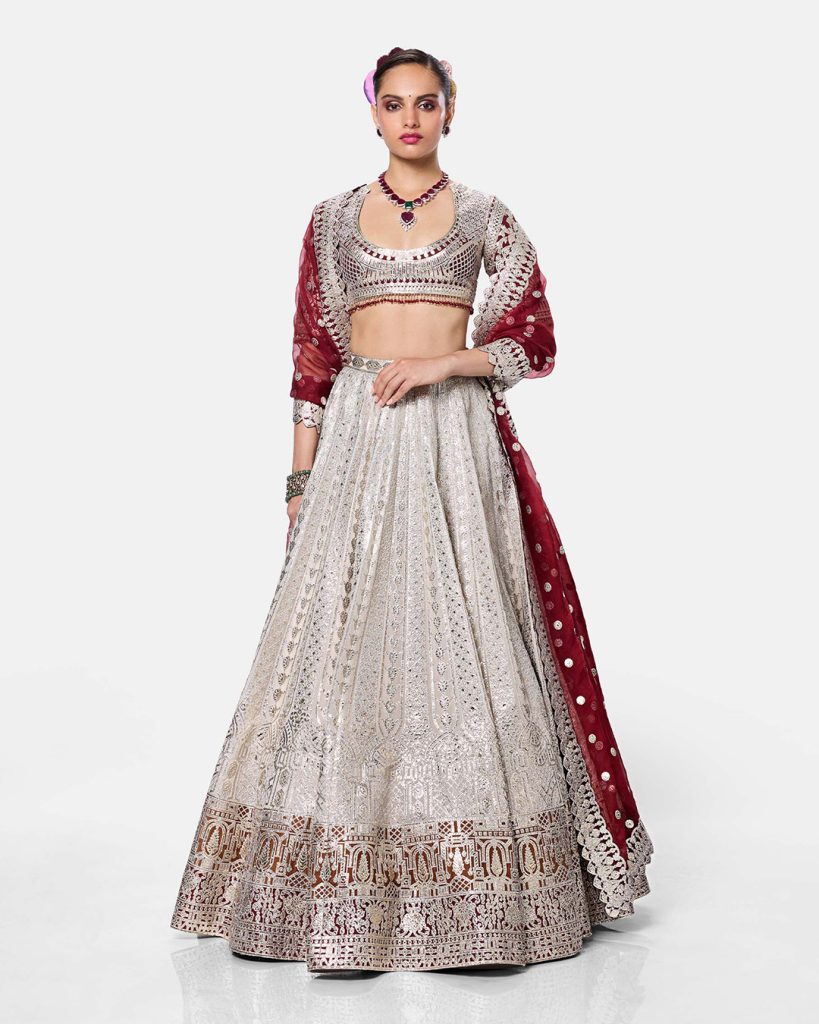
The true difference lies in undertones. While maroon is red mixed with brown, burgundy features red mixed with purple.
Colour Composition
Maroon: This one combines brown with red, creating a colour that takes its name from the French word marron, meaning chestnut. The colour has a warm and earthy feel, leaning towards a muted palette.
Burgundy: A combination of red and purple, the colour prominently gravitates towards a wine-like colour, mimicking the wine from the Burgundy region in France. Unlike maroon, burgundy has a brighter appearance with cool undertones and is best suited for evening wear like women’s designer gowns.
Tone and Appearance
Shade: Maroon is a deeper and darker shade, as it has brown in its base. Burgundy, on the other hand, appears slightly more luminous and vibrant due to violet undertones.
Lighting test: When looked at under natural light, maroon shows brown tones, whereas burgundy will always show purple peeking through.
How To Tell Them Apart in Different Lighting?
While the two colours may appear similar. However, when placed under different lights, you can clearly notice the subtle but obvious differences that set them apart.
Natural daylight: When looked at under daylight, the true base shows up. Maroon shows its earthy and warm brownish tones, while burgundy reveals its purple or violet hints.
Warm yellow light: Warm artificial lights have a completely different effect on both the colours visually. Maroon appears more like a chocolate brown, while burgundy also appears to be deeper and redder.
Cool fluorescent light: Blue-toned or cool lighting may bring out the violet hints in burgundy, making it appear more purple. However, maroon does not change much under cool lighting and appears like a deep red-brown.
Which Fabrics Suit Each Shade Best
Deeper colours like maroon and burgundy show up best on luxurious and textured fabrics like velvet, satin, silk, and fine wool, as they enhance deeper tones, creating richer colours.
Best fabrics for burgundy: The ideal fabric options for the cool-toned colour would be velvet, silk, satin, smooth cotton, and merino wool. Whether you choose designer kurtis or sophisticated sarees, the colour shows up differently on each fabric.
Best fabrics for maroon: The warm-toned hue shows up best on fabrics like raw silk, leather, suede, poly-wool, and tweed.
Maroon vs Burgundy For Indian Weddings & Festive Wear
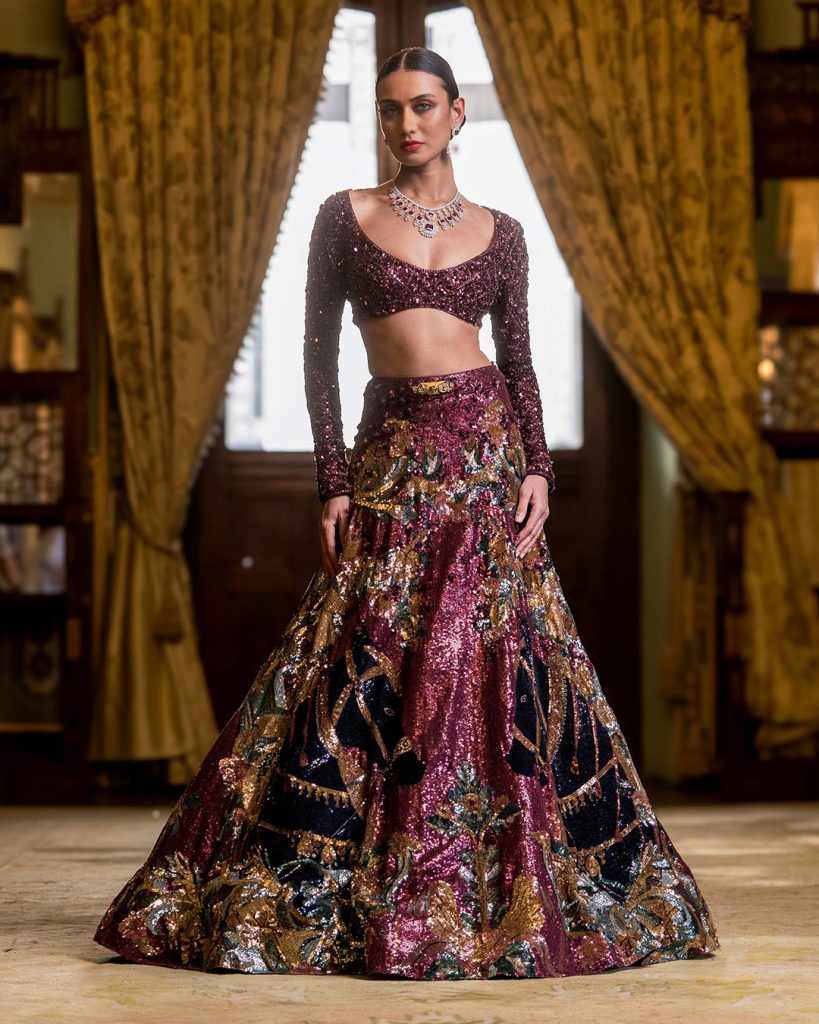
Both maroon and burgundy have a special place in Indian weddings and festive wear. These colours are deeply rooted in culture and are an integral part of the traditional Indian wardrobe.
For Weddings
Choose maroon if you want to create a premium designer saree look or even guest attire. The deep hue pairs exceptionally well with Indian embroidery such as gold zari and zardozi work, jewellery styles like temple and kundan, and colours like warm ivory, mustard, and rani pink.
Pick burgundy if you want to achieve a contemporary look that is vibrant yet understated and luxurious. The cool-toned hue pairs beautifully with lighter hues like dusty rose and blush, along with metallic tones like antique gold, champagne, and subtle silver embellishments.
For Festive Occasions
For daytime occasions and events like pujas, festivals, mehendi, or family functions, maroon is more suitable, especially in fabrics like chanderi, silk, organza, and brocade.
Burgundy is more vibrant and thus suits nighttime events like receptions, cocktails, sangeet, or formal dinners, especially in satin, velvet, georgette, and silk.
What Colours Pair Well With Maroon And Burgundy?
Soft pinks, classic neutrals, contrasting jewel tones, and rich earthy tones pair seamlessly with maroon and burgundy.
Classic neutrals: Neutral shades like white and cream, when paired with deeper colours like maroon and burgundy, create a crisp and balanced look. Grey and silver give a modern edge, while black creates a dramatic yet sharp contrast.
Soft and pastel tones: Lighter shades of pink like dusty pink and pale pink create a softer, feminine look. For more understated combinations, choose nude, beige, and camel.
Earthy and nature tones: Sage green and dark green, when paired with maroon or burgundy, create the perfect colour combination ideal for opulent occasions.
FAQ’s
Is maroon the same as burgundy?
No, both are different colours. Burgundy is red with violet undertones, while maroon has brown undertones in it.
Which colour is darker, maroon or burgundy?
Both are deep shades. However, the fabric and lighting may make one appear darker.
Is maroon or burgundy more formal?
Both maroon and burgundy are considered formal colours when it comes to Indian traditional wear.