
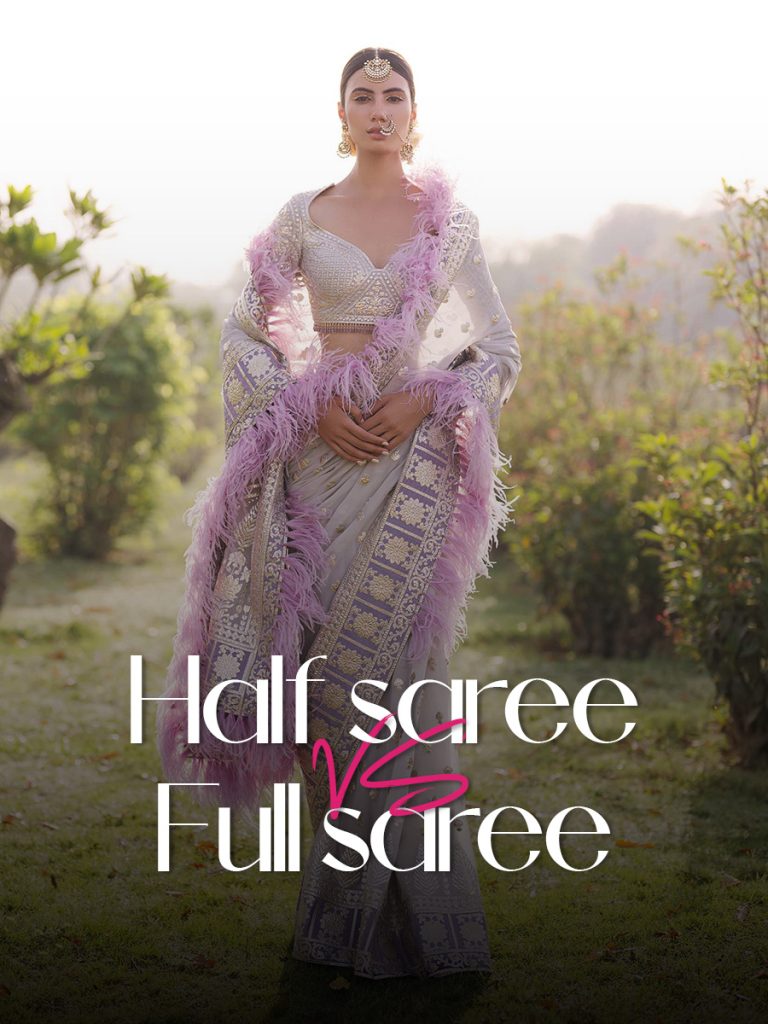
The debate of half-saree vs full saree often comes down to personal style, occasion, comfort, and tradition. While a half saree is known for its youthful charm, vibrant colours, and three-piece design, a full saree offers timeless elegance with a single drape that suits everything from festive celebrations to weddings and formal events.
Both styles come in a variety of fabrics, designs, and patterns, making them versatile choices for different fashion preferences. Understanding the differences, exploring the popular types, and knowing how to choose the right style can help you find the perfect outfit that complements your personality and the occasion.
What Is a Half Saree?
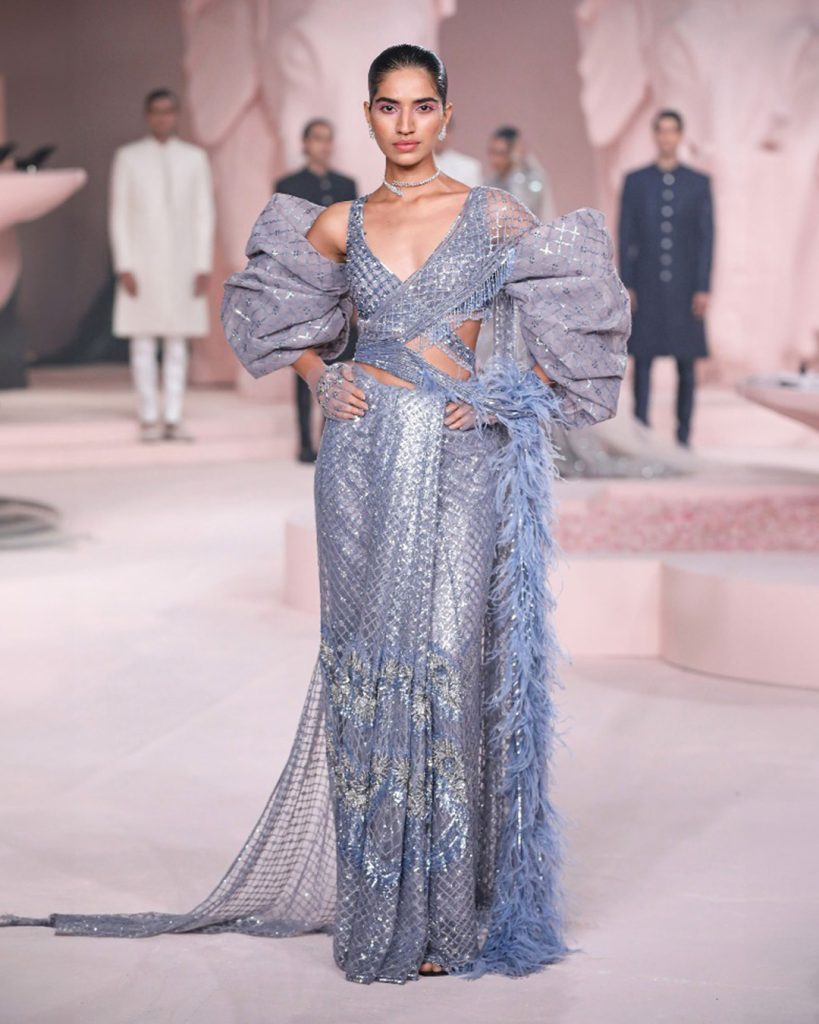
Though called a half saree, it is actually more similar to a lehenga, as it comprises three separate pieces, including a skirt, a blouse, and a dupatta. Traditionally, half sarees are worn by young women and girls in South India for special occasions. The pre-structured design of the outfit makes it much simpler to wear and manage during festivals, weddings, and cultural events for extended hours.
What Is a Full Saree?
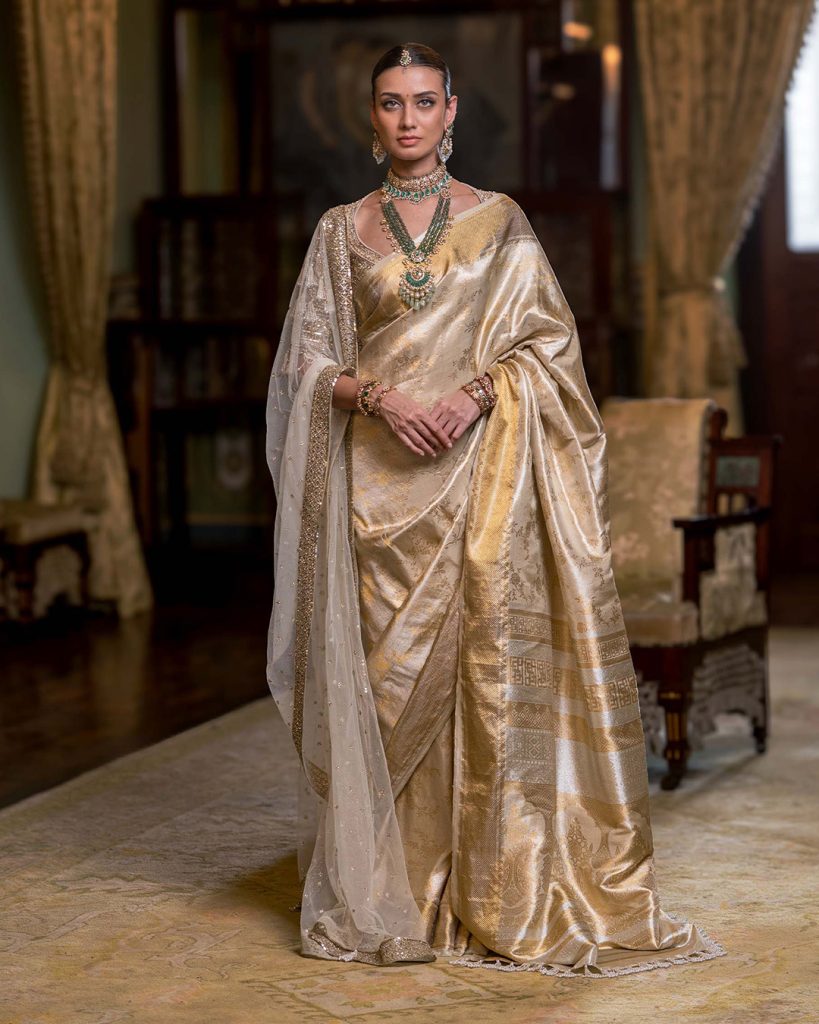
A full saree is basically a regular, five- to nine-yard piece of unstitched fabric that is draped around the body in various graceful ways and is paired with a blouse and petticoat. A full saree is one of the most culturally relevant Indian traditional outfits and is worn across the subcontinent in various regional saree draping styles.
Half Saree vs Full Saree: Key Differences
Structure and construction
Half saree:
Comprises three distinct elements: a skirt, a fitted blouse, and a dupatta that is usually draped around the body. The construction makes it easier for young girls to wear for their special occasions.
Full saree:
A full saree comprises a long strip of cloth that is draped on the body in different styles, paired with a blouse and petticoat. It takes some practice to drape a saree, as it involves pleating, tucking, and draping the saree.
Ease of draping and comfort
Half saree:
Much easier to wear and carry, as there isn’t much draping or pleating involved. It allows freedom of movement while offering a playful, lightweight feel.
Full saree:
Slightly complicated in terms of draping but can be learnt with regular practice. The final look is more polished, sleek, and graceful, suitable for women of all ages.
Cultural Significance and Occasions
Half saree:
Traditionally worn on the special occasion of young girls transitioning into womanhood in South India. It is also worn on festivals and cultural events by women of all ages.
Full saree:
A full saree is much more versatile and can be worn for multiple occasions and settings, like formal gatherings, religious rituals, office wear, weddings, and even day-to-day wear.
Draping Guide: Half Saree vs. Full Saree
Half saree Draping Guide:
Traditionally, there isn’t much draping or pleating involved when wearing a half-saree. You simply wear the skirt and the blouse, and then drape and secure the dupatta in place. But if you are planning to wear a full saree as a half saree, then the process is more detailed. Here is how to drape a full saree to look like a half saree:
- To lay the base, start by wearing a fitted shapewear skirt or petticoat and a suitable blouse.
- Next, grab one end of the saree, create a small pleat, and tuck it in. Keep repeating the process until you have created an even layer of the saree all around the waist. Make sure you have enough fabric left to create the pallu.
- Now, with the remaining fabric, create small pleats and secure it on the shoulder with a pin.
- As an additional step, you can add a waist chain or kamarbandh to define your waist.
Full saree Draping Guide:
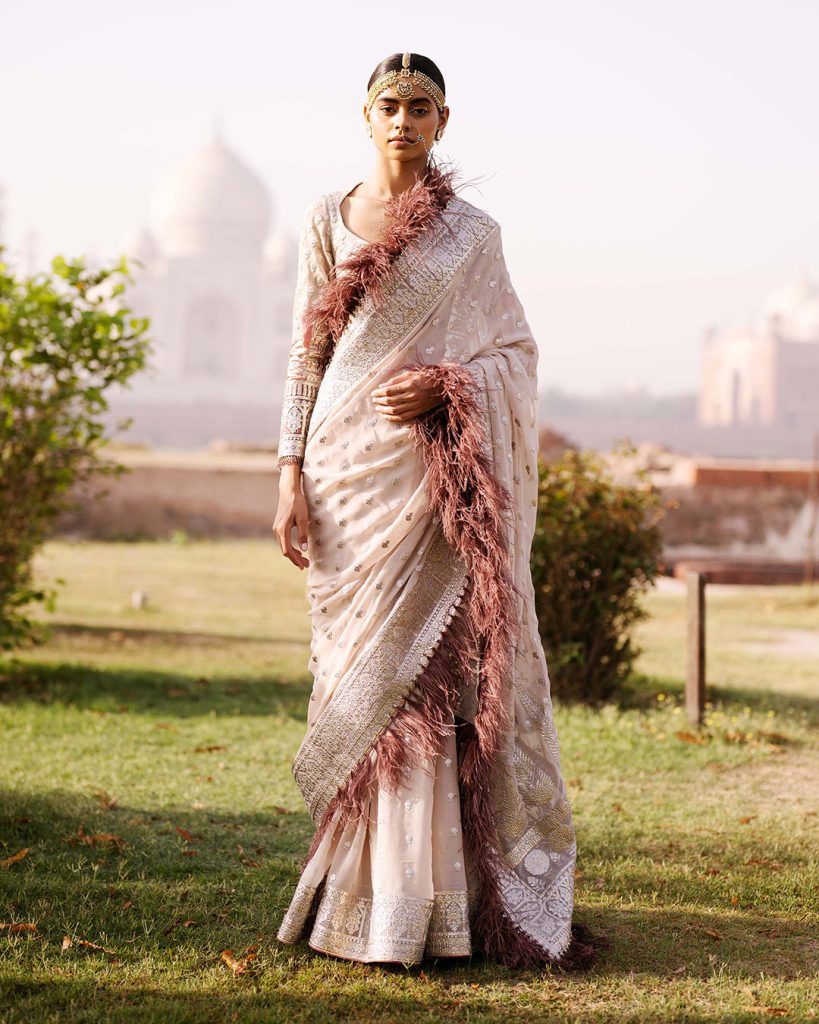
A full saree can be draped in numerous ways and is one of the most versatile Indian traditional garments for women. However, one of the most popular and worn saree draping styles is the Nivi saree drape. Here is a detailed, step-by-step guide to achieving the look:
- The first step is to start with the foundation of a matching petticoat and blouse for the saree.
- Next, start by tucking in the saree from the front right side of the waist and tuck it around the waist, making a full turn.
- Now create 5 to 8 even front pleats, check the length, and then tuck them into the waistband and secure with a safety pin.
- Now, with the remaining loose end, create even vertical pleats, bring it around your back, and drape it over your left shoulder and secure it with a pin.
Half Saree or Full Saree: How to Choose
Choose a half saree if:
If you want an easy-to-wear option for special occasions, suitable for both girls and women, pick a half saree. It allows ease of movement and comfort for extended hours during religious and cultural events.
Choose a full saree if:
If you prefer a classic silhouette that looks elegant and polished for almost any occasion, whether formal or celebratory, then choose a full saree and drape it as you wish.
Styling Tips
Draping style:
The draping style you choose dictates the final look of your saree. Whether it is a half saree or a full saree, choose a pallu/dupatta draping style that flatters your silhouette and is comfortable to wear for a few hours.
Fabric choices:
Choose lightweight fabrics like georgette, organza, net, and chiffon if you want to create a daytime summery, dreamy look. For more nighttime-appropriate colours, pick thicker, regal-looking fabrics like Kanjeevaram silk, Banarasi silk, brocade, and velvet.
Jewellery:
Pairing the saree with the right type of jewellery is key to creating a cohesive look. Depending on the saree, opt for traditional temple jewellery, polki sets, chaandbalis, jhumkas, and bangles to match the outfit. Elevate the look further with statement pieces like haath-phools or matha patti.
Footwear:
Choose embellished sandals, comfortable heels, or embroidered juttis based on your comfort level to match your outfit.
FAQs
Which saree drape is the most common?
The Nivi saree drape is one of the most popular ones out there.
Is a full saree harder to wear than a half saree?
A full saree is more complicated to drape. But once you practice it enough times, you can drape a full saree in 2-3 minutes.