
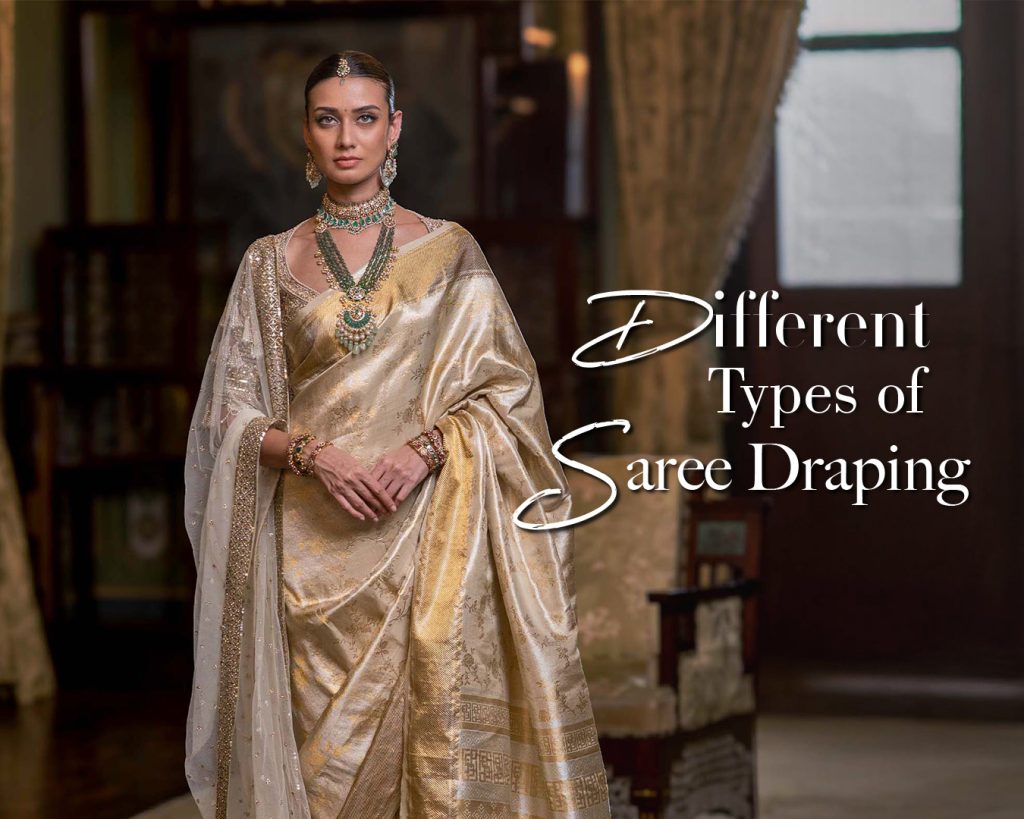
Sarees hold a special place in the hearts and closets of Indian women. It is not just a garment but a crucial element of their cultural heritage that has been passed down through generations. To the amateur eye, a saree may appear to be just a piece of cloth, but it is the draping style that brings it to life. What’s truly fascinating about sarees is how one humble piece of clothing can be draped in numerous ways to achieve a distinctive look each time.
What Is Saree Draping & Why It Matters
As you know, a saree is a long piece of fabric designed to be draped around the body. There are different ways in which you can drape the designer saree, and they vary based on regions, cultures, communities and personal preferences. The draping style you choose is a representation of your cultural heritage, individuality, practicality, and artistic impression, and thus should be picked carefully.
Different Types of Saree Draping Styles
Saree draping is a form of art that has been passed down through generations. There are numerous draping styles, belonging to different states, cultures, and communities, each narrating a story of history, the native land, and the evolution of global fashion scenarios.
Classic Everyday Saree Draping Styles
There are saree draping styles that are worn by women on a day-to-day basis, as they are easy to achieve and offer the right amount of grace with minimal effort.
Nivi Saree Draping Style
The Nivi saree draping style is one of the most popular ones, both for daily wear and special occasions. It originated in Andhra Pradesh and features neatly formed pleats tucked in at the waist, and the pallu is arranged in pleats and placed on the left shoulder. The result is a clean and simple drape that exudes effortless charm and elegance.
Open Pallu Saree Draping Style
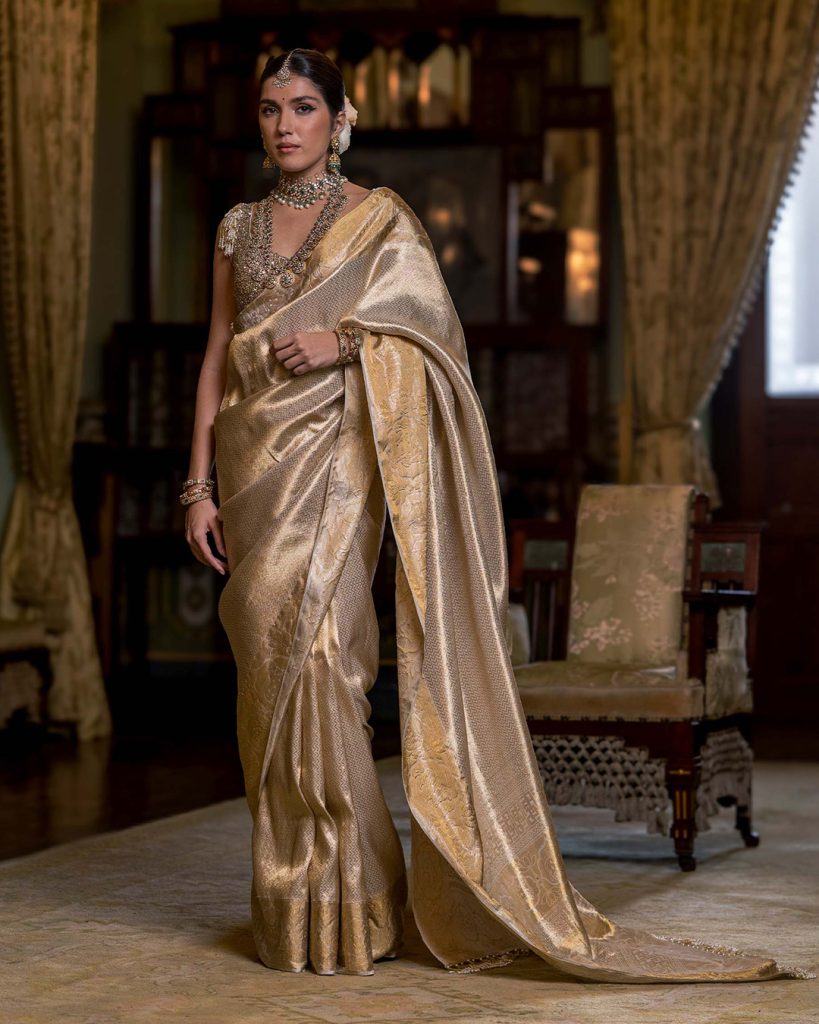
The open pallu is similar to the Nivi drape, but instead of arranging it in pleats, it is left to cascade freely over the shoulder. This style looks a bit more modern compared to the traditional Nivi style. It is best to drape your heavy pallu sarees this way to showcase stunning prints and embroidery.
Front Pallu / Gujarati Saree Draping Style
The front pallu, or the Gujarati saree draping style, is popular among the Gujarat community. This particular style features a front draped pleated pallu that sits on the right shoulder, fanning across the torso, secured on the left side of the waist. This unique draping style is most worn during special occasions like weddings, Navratri, and other cultural events.
Traditional & Regional Saree Draping Styles in India
Traditional and regional saree draping styles are deeply associated with history, regional identity, and cultural narratives, with each style narrating a story of its land.
Bengali Saree Draping Style
The Bengali saree draping style, also known as Aatpoure, is native to the West Bengal region of India and has a very distinctive look. Unlike other draping styles, this one does not involve the front pleats, and the pallu is draped over both shoulders. This eye-catching drape symbolises grace and the tradition of Bengali women in a majestic way and is a common sight during weddings and Durga Pooja celebrations.
Maharashtrian Nauvari Drape
The Nauvari drape is the traditional Maharashtrian saree drape, worn by women on special occasions. The nine-yard silk bridal saree is draped in a dhoti-like style, allowing ease of movement. This style originated to favour Maratha warrior women but is still worn for its unique look.
Coorg / Kodava Saree Draping Style
The Coorg or Kodava saree draping style is fairly unique compared to other traditional drapes. This drape involves tucking in the pleats at the back, wrapping the saree twice around the body, and draping the pallu over the left shoulder from back to front, creating a distinctive look.
Modern & Fusion Saree Draping Styles
Modern and fusion saree drapes came into existence to bridge the gap between Indian traditional wear and the ever-evolving global fashion trends.
Belted Saree Draping Style
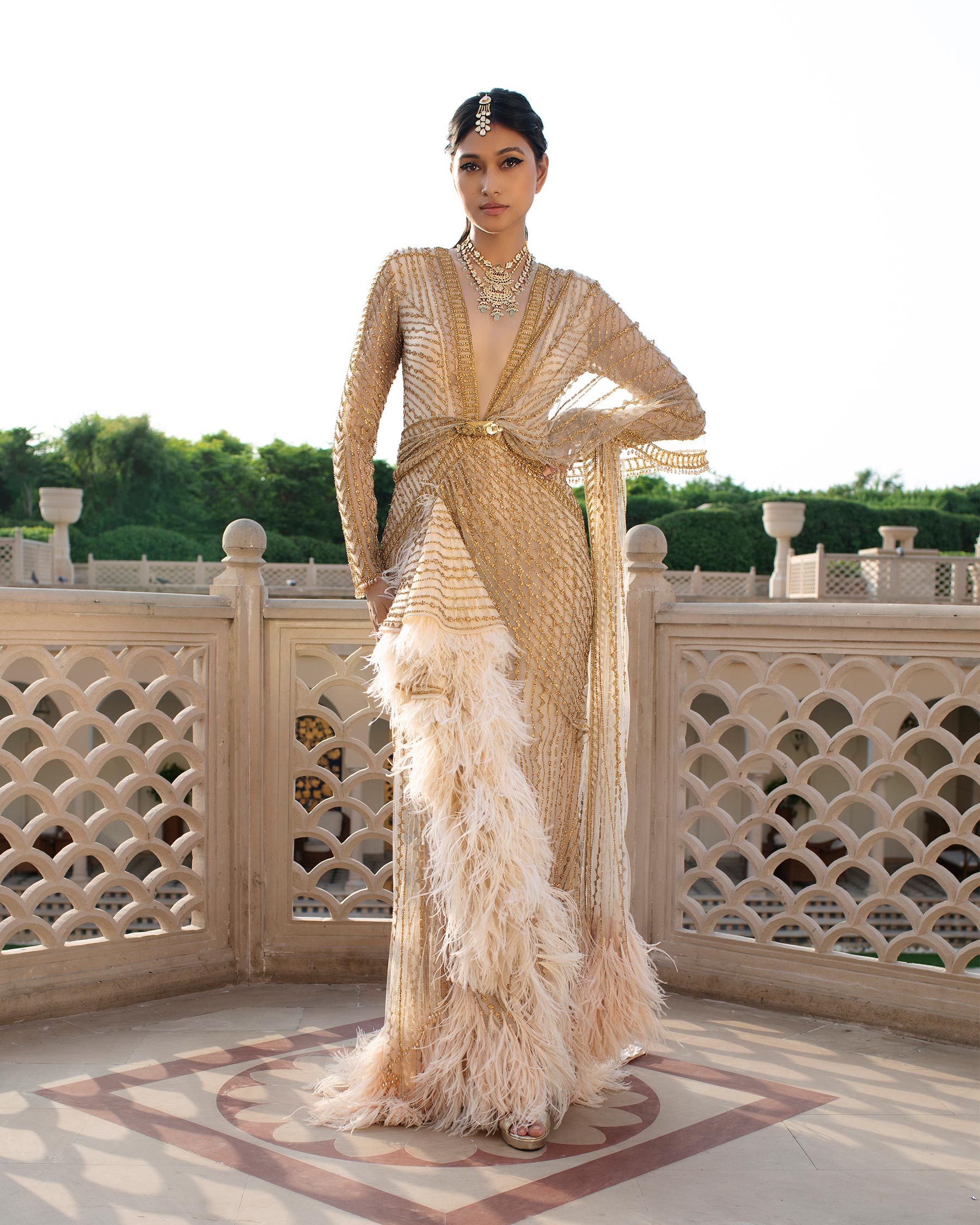
The belted party saree draping style is a modern fusion take on the traditional saree draping styles. This involves adding a belt, thin or wide, made of leather, fabric, or metal, or embellished to add a cinching effect, accentuating the waistline. You can use the belt as a statement accessory or use a simpler design to keep the focus on your party saree.
Cape‑Style Saree Draping
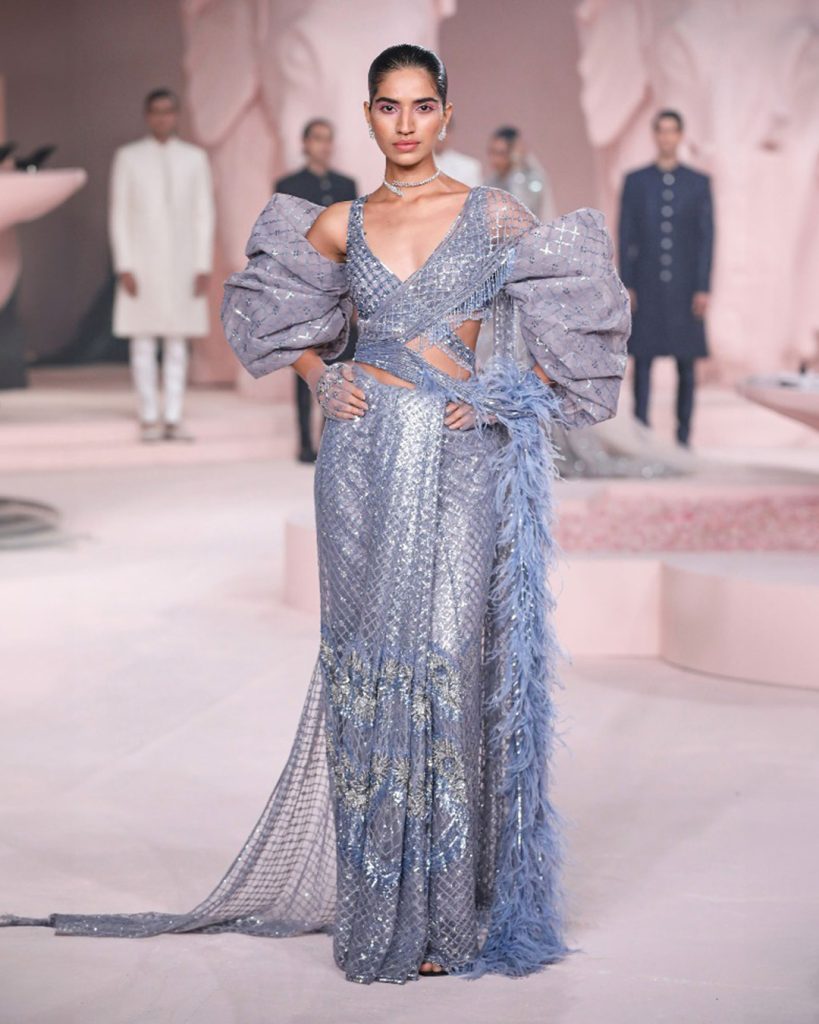
Another fusion saree draping technique perfect for celebratory occasions like cocktails, engagements, or receptions. This style involves draping your saree pallu around your shoulder like a cape. Or you can also add a dupatta or a cape to make the draping part easier.
Dhoti‑Style Saree (Modern 6‑Yard Version)
The modern dhoti-style draping is similar to the Nauvari-style draping, offering a simpler and easier-to-achieve variation. Compared to the traditional style that requires a 9-yard saree, this one can be achieved with the regular 6-yard version. If you want to stand out, this draping style is sure to get you all the attention.
Pant Style Saree Draping
This saree style combines traditional elegance with ultimate comfort. It combines the cascading drape of the pallu with the modern edge of pants to showcase the best of modern traditional styling. This draping style eliminates the underskirt or petticoat and instead uses pants or trousers to hold the saree in place.
Mermaid/Fish‑Cut Saree Draping Style
The mermaid or fish-cut draping style is a glamorous take on the classic saree draping. The best way to achieve this look is by choosing a mermaid-cut underskirt or petticoat. Drape the saree tightly and create narrow pleats for an elongated look.
Lehenga Style Saree Draping
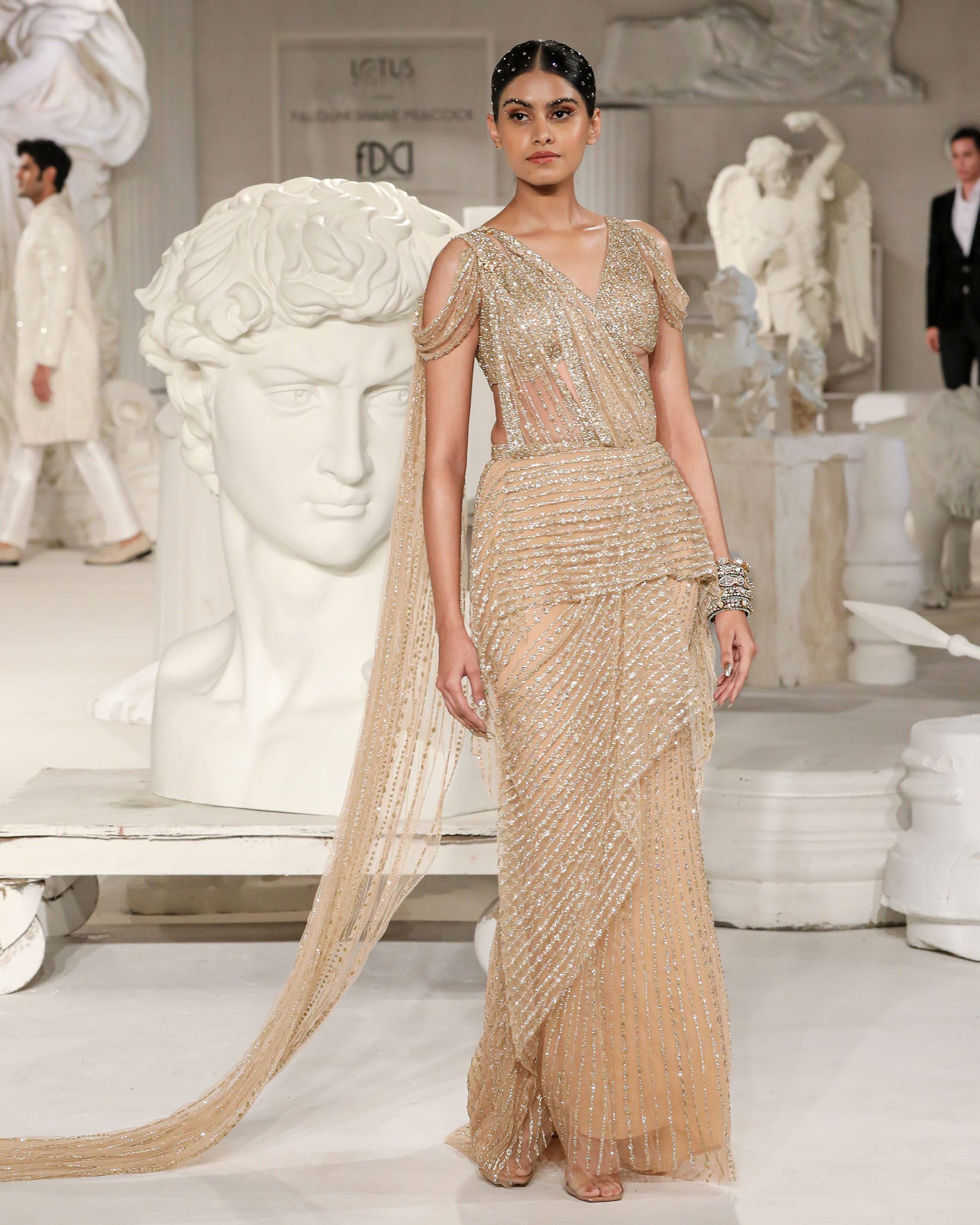
It is a great alternative for those who don’t want to invest in a lehenga and want to achieve a similar look with their saree. For this, wear a cancan skirt and start tucking in the saree at the waist while forming pleats. Do this until you cover the entire skirt, and then adjust the pallu like you normally would for a saree.
Around‑the‑Neck Saree Draping Style
Around-the-neck draping style, or the scarf style, is a decorative way of draping your festival saree. It gives a chic and minimal look, almost similar to a modern outfit. It is perfect for casual and professional occasions, offering a contemporary twist on traditional draping styles. You can experiment with the pleated or the twisted rope draping to achieve different styles.
Dupatta & Double Saree Draping Styles
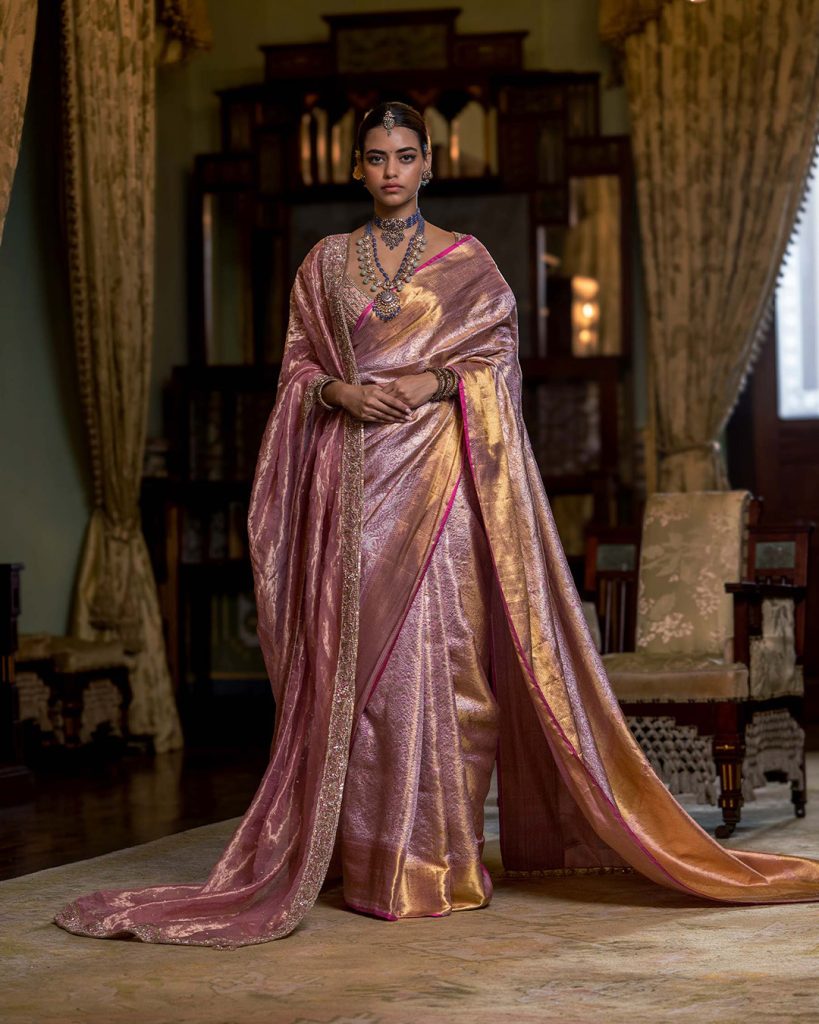
The double dupatta draping style is fairly popular among brides, as it gives a grand and regal look to your saree. There are numerous ways to achieve this look. An additional dupatta can be draped along the saree to create an extended pallu look or as a bridal veil or draped along the pallu for a dual-toned pallu look. With this particular style, the possibilities are endless.
How to Choose the Right Saree Draping Style?
There are certain deciding factors when choosing the right saree draping style.
- Expertise: Some draping styles are more complicated than others and require a certain level of expertise to achieve them. It is recommended to pick a draping style that is easy for you to achieve without much hassle.
- Occasion: Simpler drapes like the Nivi style and open-pallu are best for casual or professional settings. For traditional events like weddings and poojas, regional draping styles like Gujarati, Nauvari, and Coorgi are recommended.
- Look: If you want to go the traditional saree draping route, stick to the usual nivi and other traditional and regional styles. For a fusion saree look, try belted pants, cape, or dhoti-style drape.
- Culture: If you are attending a cultural event, it is recommended to drape your saree in a style that resonates with your culture and community.
FAQs
Which saree draping style is best for beginners?
The Nivi draping style and the open pallu style are the easiest ones to achieve. However, if you are a complete beginner, you should start with pre-draped sarees and gradually make your way to draping a traditional saree.
How many different types of saree draping styles are there in India?
There are dozens, potentially hundreds, of draping styles in India. From the traditional and widely popular Nivi style to regional ones like Gujarati, Bengali, Coorgi, and Nauvari, along with modern variations like pant, cape, mermaid, and belt draping styles, there are numerous ways to drape the classic saree.