
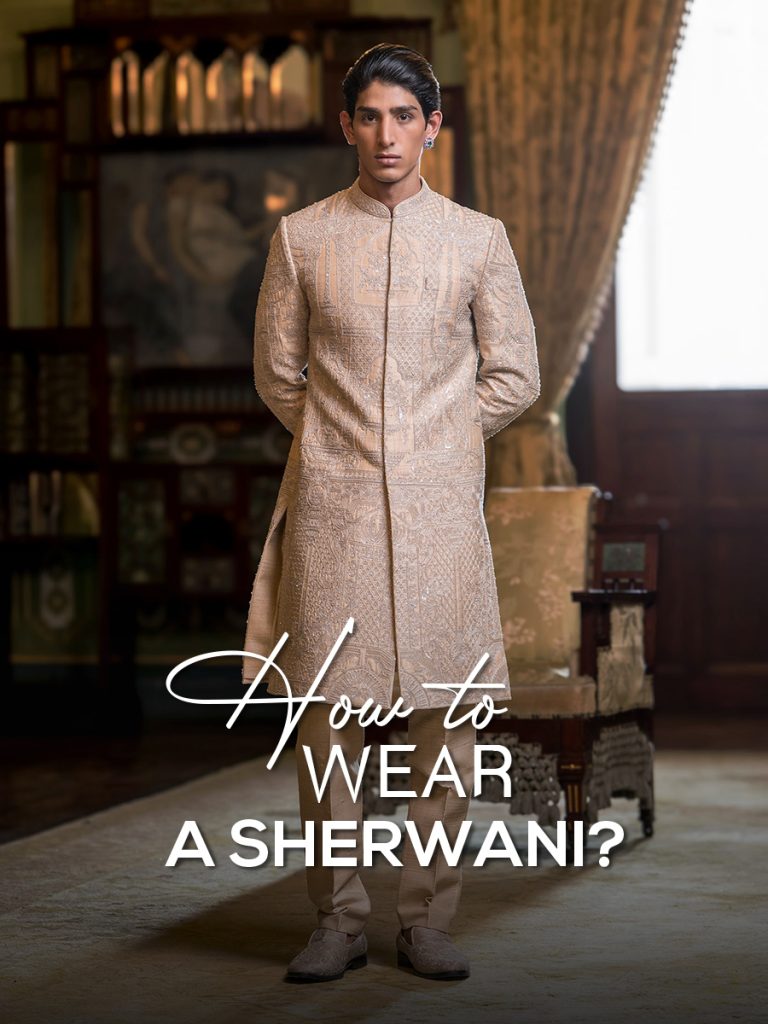
To make a lasting impression in your sherwani, wear and style it for comfort and fashion. Wearing a sherwani correctly involves getting the fit right, layering it with the right elements, and adding suitable accessories to create a cohesive look. The final outfit should create a formal look, showcase traditional elegance and be comfortable to wear.
What Is a Sherwani?
A sherwani is a long, formal, coat-like traditional garment worn by South Asian men, especially in India, Pakistan and Bangladesh. Typically, it is worn over a kurta, paired with bottoms such as a churidar, salwar, or straight-cut pants. These are often made from luxurious fabrics like silk, brocade, jacquard, velvet, etc., featuring intricate embroidery, beadwork, zari work, or embellishments to suit special occasions.
How to Style a Groom’s Sherwani?
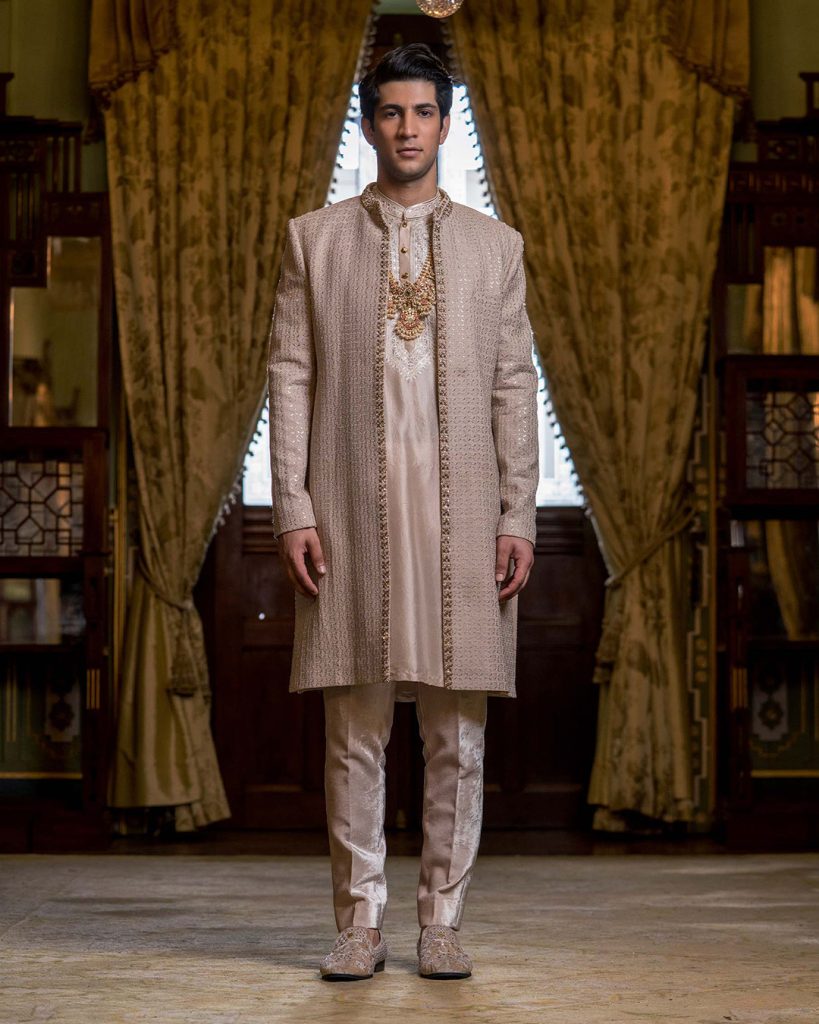
There are several key factors that go into styling a sherwani the right way. It is not just about wearing a sherwani but embracing the culture, showcasing your personal style, and ensuring a comfortable fit throughout the event.
Master the base layer:
A sherwani is never worn directly over bare skin. Typically, a matching or contrasting kurta is worn under the sherwani to prevent the embroidered sherwani from scratching the skin and absorb any excess sweat.
Perfect the fit and silhouette:
Make sure to achieve the accurate fit and silhouette that is expected from a perfect sherwani. The sherwani should hit right above the knee and fit snugly across the shoulders for a structured yet comfortable fit.
Don’t skip accessories:
When wearing a sherwani, there are certain accessories that you cannot skip. A silk dupatta or stole over one shoulder, a turban with an embellished kalgi, and a layered necklace to tie the look together.
Footwear and finishing touches:
Finish off the look with traditional footwear, such as embroidered juttis and mojaris, to match your sherwani. Do not skip a classic wristwatch and a pocket square to finish off the look.
What to Wear with a Sherwani?
Once you have mastered how to wear a sherwani, the next step is to tackle what to wear with a sherwani. The sherwani alone does not make an impact and is meant to be paired with additional elements to look cohesive. While the sherwani is the centrepiece of your outfit, all the other elements are a must to complete the attire.
The Inner Layer:
A sherwani is always worn on top of a kurta, as it offers a smooth base, preventing the heavy embroidery from scratching your skin. The kurta is often made from soft silk fabric in matching or contrasting colours to ensure a striking look that is also comfortable.
The Bottoms:
The next crucial element is the bottoms. From churidar to tailored pants to dhotis, you can choose a suitable bottom to complete your desired look. A churidar offers a classic look that is popular among the majority of grooms. Cigarette pants offer a contemporary vibe, suitable for an Indo-western aesthetic, while dhoti pants offer a regal touch to your sherwani look.
Footwear:
Suitable footwear like traditional mojaris and juttis is a must to complete the traditional wear look. These often feature intricate embroidery and detailing that complement the embroidered sherwani, creating a cohesive look. However, you can also opt for loafers or oxfords if you want to achieve a contemporary look.
Essential Sherwani Accessories
The right sherwani accessories elevate your traditional look. Elements like a dupatta, necklace, safa, brooch, etc., add character and visual appeal to the outfit.
Safa:
A matching or contrasting safa is a must for creating a traditional wedding look. You can choose from a silk safa paired with an embellished kalgi or you can opt for pre-tied embroidered options.
Kalgi:
If you are the groom, you have to put on a kalgi, an embellished feathered ornament worn attached to the front of the safa.
Dupatta:
Crucial to the sherwani, a dupatta should be worn over one shoulder to add character and elegance. You can opt for heavy zari work, elaborate stone detailing or minimal threadwork options to match your sherwani.
Mala:
A layered necklace frames the face while adding character to the outfit. Choose from popular options like pearl strands, gemstone pendants, and gemstone bead malas to add some bling to your sherwani look.
Common Mistakes to Avoid When Wearing a Sherwani
Getting the fit and proportion wrong:
This one is a no-brainer for any outfit you wear, and a sherwani is no exception. Make sure that the length and fit of the sherwani are accurate as per your measurements. The sherwani should end right above or below the knee, and the shoulders should sit right across your actual shoulders for a seamless fit. Also, make sure that the bottoms are neither too loose nor too tight.
Wearing an unmatched dupatta:
The dupatta of your sherwani should pull the entire look together. Opt for a matching dupatta from the same colour family as your sherwani or choose a contrasting colour for a more eye-catching look. Refrain from picking a colour that is an exact match, as it will completely blend in with the sherwani.
Skipping the inner kurta:
Do not skip the inner kurta when wearing a sherwani. The kurta acts as a protective layer against the heavy embroidery, preventing it from scratching and irritating your skin.
Mismatched shoes:
Sherwanis are best paired with traditional shoes like mojaris and juttis. Avoid wearing casual shoes or sandals with your sherwani.
Over- or under-accessorising:
Add just enough accessories to elevate your traditional wear look. Refrain from adding too many accessories, especially if you are wearing a heavy sherwani and vice versa.
Trending Sherwani Styles for Men
The present era is all about sharper tailoring, lighter fabrics, and a blend of traditional craftsmanship with modern silhouettes. Instead of overly heavy, ornate designs, modern grooms are choosing styles that feel elegant, comfortable and easier to move in.
Modern Indo-Western Sherwanis:
One of the most trending sherwani styles is the Indo-Western fusion sherwani, combining a tailored silhouette like a bandhgala with traditional fabrics and embroidery. This style works particularly well for cocktail events, receptions and destination weddings.
Jacket Style Sherwanis:
A more casual take on the traditional sherwani, this one features an open-front jacket worn over an achkan or kurta. This style is best suited for fun-filled events like a sangeet or cocktail party.
Angrakha Style:
A traditional silhouette that features an overlapping neckline that ties at the side. The modern designs often feature unique colour combinations with intricate threadwork and mirror work.
Slim Fit Sherwanis:
The modern sherwani designs are more about streamlined silhouettes, cleaner lines and shorter lengths, creating a less-elaborate and fashion-forward look.
Frequently Asked Questions
Can I Wear a Sherwani Without a Dupatta?
You can skip the dupatta if you want a minimal look, especially for occasions like cocktail, engagement and sangeet.
Which Shoes Go Best with a Sherwani?
Traditional footwear like embroidered juttis and mojaris is best paired with sherwanis.
What Colour Sherwani Is Best for a Groom?
For day weddings, choose fresh pastel shades like sage green, powder blue and blush pink or lighter neutrals like beige and off-white. For nighttime occasions, regal, dark tones like emerald green, maroon, or midnight blue are appropriate choices.
How Should a Sherwani Fit?
A sherwani should skim over your body without being too tight or loose. The shoulders of the sherwani should sit on top of your shoulders, and the sherwani’s hemline should end right about or below the knee.
Can a Sherwani Be Worn for Non-Wedding Occasions?
Yes, you can wear a sherwani to a non-wedding occasion. Just make sure to pick the right fabric, colour, and styling technique to ace the look.
Conclusion
Wearing a sherwani is all about balancing tradition with personal style. From choosing the right fit and accessories to pairing it with suitable footwear, every detail contributes to a polished look. With the right styling, a sherwani can help you make a lasting impression at any wedding or festive occasion.