
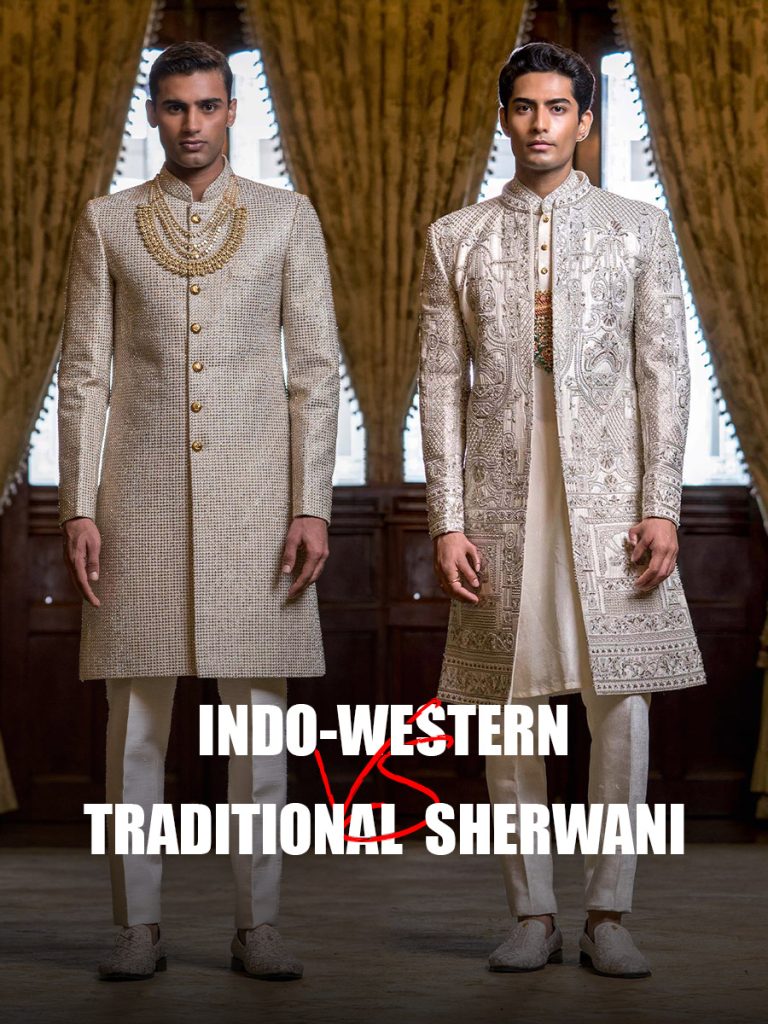
The right traditional outfit can make a huge difference to your overall look, especially for weddings, festive celebrations, and formal occasions. When deciding between an Indo-Western vs traditional sherwani, it is important to consider your personal style, the occasion, comfort, and the kind of statement you want to make.
While traditional sherwanis offer timeless elegance and a regal appeal, Indo-Western styles bring a contemporary twist with modern silhouettes, patterns, and detailing, making each option suitable for different fashion preferences and occasions.
What Is a Traditional Sherwani?
A traditional designer sherwani is a formal, long, coat-like garment that is often styled with matching bottoms and a dupatta or shawl for a cohesive look. It is often tailored from luxurious fabrics and features intricate hand embroidery. It is mostly worn by grooms and men in general for various cultural events in South Asian countries.
What Is an Indo-Western Sherwani?
Indo-western sherwani designs are inspired by traditional sherwanis but feature several modern characteristics like asymmetrical hemlines, shorter lengths, and power shoulders. These unconventional designs are often tailored from lighter fabrics with modern embroidery and fashion aesthetics.
Indo-Western vs Traditional Sherwani — Key Differences
| Traditional sherwani | Indo-western sherwani | |
| Design & Silhouette | Symmetrical, straight-cut, and structured coat that falls below the knee. | Asymmetric hemlines, shorter lengths, angular slants, and layered designs. |
| Fabric & Embroidery | Traditional embroidery styles like zari, zardozi, and threadwork on heavier fabrics like silk, brocade, and velvet. | Uses lighter fabrics for the base with modern embroidery styles like minimalist aari work, tonal zardozi, micro-sequins, and bead accents. |
| Bottom Wear & Accessories | Traditionally paired with a churidar or a dhoti, along with a dupatta or shawl. Styled with a safa (turban), kalgi (headpiece), mojris (traditional footwear), and layered necklaces. | Paired with slim-fit trousers, cigarette pants, or Jodhpuris, styled with a pocket square or a brooch for a modern yet minimal look. |
Which One Suits Which Wedding Function?
Every wedding function has its own vibe, and the right outfit can make all the difference. From elegant and understated to glamorous and festive, discover which look suits each celebration best.
Main Ceremony/Pheras: A traditional sherwani would be a better pick for the main ceremony or pheras, as they seamlessly match the vibe of the occasion. The regal opulence of heavier fabrics with intricate embroidery matches the traditional aesthetic of the event.
Sangeet/Cocktail: Indo-Western sherwanis are ideal for sangeet and cocktail events. The silhouettes are more modern, lightweight, and comfortable to move around during high-energy performances and dancing.
Reception: You can choose a reception sherwani based on the theme of the event. However, most people gravitate towards Indo-Western, modern silhouettes for the reception. Focus on creating an attire that prioritises comfort and ease of movement for an event that requires you to socialise and be on your feet for extended hours.
Destination Wedding: Again, the type of sherwani you pick depends on the destination of your wedding. For a beach wedding, lightweight sherwanis in pastel hues featuring subtle chikankari or light threadwork are more appropriate. But for a nighttime palace wedding, go all out with luxurious fabrics like silk and brocade with intricate zari or zardozi detailing to match the opulent venue.
Traditional Sherwani vs Indo-Western Sherwani By Season and Venue
By Season:
Winter and Cooler Months
Traditional Sherwani: Heavier fabrics like silk, brocade, and velvet with traditional embroidery styles, including zari and zardozi, create the perfect winter wedding sherwani.
Indo-Western Sherwani: For a modern take, blended fabrics and raw silk with mirrorwork or sequin detailing work well for colder months.
Summer and Warmer Months
Traditional Sherwani: For summer wedding sherwanis, lightweight and breathable fabrics like cotton silk, raw silk, and chanderi with threadwork or resham embroidery are suitable.
Indo-Western Sherwani: Fabrics like cotton, linen, and silk blends are ideal for summer Indo-western sherwanis, especially for daytime events.
By Venue:
Majestic Palaces and Ballrooms
Traditional Sherwani: Long, structured traditional engagement sherwani designs match the opulent aesthetic of palaces, especially for rituals like pheras.
Indo-Western Sherwani: For ballroom weddings, Indo-Western sherwani designs can be styled to match the event, without looking out of place.
Destination Venue and Beaches
Traditional Sherwani: For outdoor settings, stick to lightweight and airy fabrics, even for a traditional theme.
Indo-Western Sherwani: Indo-Western sherwani styles are best suited for outdoor venues like beaches, as they match the aesthetic seamlessly.
FAQ’s
What is the difference between an Indo-Western and traditional sherwani?
Traditional sherwanis and Indo-Western sherwanis differ from each other in various aspects like length, silhouette, fabric, and even embroidery style. Based on individual requirements, grooms can choose which type of sherwani to pick for their special day.
Which is better for a wedding reception: a sherwani or Indo-Western?
The ideal sherwani should match the theme of the event, as well as the groom’s style. If the reception has a traditional vibe, then a sherwani with traditional elements would work best. For a modern-themed event, Indo-Western sherwanis with contemporary design elements are ideal.
Can an Indo-Western sherwani be worn for wedding rituals?
Yes, you can wear an Indo-Western sherwani for wedding rituals, but make sure to not make a faux pas or wear an outfit that is too out of place.
Is an Indo-Western sherwani more affordable than a traditional sherwani?
Not really. The price of the sherwani depends on various factors like the brand or designer, fabric used, embroidery, craftsmanship, and the time taken to complete the attire.