
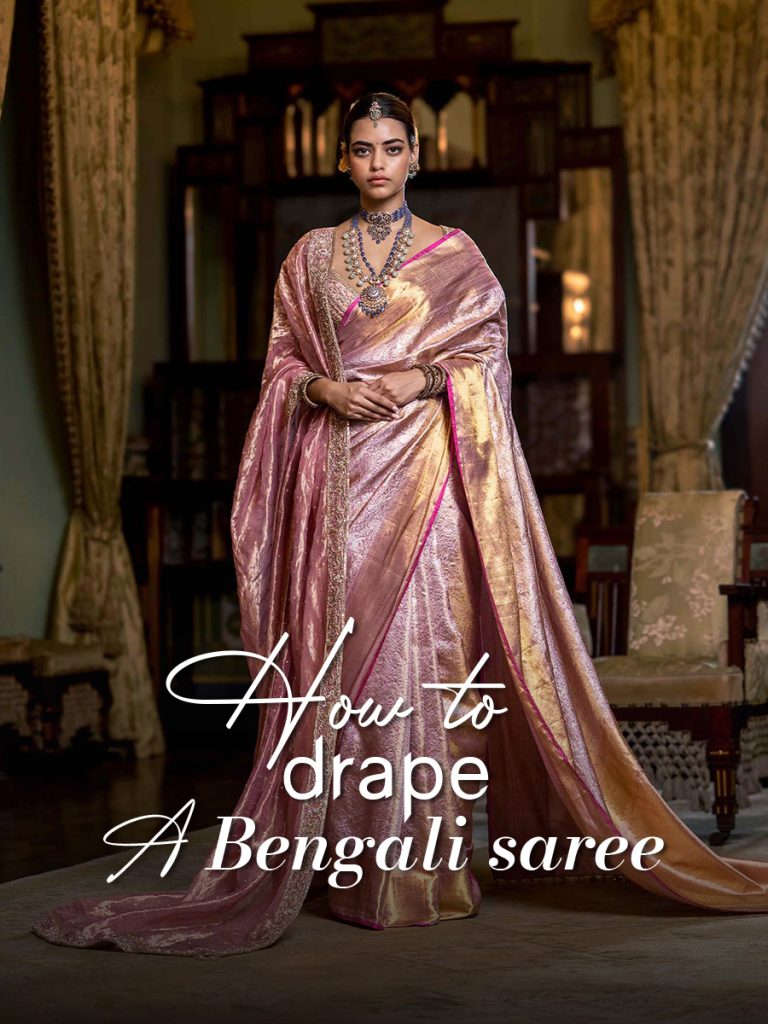
The graceful elegance of Bengali style saree draping is a timeless reflection of tradition, culture, and femininity. Known for its distinctive wide pleats, keyring pallu, and effortless charm, this draping style is especially popular during festivals like Durga Puja and traditional celebrations.
Whether you are dressing up for a wedding or cultural event or simply want to embrace classic ethnic fashion, learning the Bengali saree drape can instantly elevate your look. In this guide, we’ll walk you through a simple step-by-step method to achieve this iconic style with ease and confidence.
What Is Bengali-Style Saree Draping?
The Bengali-style drape, also known as ‘Atpoure’, is the traditional saree-draping style that originated in West Bengal. This draping style is characterised by its wide pleats, distinctive double pallu draped over the shoulder and graceful appearance. It is very different from the popular Nivi-style draping, creating a regal look rooted in Bengali culture and worn on special occasions like weddings, festivals, etc. Traditionally, this style is created with handwoven sarees like Tant, Baluchari, or any other red-and-white designer saree.
Benefits of Bengali Saree Wearing Style
Elegant traditional look: The wide pleated saree style creates a royal and elegant look suitable for special occasions.
Comfortable draping: The relaxed drape and loose pallu allow for easier movement and comfort.
Highlight saree border: The front pallu allows for a better showcase of the richly designed borders and motifs.
Suitable for festive occasions: A celebrated saree draping style suitable for religious events, weddings and festivals.
Cultural significance: Showcases the artistic traditions and Bengali heritage.
Versatile styling: Can be styled with modern accessories to create a fashion-forward party wear saree look.
How to Drape Bengali Saree: Step‑by‑Step Tutorial
Step 1: Tuck and Wrap Around the Waist
Begin by tucking the plain end of the saree into your petticoat at the right side of your waist. Wrap the fabric once around your body from right to left, keeping the lower edge just above the floor. Make sure the tuck is firm so the saree stays secure.
Step 2: Create the Front Pleats
Bengali draping uses broader pleats than the standard Nivi style. Fold about five to seven wide pleats and tuck them slightly to the left of your navel. The pleats should fall neatly and allow you to move comfortably.
Step 3: Drape the Signature Front Pallu
Take the remaining fabric around your back and bring the pallu over your left shoulder from behind. Let it hang loosely in front. Then pass the free end under your right arm and drape it over your left shoulder again—this creates the distinctive Bengali double-drape effect.
Step 4: Secure the Pallu with a Key Ring Detail
Traditionally, Bengali women attach a decorative key ring or an ornate bunch of keys to the corner of the pallu. Pin or tie the pallu to your shoulder for stability, then fasten the key ring near the edge for an authentic festive touch.
Step 5: Make Final Adjustments
Check that your pleats are even, the border is aligned, and the pallu falls at a flattering length. The saree should sit comfortably at your waist and shoulders. Complete the look with traditional accessories, such as a large bindi, bangles, and classic jewellery.
How to Wear a Saree in Bengali Style for Different Occasions?
Bridal Bengali Style Saree Draping
The bridal Bengali saree waring style is more traditional and refined. Bengali brides opt for red and white luxurious silk sarees, like Baluchari, for their special day. The wedding saree is draped, forming clean pleats with a long pallu, often secured with decorative pins, and styled with a traditional bridal crown, a large red bindi, gold jewellery, and shanka pola bangles.
Simple Everyday Bengali Saree Wearing Style
For simple, everyday wear, lightweight sarees like Tant and soft handloom ones are the best picks. Keep the pleats neat and simple with a shorter pallu for maximum comfort while doing everyday chores. Style the saree with minimal accessories such as glass bangles, earrings and a bindi to keep the look traditional.
Festive Bengali Saree Looks for Durga Puja
The red and white colour combination for saree is the ideal one for festive celebrations like Durga Puja. Cotton and silk sarees with bold borders and intricate detailing are recommended to match high-octane celebrations and pandal visits. Don’t forget to accessorise the festive saree with oxidised or traditional gold jewellery, a red bindi, and a traditional bag or potli to carry essentials.
Common Mistakes in Bengali Style Saree Draping
Uneven front pleats: One of the main characteristics of Bengali saree draping is its broad, well-aligned pleats that are placed gracefully over the shoulder.
Incorrect pallu length: The pallu’s length should be neither too long nor too short. Figure out your ideal length and ensure that you are hitting that length every single time.
Loose waist tucking: Make sure that your petticoat is tied tightly to avoid the saree from slipping throughout the day. But make sure it is not too tight to cause discomfort.
Ignoring saree border alignment: While making the pleats, make sure that the borders are aligned and pressed down properly to look neat and effortless.
Not accessorising the look: Your Bengali saree look is incomplete without the right accessories and jewellery. Make sure you do not skip essentials like bangles, earrings, and bindi to ensure a cohesive look.
Final Thoughts
Similar to any other saree draping style, the Bengali drape also takes some practice to perfect. But once you get the hang of it, you can easily create the iconic drape within minutes for everyday wear as well as special gatherings.