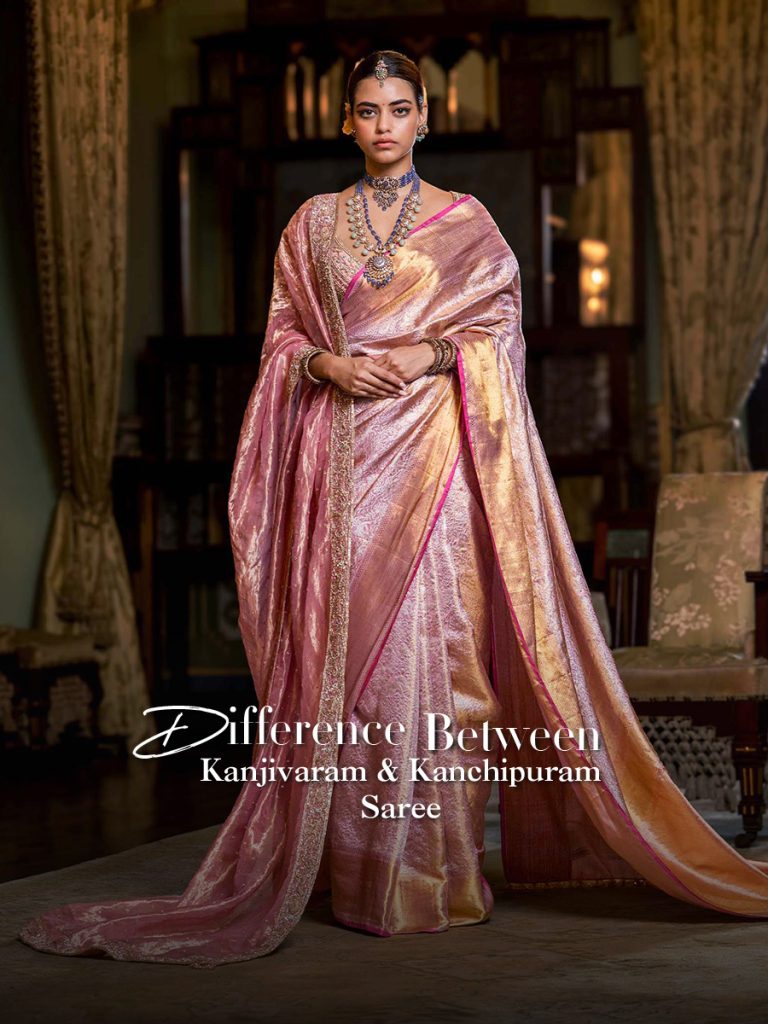
One of the longest-standing sources of confusion related to Indian traditional wear is the question of the difference between a Kanjivaram and a Kanchipuram saree. The confusion arises because “Kanjivaram” and “Kanchipuram” refer to the same type of saree. The only difference is that one is a historical name and the other is a modern official name, creating confusion among fashion admirers.
What Is a Kanjivaram Saree?
A Kanjivaram saree is a pure silk, handloom saree that originated in the town of Kanchipuram, Tamil Nadu and is considered one of the best silk sarees for weddings. These traditional premium sarees are made from pure mulberry silk and gold and silver zari, creating beautiful patterns.
What Is a Kanchipuram Saree?
A Kanchipuram saree is another name for ‘Kanjivaram saree’, as both terms are used interchangeably. This name is more focused on the origin it comes from, often creating a perception that both sarees are different from one another.
Kanjivaram vs Kanchipuram Saree: The Real Difference
There is absolutely no difference between a Kanchipuram and a Kanjivaram saree. Kanchipuram in Tamil Nadu is the city of origin of the Kanjivaram sarees. Therefore, this pure mulberry silk saree is known as both a Kanjivaram and Kanchipuram saree.
| Kanjivaram | Kanchipuram | |
| Refers to | Same saree, popular/anglicised name | Same saree, official place name |
| Origin | Kanchipuram, Tamil Nadu | Kanchipuram, Tamil Nadu |
| Legal status | Same product, no separate registration | GI-tagged term with defined weaving standards |
| Common usage | Retail, outside South India | Formal documentation, South India |
What Makes an Authentic Kanjivaram/Kanchipuram Saree?
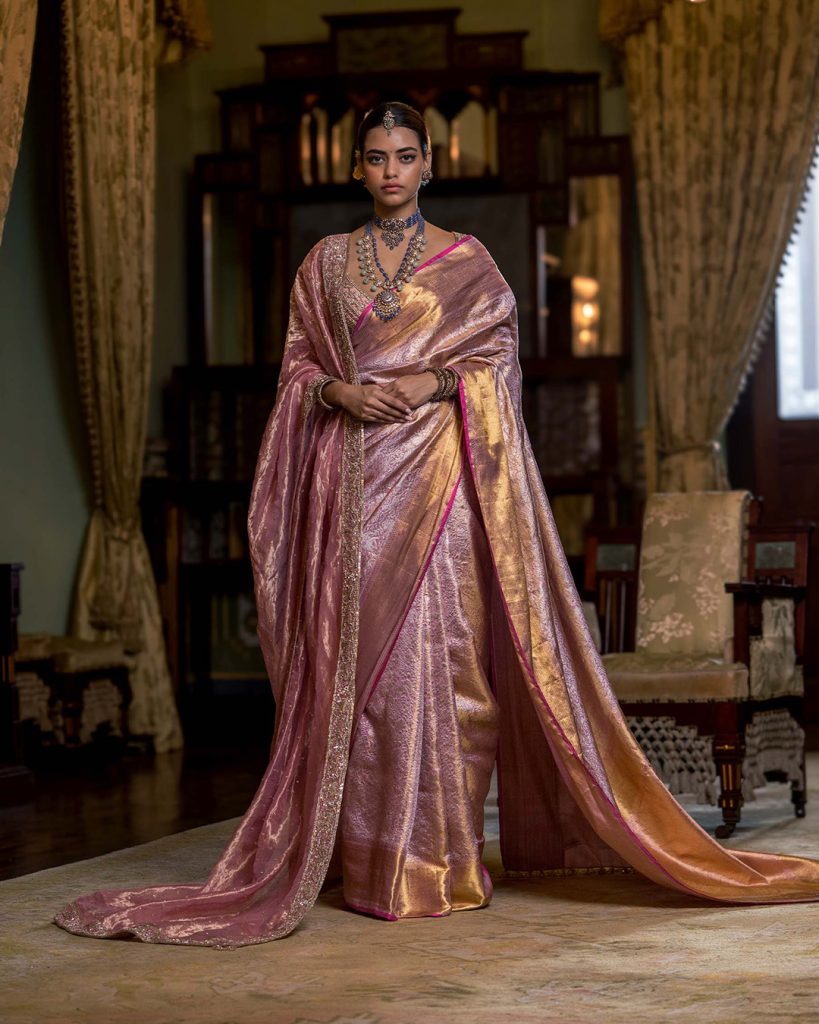
An authentic Kanjivaram/Kanchipuram saree is defined by four core markers: pure mulberry silk, real zari, the korvai weaving technique, and traditional temple-inspired motifs.
Pure Mulberry Silk & Zari: Kanjivaram (Kanchipuram) sarees are handwoven from pure mulberry silk, offering them natural lustre and sheen. The silk thread is combined with real gold and silver thread or zari to create traditional motifs and patterns.
Korvai Weaving Technique: A key characteristic of Kanjivaram premium sarees is the use of the Korvai weaving technique. It is a highly technical skill that has been passed down through generations of skilled artisans. It involves two to three people and multiple shuttles to weave the body of the saree and the border separately and then interlock them together to finish the saree. It is a time-intensive process and requires anywhere between 10 and 20 days to complete a single saree depending on the design’s intricacy.
Traditional Motifs (Temple, Peacock, Checks): Traditionally, Kanjivaram sarees feature designs inspired by South Indian temple architecture, nature, and mythology. These motifs are made from gold-covered silver thread, often featuring mangoes, floral creepers, peacocks, elephants, and mythical creatures like Annapakshi and Kuthirai. The classic grid pattern, or ‘kattam’, is also one of the most popular designs, especially for when you want a more casual look.
How To Identify a Genuine Kanjivaram Saree?
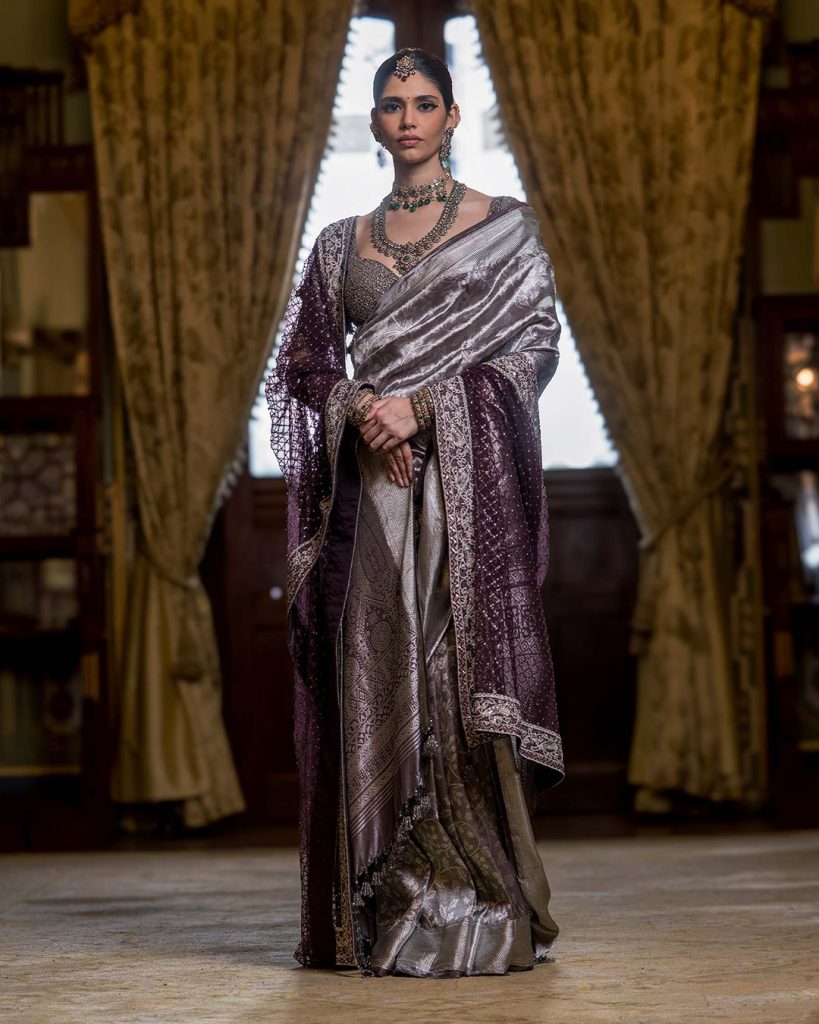
There are some key characteristics that scream authenticity when it comes to Kanjivaram sarees. Here are the most common ones that help you identify an original Kanjivaram saree from its copies.
Check the Silk Mark certification: Original Kanjivaram silk sarees come with a Silk Mark authorised by the Silk Mark Organisation of India. This certification assures that the saree you are purchasing is an authentic pure mulberry silk saree.
Examine the border and body: An authentic Kanjivaram saree is woven in two parts: the body and the pallu. The two elements are then woven together to complete the saree. This weaving technique is called the korvai technique and is one of the key characteristics to identify an authentic creation.
Check the zari: The zari used in authentic Kanjivaram sarees is made of pure silver thread coated in gold. However, these days silver-free metallic yarn is also being used in Kanjivaram sarees, which is fine as long as it is disclosed by the seller. This factor also reduces the price significantly, making these party wear sarees more accessible.
Feel the fabric: Pure mulberry silk is super smooth to touch and feels luxurious when draped on the body. It has a natural sheen that is not overly glossy and is heavy in weight but easy to drape.
Check the weave quality: Kanjivaram sarees are woven with utmost skill and thus always feature well-defined and crisp borders and motifs. Uneven weaving, loose threads, and printed motifs often indicate imitation sarees.
Consider the weight: An authentic Kanjivaram saree weighs anywhere between 600 grams to 1.2 kilograms. Luxury bridal sarees usually weigh on the higher end, as they feature wide, dense, heavy gold zari borders and thick korvai borders, adding to their weight.
Shop from a trusted source: To eliminate the chance of buying a fake silk saree, make sure you shop from established retailers, reputable weavers, and cooperative societies. When shopping from these sources, you can enquire about details regarding the silk, zari, and place of weaving, along with the authentication certificate and invoice.
FAQ’s
1. Why are Kanchipuram sarees also called Kanjivaram?
Both terms are used for the same garment. “Kanchipuram” is the town where the popular saree style originated, while “Kanjivaram” is a popular colloquial pronunciation of the saree, widely used in common speech and commercial markets.
2. How can I tell if a Kanjivaram saree is authentic?
To check if a Kanjivaram saree is authentic, look for the official Silk Mark Certification tag, check the Korvai border joint that connects the body and border, and test the zari with a scratch test and a heavy weight.
3. Why do people think there’s a difference?
Because the two names are used in different contexts – “Kanjivaram” dominates retail and everyday conversation, while “Kanchipuram” appears in formal, legal, and GI-related documentation, it can look like two products when it’s one.