
A saree is not just a traditional attire; it is symbolic of the culture, tradition, and artistic brilliance that India is all about. It is one of the simplest garments out there, a long strip of fabric and yet it is one of the most complex attires to exist.
Skilfully woven fabrics, native to different regions and adorned with elaborate motifs, different types of sarees tell tales of sub-cultures and communities.
The fashion evolution may have changed the face of fashion in India, but one thing that has stayed constant is the love women have for sarees. Whether it is a casual outing or a wedding celebration, picking the best saree colour combination for wedding festivities makes it the perfect attire to flaunt.
Especially with the saree varieties available, it is fairly easy to find one that matches your style and will suit the occasion.
Today, in this blog, we will explore some of the most popular types of sarees available in India and talk about their origin, fabrics and the intricate craftsmanship that goes into creating them.
List of Different Types of Sarees
Banarasi Silk Saree
Meticulously handcrafted in the narrow lanes of Banaras (Varanasi), Banarasi silk sarees are loved for their unmatched intricacy and exquisite beauty. Banarasi sarees are among the top choices for bridal sarees, adding the right amount of grace and glamour to your bridal ensemble.
Originating during the ancient era, these exquisite types of sarees are still handwoven by skilled artisans, using delicate silk threads along with gold and silver threads, to create distinctive motifs and patterns.
Banarasi sarees are not just ensembles but a token of tradition, cultural heritage, and unwavering craftsmanship that is passed down through generations to cherish and celebrate.
Kanjeevaram Silk Saree
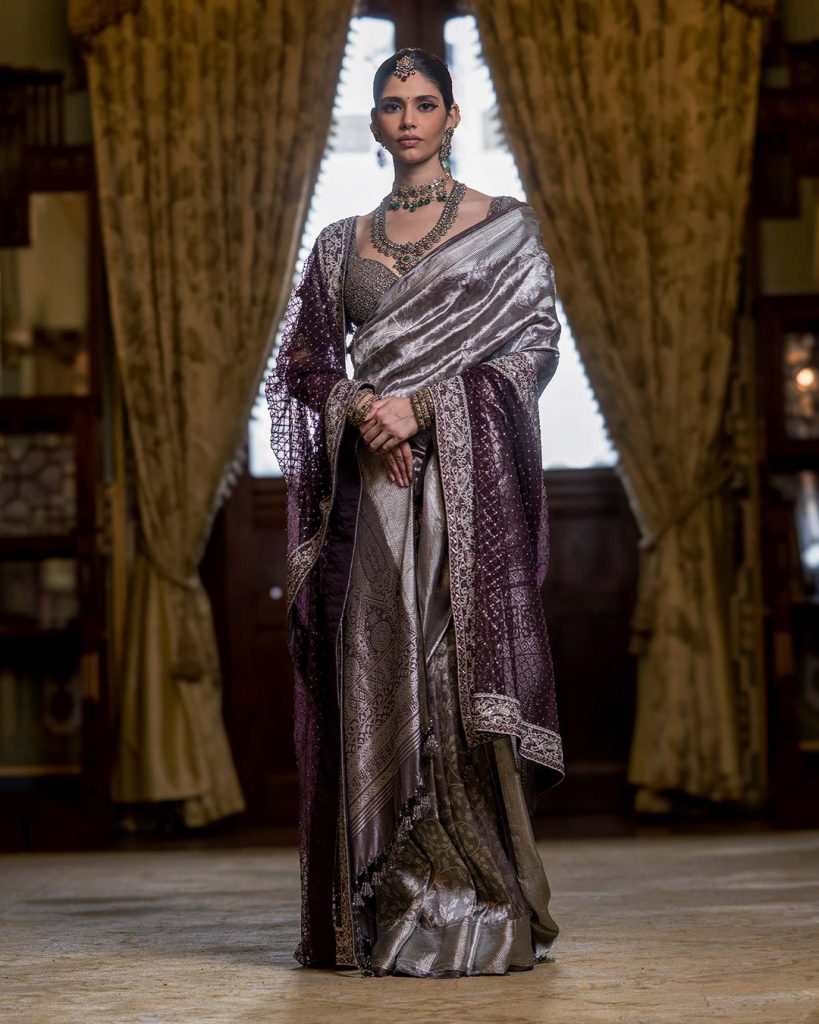
Originating from the City of Thousand Temples, Kanchipuram, Kanjeevaram silk sarees are the epitome of grandeur and regal charm. To clear the common confusion regarding the Kanchipuram and Kanjivaram saree difference, it is important to note that both names refer to this singular legendary weave.
These wearable masterpieces come with hefty price tags, turning them into a status symbol, popular among women from all social classes. A traditional Kanjeevaram weave is characterised by its intricate patterns, often featuring detailed motifs showcasing hints of nature, symbols of mythology, botanical elements, wedding rituals and more. Check out the latest collection, Rang Mahal by Falguni Shane Peacock, featuring exquisite Kanjeevram silk sarees.
Mysore Silk Saree
As the name suggests, Mysore silk sarees find their origin in the Mysore region of Karnataka and are known for their luxurious look and appeal. Crafted from 100% mulberry silk, these saree varieties are fairly lightweight compared to Kanjeevaram and Banarasi silk sarees.
Mysore silk sarees gained popularity for their gleaming lustre and minimalistic designs, which are mass appealing and can be styled for a plethora of special occasions.
Dola Silk Saree
Dola silk sarees are the perfect alternative to the heavier silk saree options. The word “Dola” refers to the process of dying the silk threads before weaving, which imparts these sarees their signature vibrant hue.
Woven in the eastern part of India, these types of sarees are a comfortable and elegant choice to adorn during summer weddings and other celebratory occasions. They are crafted using a special weaving technique that results in a lightweight and comfortable feel altogether.
These vibrantly hued saree varieties have a natural sheen that reflects light beautifully, making them the perfect ensemble for elaborate occasions or as a lightweight wedding saree.
Patola Saree
Originating from the Patan region of Gujarat, Patola sarees are loved for their intricate motifs created using the complex double ikat technique. Reserved once for only royalties and aristocratic families, Patola sarees are no less than a status symbol.
The weaving process for these is back-breaking and may take up to a year to finish a detailed saree design. Traditionally, this type of saree features distinctive motifs, comprising parrots, elephants, flowers, geometric designs and bird designs, but with modern interpretations, you can expect to see elaborate motifs and even some embellishments.
Georgette & Chiffon Saree
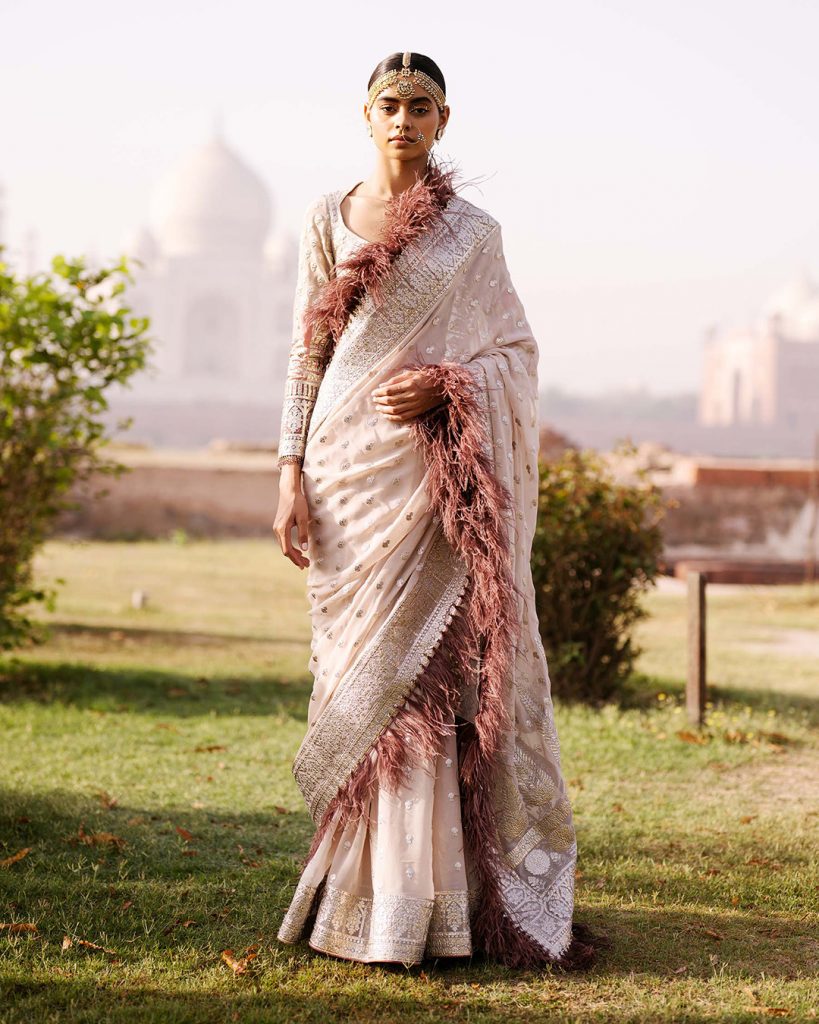
Known for their lightweight feel and effortless drape, georgette and chiffon are two of the most popular saree fabrics. With georgette saree varieties, you can achieve a flowy and silky drape, perfect for everyday wear.
Chiffon sarees feel much softer on the skin but are slightly more delicate. Both the fabrics carry threadwork, beadwork and prints beautifully, making them the ideal choice for creating a variety of designs suitable for all sorts of occasions.
Chikankari Saree
Believed to have originated in the 16th century during the Mughal era, chikankari is an intricate and timeless embroidery technique. Initially, the technique was practised solely on muslin cloth, but later evolved to become one of the most beloved and complex forms of artistry.
There are several forms of chikankari embroidery, including Tepchi, Bakhiya, Phanda and Murri, Jaali Work and Keel Kangan, each showcasing a distinctive stitch pattern. Today, Lucknow in Uttar Pradesh is considered the hub of chikankari, with a variety of fabrics, designs and colours available to explore and cherish.
Tulle Saree
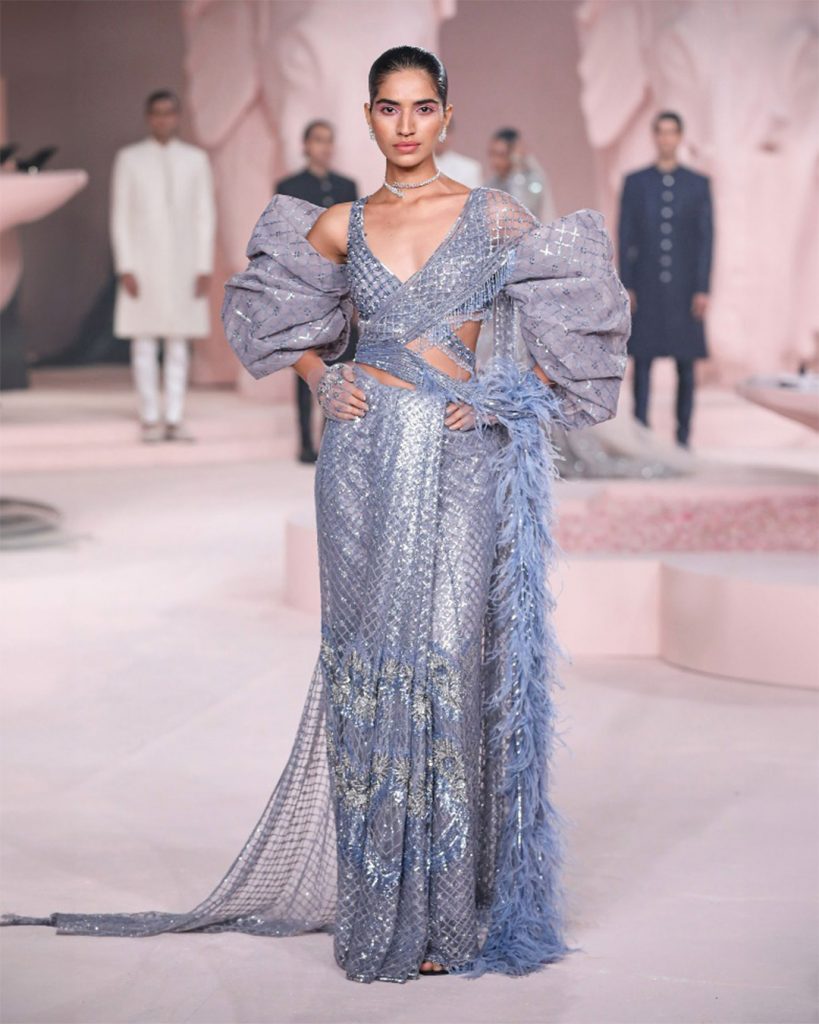
A tulle saree is made from a net-like fabric called tulle and is one of the most popular choices for party wear sarees. Tulle saree varieties are loved for their sheer look and the playful, romantic vibe.
These types of sarees are often adorned with ornate embellishments such as sequins, stones, crystals and beads, making them suitable for celebratory occasions such as weddings, festive occasions and more.
The fine mesh structure adds body to the saree, creating a structured and voluminous look. Explore the elaborate collection A Poème by the Lake Kashmir by Falguni Shane Peacock for premium quality tulle sarees.
Tant (Taant) Saree
Originating in the Bengal region of India, the taant cotton saree is a staple for Bengali women. These saree varieties were traditionally dyed using a natural dye extracted from the tansetta tree, thus imparting the name Taant.
These everyday wear sarees are characterised by their elaborate borders, intricate weaving and botanical-inspired motifs. However, even the simplest designs of a handwoven taant saree may take up to 10-15 hours to finish, making the manufacturing process an arduous one.
Chanderi Saree
Hailing from the town of Chanderi in Madhya Pradesh, Chanderi sarees are a symbol of India’s rich and creative textile tapestry. Chanderi sarees are made from three kinds of fabric, including silk, Chanderi cotton and a cotton-silk blend, thus offering a wide variety of looks.
The fabric has a natural sheen, and the lightweight, transparent texture makes it a suitable pick for the summer season. Depending on the intricacy of the design, these types of sarees may feature gold and silver brocade or zari, intricate embroidery and even ornate embellishments.
Kota Doria Saree
The Kota Doria saree is characterised by its distinctive square-checkered pattern, called the “khat”. Native to the Kota region of Rajasthan, this saree style is crafted from a blend of cotton and silk yarns, creating a sheer and breathable but durable fabric.
The meticulous and intricate weaving process of Kota Doria contributes to their unwavering charm and timeless appeal. These one-of-a-kind sarees are cherished by women of all ages for various occasions, both formal and casual.
Lehenga‑Style Saree
A lehenga-style designer saree seamlessly combines the timeless grace of a saree with the grandeur of a lehenga, making it the perfect choice for modern women. It features a flared skirt with pre-draped pleats mimicking a saree’s pleats.
The pallu or drape comes attached to the skirt and needs to be draped around the waist, over the shoulder, to achieve a saree-like look. A lehenga-style saree is ideal if you want to achieve an opulent saree look that is both regal and comfortable.
Ready‑to‑Wear Saree
A pre-draped saree is a modern and convenient rendition of the traditional attire. While nothing comes close to the grace and timelessness of a saree, draping one is not the easiest task.
So, for all the amateurs out there, a ready-to-wear saree is a boon. As the name suggests, a ready-to-wear saree comes with a pre-pleated front, so there’s no hassle creating the right-sized pleats.
These festive sarees often come with an attached petticoat for convenience and sometimes a pre-pleated pallu as well. All you need to do is wear the saree, button up and head out the door.
Ikkat Saree
A traditional handloom saree originating in the town of Bhoodan Pochampally in Telangana, it is known for its traditional dyeing style called ‘ikkat’. This particular saree style is known for its intricate tie-dye technique that results in geometric patterns that are identical on both sides of the fabric. The final saree is the result of meticulous craftsmanship that requires tie-dyeing the warp and weft yarns before weaving the saree.
Paithani Saree
A Paithani is a traditional silk saree from the state of Maharashtra and is an integral part of a Maharashtrian bride’s trousseau. These types of sarees are handwoven using mulberry silk, featuring intricate traditional motifs like lotuses, peacocks and parrots. Some of the key characteristics of a Paithani that set it apart from other traditional silk sarees include its vibrant colours, heavily embroidered pallu, and intricate gold and zari work.
Bandhani Saree
A Bandhani saree is native to the states of Gujarat and Rajasthan, showcasing a traditional tie-dye technique involving plucking the fabric into tiny bindings and then dyeing it. This technique creates intricate patterns of waves, dots, and squares that are rooted in culture. Modern bandhani sarees also feature detailed embroidery and embellishments to make them more appealing to the younger crowds.
Kalamkari Saree
Kalamkari sarees feature hand-painted designs using a bamboo pen or block-printed designs created using carved wooden blocks, often showcasing detailed mythological, floral or nature-inspired designs. Traditionally, natural, eco-friendly dyes are used on a cotton or mulmul base to create this saree variety. However, modern iterations are being created on fabrics like modal silk, crepe, and silk blends, offering unique variations.
Organza Saree
Organza sarees are known for their sheer, lightweight and lustrous fabric, offering a modern saree option to explore. Originally, these types of sarees in India were made from pure silk, but more affordable options made from nylon and polyester fibres are now available. The dreamy base works as an excellent canvas for intricate embroidery and embellishments like sequins, cutdana, beads, stones, and crystals.
Satin
Satin sarees make for a luxurious-looking ensemble for parties and special occasions, without being heavy on the feet. However, contrary to what most people believe, satin is a weaving technique and not a fabric. This specific technique creates a fabric that is glossy on one side and dull on the other, creating a lustrous, flowy drape. Some of the popular choices for satin sarees include satin-silk sarees, crepe-back satin sarees, georgette satin sarees, Japan satin sarees, Banarasi satin silk sarees, and embellished satin sarees.
Tussar Silk
Unlike traditional silk sarees, tussar silk sarees are made from “wild silk” obtained from uncultivated, wild silkworms. The fabric has a slightly coarse texture, a non-slippery grip, and subtle golden lustre – very different from regular silk. Tussar silk sarees are incredibly porous, making them a luxurious yet comfortable choice for warm climates. These sarees are often adorned with hand-painted motifs, embroidery or block prints, perfect for creating timeless looks.
Sambalpuri
The Sambalpuri saree comes from the state of Odisha, featuring the traditional ikkat tie-dye technique. This particular technique uses pre-dyed yarns (warp and weft) to create intricate patterns and motifs, often featuring symbolic elements like flowers, temple art, conch shells, wheels, etc. These saree types can be explored in traditional colour combinations like red, black, and white, or red, white, and green or more modern colour combinations to suit contemporary fashion choices.
Leheriya
The tie-and-dye saree comes from the western Indian state, Rajasthan, often featuring wavy, diagonal striped patterns in bright colours. These are often made from lightweight fabrics like cotton, chiffon, or georgette, featuring a specific tie-dye process to create the signature wave or chevron pattern. The sarees are available in simpler designs suitable for everyday casual wear as well as more decorated and embellished ones best suited for festive or formal looks.
Uppada Saree
These exquisite creations from the coastal town of Uppada in Andhra Pradesh, India, are known for their intricate handwork. These sarees utilise the famous Jamdani weaving technique, where motifs are directly woven into the fabric by interlocking the warp and weft by hand. The inclusion of gold and silver zari amps up the beauty quotient of these sarees, but the final look is super lightweight, making it ideal for both casual and formal wear.
Muga Silk Saree
Muga silk sarees are no less than a prized possession, as they are crafted from one of the rarest types of silks. These sarees have a rich but uneven texture with a natural glossy finish that elevates further with each wash. Traditionally, these sarees are often adorned with Assamese motifs, as this silk is exclusively retrieved in Assam, India. Unlike Banarasi and Kanjivaram silk sarees, Muga silk sarees are fairly lightweight, making them suitable for casual and festive wear.
Maheshwari Saree
Originating in the Maheshwar town of Madhya Pradesh, these traditional handloom sarees are characterised by a reversible border (bugdi), a decorative pallu with five distinctive stripes, and a featherlight feel. These are crafted using pure silk warp and a fine cotton weft to create a breathable weave that is sheer and easy to wear. While there is a wide variety of designs to explore, Maheshwari sarees often showcase motifs inspired by local architecture and design elements.
Kasavu Saree
These different types of sarees from Kerala are known for their classic off-white or cream base, paired with a gold or copper border called kasavu. Traditionally, the sarees are made using a cotton base and feature real gold, silver, or copper zari work, making them ideal for celebratory occasions like Onam and weddings. These sarees are known for their minimal aesthetic and are a wardrobe staple for local women.
How to Choose the Right Saree for the Occasion
For weddings: Banarasi, Kanjeevaram, or Paithani sarees offer the richness
and craftsmanship suited to the occasion’s significance.
For daily wear: Cotton-based sarees like Tant or lightweight Chanderi
offer comfort and breathability for everyday use.
For summer functions: Organza, Georgette, Chiffon, or Tussar silk sarees
are lightweight and breathable, ideal for warm-weather celebrations.
For festive occasions: Bandhani, Sambalpuri, and Leheriya sarees bring
vibrant colour and traditional motifs suited to festivals like Diwali,
Navratri, and Onam.
For evening or party wear: Tulle and satin sarees offer a modern,
glamorous silhouette perfect for receptions and cocktail events.
FAQ’s
What are the most versatile types of sarees for festivals and weddings?
Some of the most popular saree styles suitable for celebratory occasions, such as festivals and weddings, include a variety of silk sarees, such as Kanjeevaram, Banarasi and Mysore silk; hand-embroidered sarees featuring intricate motifs and ornate detailing; and embellished sarees crafted from delicate fabrics such as tulle and chiffon.
How should I care for silk vs cotton sarees?
Silk sarees are fairly delicate when compared to cotton sarees. Thus, they need more delicate care. For silk sarees, dry cleaning is generally recommended. A dry-cleaned silk saree should be wrapped in a muslin cloth and stored in a cool and dry place, away from direct sunlight.
Cotton sarees, on the other hand, can be washed in the washing machine on a gentle cycle or hand-washed. Post washing, hang the saree to dry in a shaded spot to avoid fading. When dry, fold and store your saree in the cupboard.
Which type of saree is best for daily wear in tropical climates?
For a hot and humid climate, linen, cotton, organza and chiffon sarees are most suitable saree varieties. These fabrics are lightweight and breathable, allowing uninterrupted flow of air, keeping you cool and comfortable in the humid weather.
How do you know if a saree variety is authentic?
Different saree fabrics can be checked using different methods to ensure authenticity. For example, handwoven sarees have minor inconsistencies and are never perfect. For silk sarees, you can do the ring test or the water test to check their authenticity.
Can different types of sarees be styled in modern/fusion ways?
Yes, you can style your saree in modern ways to match your style or occasion. You can drape your saree in unique ways or pair your saree with contemporary blouse styles to create a fusion look. The right use of accessories also elevates your modern/fusion saree look.
How many types of sarees are there in India?
In India, you can explore over 30 popular saree varieties, along with some regional types of sarees that are not as popular.