
When it comes to styling your lehenga, there are numerous ways to achieve the perfect look. However, one of the easiest ways to achieve a fashion-forward lehenga look without additional accessories is to style your dupatta in unique ways. Different lehenga dupatta draping styles are your key to attaining unique looks with just one lehenga.
The dupatta of your lehenga is transformative and has the power to take your look from good to fab. When draped correctly, a dupatta adds layers of drama, exudes grace and even imparts a contemporary edge to different types of lehenga. The way you drape your dupatta can completely redefine your look and aesthetic.
What Is the Best Modern Lehenga Dupatta Style for a Wedding?
For weddings, the double dupatta drape and veil drape remain the most popular
choices for brides, as both create the regal, covered-head look traditional
ceremonies call for. For a more contemporary wedding guest or reception look,
the belted drape and cape-style drape are the top modern picks — they add a
structured, fashion-forward silhouette without needing a second dupatta.
All Lehenga Dupatta Draping Styles at a Glance
| Style | Best For |
| Saree Drape | Traditional, saree-lovers |
| Double Dupatta Drape | Bridal, wedding day |
| Belted Drape | Modern, fusion wear |
| Cape-Style Drape | Contemporary, movement-friendly |
| One-Shoulder Drape | Minimal-effort, statement necklines |
| Traditional Bridal Drape | Wedding ceremonies, head-covering |
| Side Pleated Drape | Bridesmaids, quick styling |
| Veil Drape | Bridal, fashion-show inspired |
| V-Drape | Statement necklines, quick styling |
| Over Elbow Drape | Wedding guests, lightweight fabrics |
| High-Neck Drape | Strapless/sweetheart necklines |
| Dupatta Tied to Wrist | Dancing, functional wear |
| Classic Shoulder Drape | Everyday elegance, all fabrics |
| Pleated Front Drape | Intimate occasions, minimal effort |
| Seedha Pallu Drape | Gujarati functions, festivals |
| Cowl Neck Drape | Festive occasions, lightweight fabrics |
| Pakistani-Style Drape | Punjabi and Pakistani bridal looks |
| Over-the-Shoulder Shawl Drape | Quick, low-maintenance styling |
| Single Dupatta Overhead | Minimalist bridal looks |
Unique Lehenga Dupatta Draping Styles
The Saree Drape
Let’s start with the classic saree drape. This draping style is ideal for those who adore the elegant drape of the saree and wish to recreate it. It is fairly easy to drape your dupatta in a saree drape. All you need to do is tuck or pin the dupatta on the left side of your waist, pleat it neatly, wrap it around your hips, and pin it on the left shoulder.
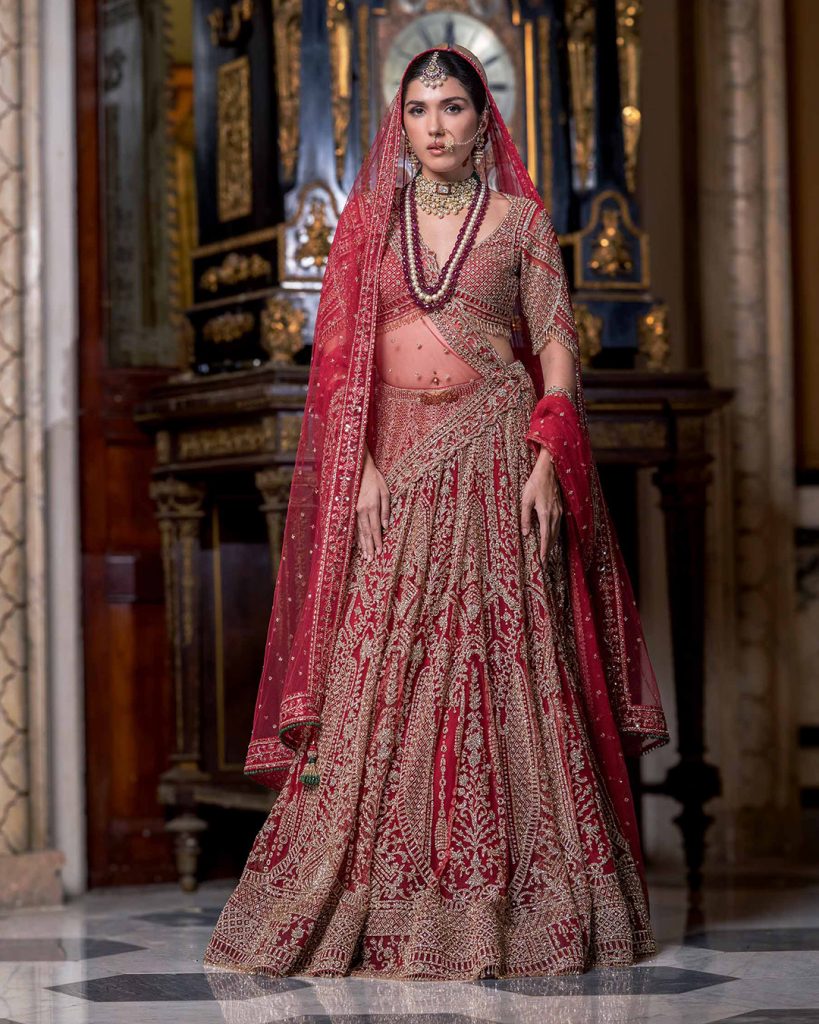
The Double Dupatta Drape
This lehenga drape style is one of the most popular ones among brides. Bridal lehengas for women typically come with two dupattas: one for draping around the body and one for covering the head. The bridal lehenga dupatta style creates a regal vibe that exudes grandeur from every angle.
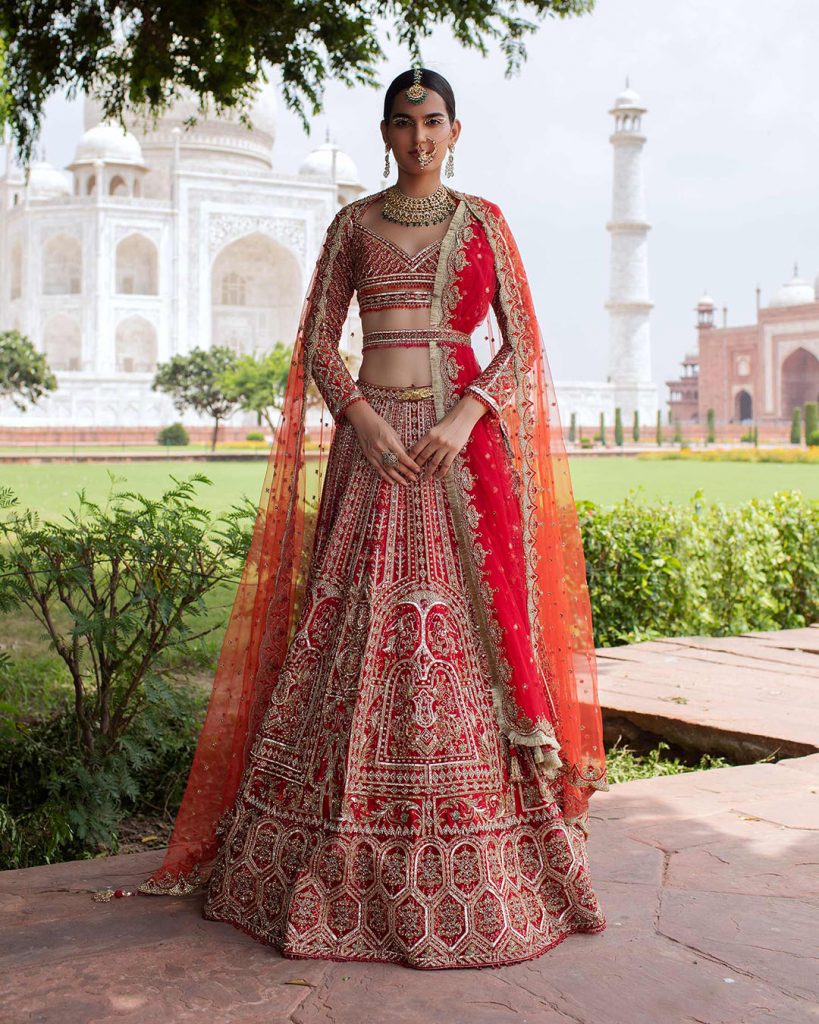
The Belted Drape
This modern lehenga dupatta style is a hit among fashionistas who love to combine contemporary elements with traditional styles. This particular modern draping style involves placing a neatly pleated dupatta on one of your shoulders and then cinching the flowing dupatta fabric with a waist belt. This lehenga wearing style not only adds a modern touch to your lehenga look but also creates a flattering hourglass silhouette that looks sleek and polished.
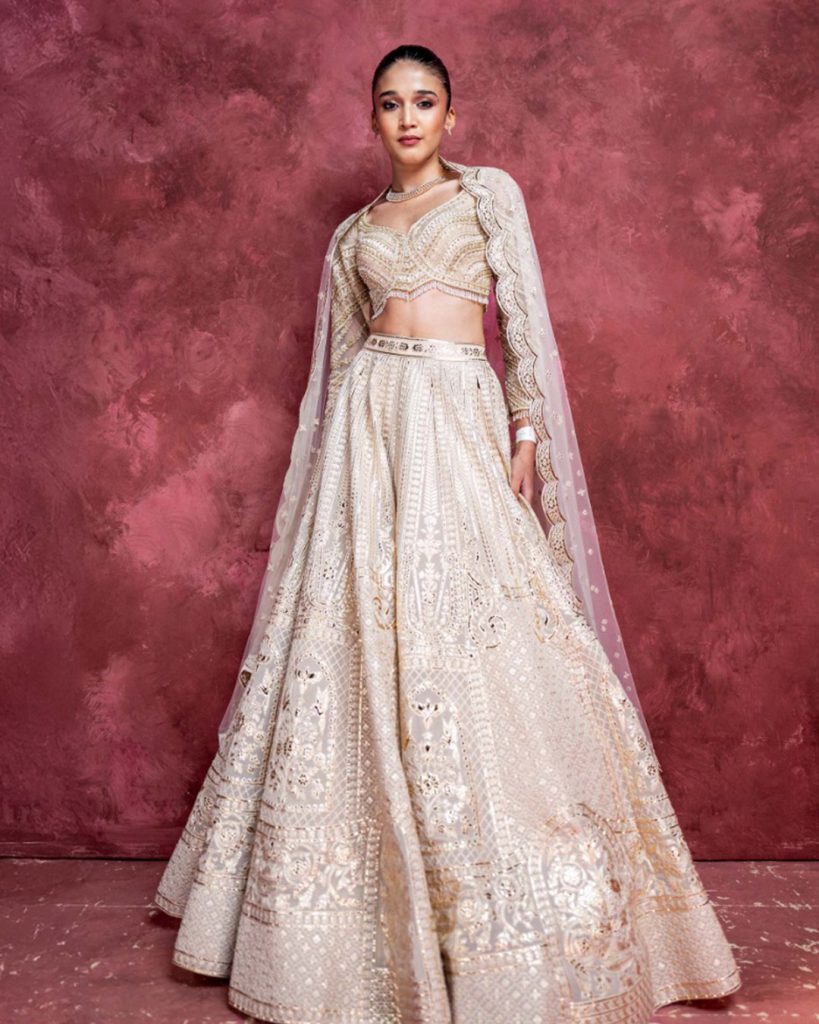
The Cape-Style Drape
Capes have become a popular choice among modern fashionistas who want to achieve a modern and polished look. But don’t worry if your lehenga does not have a cape. You can recreate a similar look with your dupatta. Pin the dupatta at the back of your shoulders and allow it to hang like a cape. This particular modern lehenga dupatta draping style not only makes you stand out but also allows unrestricted movement.
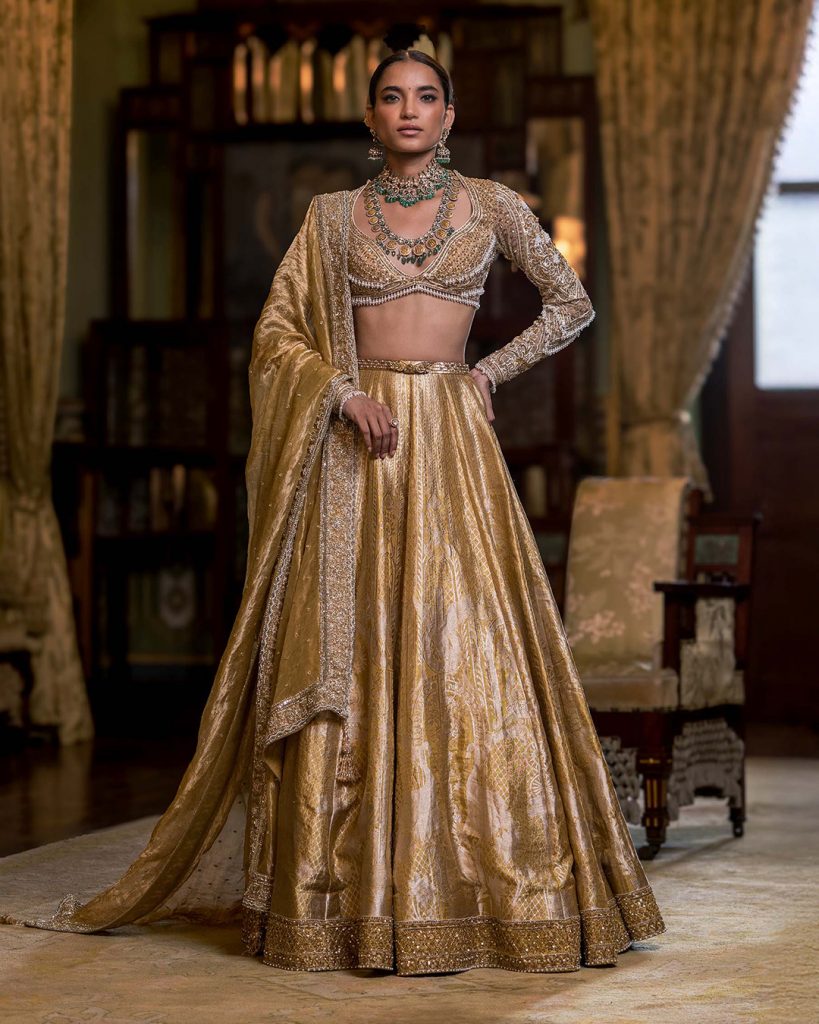
The One-Shoulder Drape
If you want to create a modern lehenga dupatta style that is timeless and requires minimal effort to achieve, then the one-shoulder drape is the ideal one for you. To achieve this look, simply pin your dupatta on one shoulder and allow it to cascade freely. This look shines even more with a heavy dupatta or one that features intricate embroidery and embellishments.
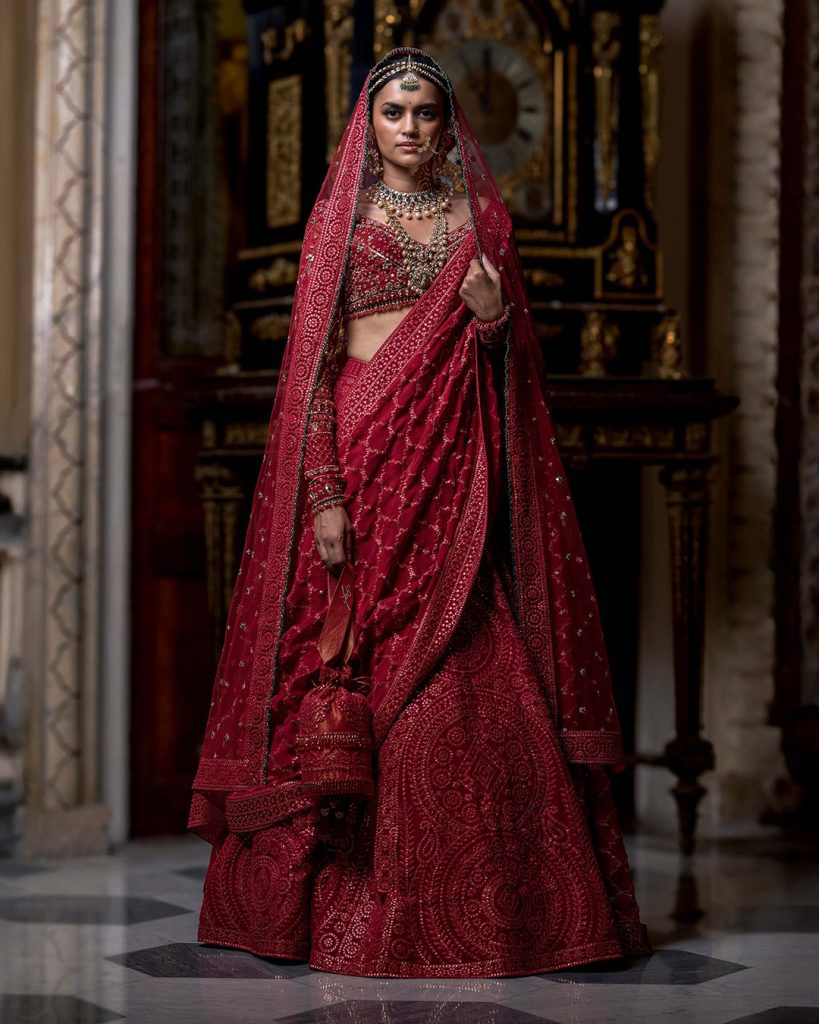
The Traditional Bridal Drape
Each bride opts for a different dupatta draping style as per her fashion preferences. Some prefer the V-neck drape, while others go for the timeless saree drape. But one thing that is common with every single bride is a second dupatta on their head. Most traditional wedding rituals require the bride to cover her head. Therefore, most brides choose a second dupatta to keep the head covered during the entire wedding ceremony. You can check out this dupatta draping style as shown with the Appoline bridal lehenga.
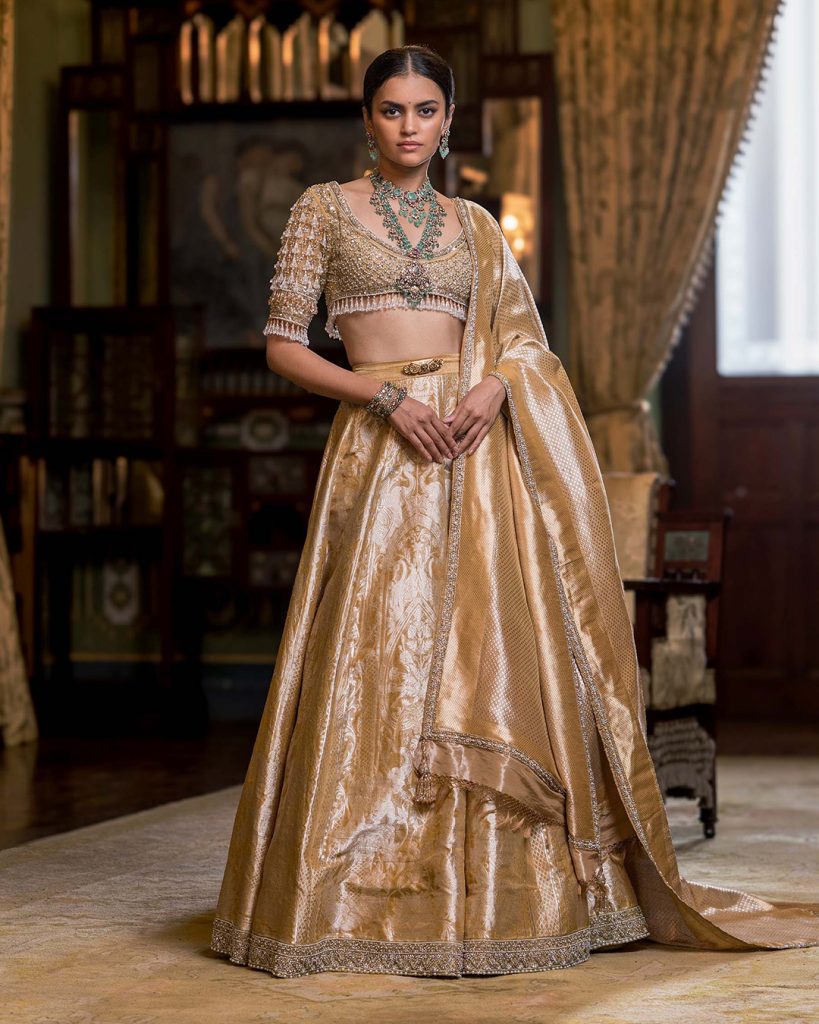
The Side Pleated Drape
Another minimal yet classic dupatta draping style, perfect for the busy bridesmaids. Simply pleat your dupatta neatly and pin it on your shoulder. This lehenga choli dupatta style imparts a sleek and minimal look to your lehenga and is a time-saver when you are rushing to get ready with minimum time to spare.
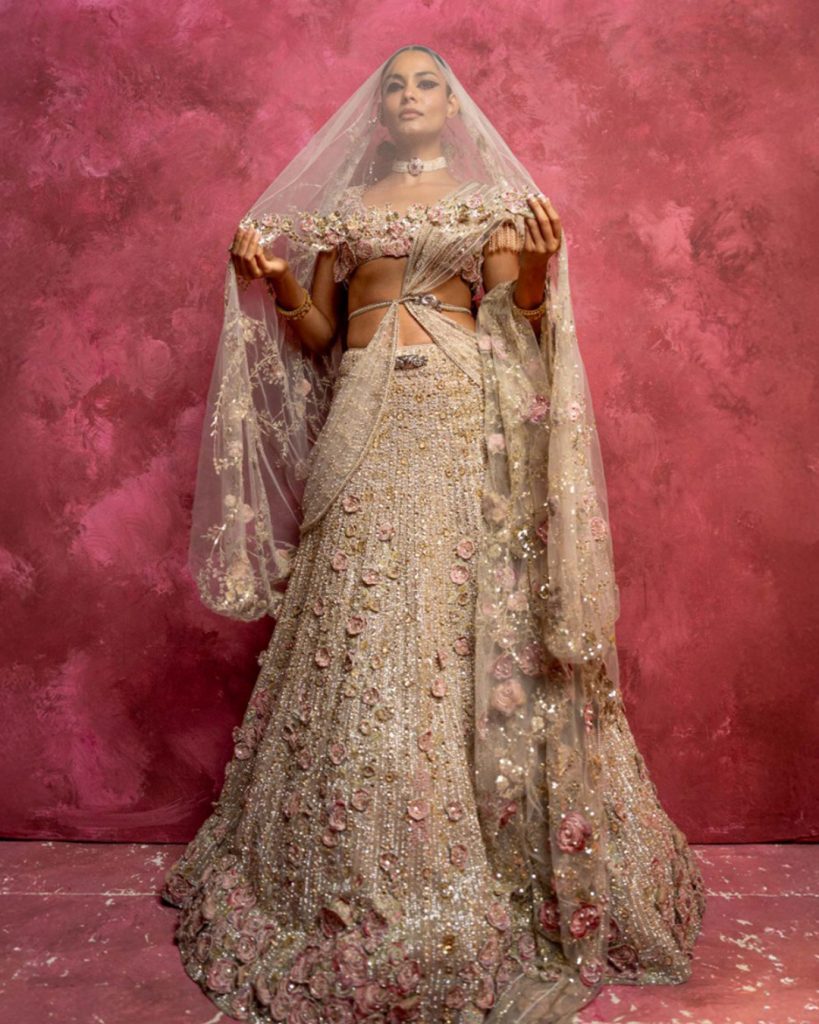
The Veil Drape
You must have seen this look on models during fashion shows as they strut down the ramps. This draping style is a must-try for brides as it adds a regal touch to their traditional wedding look. It is fairly similar to the double dupatta drape, as you need two dupattas for this look. One dupatta to drape around your body, and the second one should go over the head as a veil. You can check out this draping style as shown with the Riene bridal lehenga.
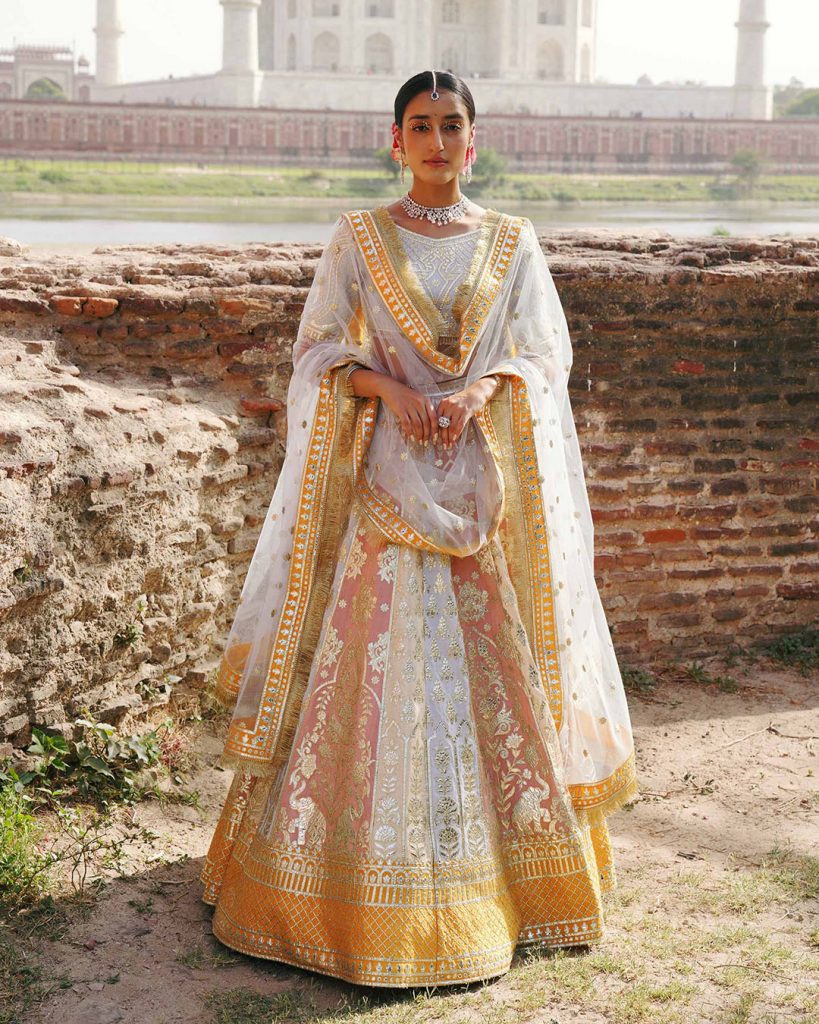
The V-Drape
Another minimal-effort modern lehenga dupatta style is the V-shaped drape. Try this specific lehenga draping style if you have a statement neckline to flaunt or just want a draping style that is quick and easy. To achieve this polished look, all you need to do is pin your dupatta on both your shoulders, creating a V-shape in the front with your dupatta.
The Over Elbow Drape
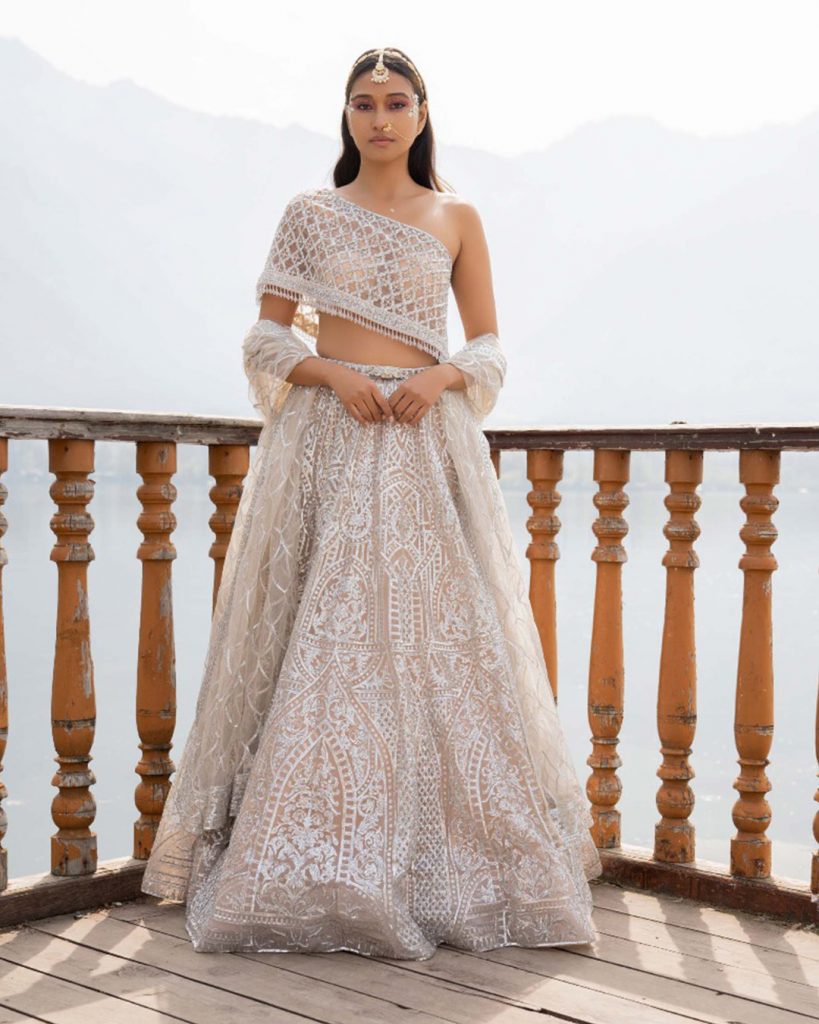
The over-the-elbow draping creates the ever-so-effortless look for the fashion divas out there. A fresh and unique dupatta draping style for lehenga that is perfect if you are attending a wedding as a guest. Super easy to achieve, as it does not require pinning the dupatta anywhere. This style is ideal for lightweight dupattas made from fabrics such as tulle, chiffon and organza.
High-Neck Drape
This particular draping style was a hit among Bollywood actresses during the early 2000s and is still loved by women who like to keep it minimal but with maximum impact. This style involves gathering the dupatta and draping it closely around the neck with both ends hanging on either side. This draping style works best with lightweight, bordered dupattas over strapless, sweetheart or deep necklines.
Dupatta Tied To Wrist
A practical and functional lehenga dupatta draping style to ensure that your hands are free to move and dance freely. This draping style is fairly customisable, as you can choose from various base draping styles and then decide if you want to tie the dupatta on one wrist or both. This style looks the best when styled with a heavy, detailed dupatta, creating a cascading look.
Classic Shoulder Drape
An elegant dupatta draping technique that never goes out of style. Start by placing the dupatta on one shoulder and securing it. Next, drag the front edge across the body diagonally and secure it with a pin or belt to finish the look. This drape can be achieved with almost any material. Lightweight fabrics offer a softer flowing look, while stiffer fabrics offer a more structured look.
Pleated Front Drape
A minimal and no-fuss lehenga draping style which can easily be achieved by yourself for intimate occasions and ceremonies. This one is similar to the saree drape but with different placement. To achieve this look, pleat the dupatta, place it on one shoulder, and secure it with a pin. Pick the front edge and drape it from the front, tucking it at the back of your waist to create a cascading front drape.
Seedha Pallu Drape
The seedha pallu drape is fairly popular among the Gujarati community and is worn on special occasions like festivals and weddings. For this draping style, one side of the dupatta is tucked into the left side of the waist, and the other end is brought from the back over the right shoulder, pleated, and spread across the chest. This lehenga dupatta draping style is best suited for heavily embroidered dupattas so the design shows.
Cowl Neck Drape
A cowl neck drape is fairly similar to the high neck drape. But unlike the high-neck drape, this one involves placing the dupatta around the upper chest to create cascading folds to resemble a loose scarf. This style is effortless, elegant, and ever-so-stylish, making it ideal for all sorts of festive and celebratory occasions. This style is best achieved with lightweight fabric options like georgette, chiffon, and satin.
Pakistani-Style Drape
This style is not only popular among Pakistani brides but is also commonly worn by Punjabi brides. To achieve this look, drape the dupatta over both shoulders as you would do for the cowl neck drape. Now, allow one side of the dupatta to hang over the shoulder and place the other end over the head and secure it for a graceful bridal dupatta draping look.
Over-The-Shoulder Shawl Drape
If you have exactly 2 minutes to drape your dupatta, this is the lehenga wearing style you should go for. This minimal and elegant draping technique requires no expertise, as you simply need to place the dupatta over your shoulder, secure it with pins, and drape it over the elbows to finish the look. Minimally bordered dupattas are best suited for this look, as heavier ones can restrict movement.
Single Dupatta Overhead
This modern lehenga dupatta style for weddings is best suited for brides who want to keep their wedding look minimal. The idea with this draping style is to cover the head and create a cascading silhouette for a cohesive look. To achieve this minimal look, the dupatta is centred over the hairline and secured with pins. Occasionally, the dupatta is also fixed into the bun to create a more seamless look.
Tips for a Flawless Dupatta Drape
- Iron Before Draping – Creased fabric is harder to pleat neatly and shows clearly in photographs.
- Pin Generously – Safety pins are your best friend, especially at the shoulder — use more than you think you’ll need.
- Mind the Waistline – Position your lehenga skirt at your natural waist, not your hips, for the most flattering silhouette.
- Practice Ahead of Time – Even 10 minutes of practising your chosen drape at home makes a noticeable difference on the day.
- Match Fabric to Occasion – Lightweight fabrics like georgette and chiffon suit relaxed, flowy drapes, while stiffer fabrics like Banarasi silk or brocade hold structured pleats best. If you’re working with a heavier weave, our guide tobanarasi dupatta draping styles for lehenga breaks down which drapes suit its weight and zari work.
Frequently Asked Questions
How to drape dupatta in different styles?
There are numerous dupatta draping styles which you can try to achieve the desired look. If you are confused, check out the above-mentioned guide to explore all the different types of dupatta draping styles popular these days.
Which draping style is best suited for a bridal lehenga?
There are two draping styles which are best suited for brides. The double dupatta drape and the veil drape. Both styles use two dupattas, where one dupatta is draped around the body and one is placed over the head.
Can I style my lehenga dupatta differently for various functions?
Yes, you can drape your dupatta differently for each occasion. It depends on your personal preference and the type of look you aim to create. Based on that, you can pick any draping style you fancy.
What is the best modern lehenga dupatta style for a wedding?
The belted drape and cape-style drape are the most popular modern choices
for weddings, offering a structured, contemporary silhouette. For the bride
herself, the double dupatta drape and veil drape remain the top traditional
choices for the ceremony itself.
Which lehenga dupatta draping style is easiest for beginners?
The classic shoulder drape and side pleated drape are the easiest styles to
achieve without prior practice, both require minimal pinning and can be
done in under five minutes.