
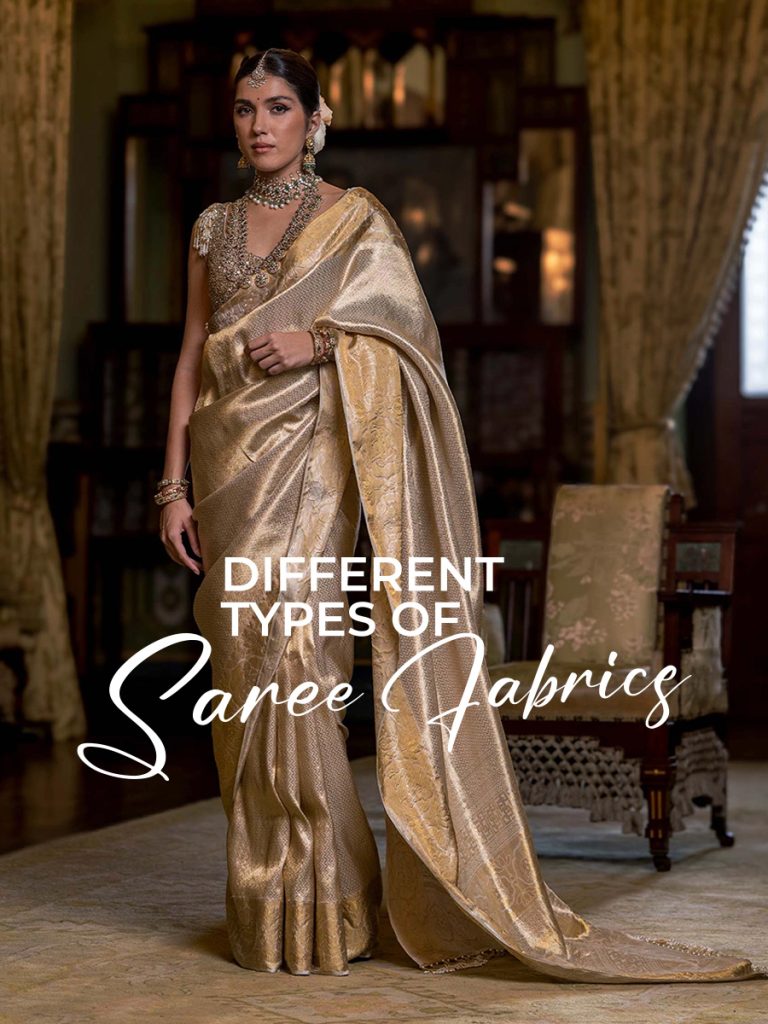
Choosing the right saree fabric is essential for achieving the perfect balance of comfort, style, and elegance. There are different types of saree fabric available, including cotton, silk, georgette, chiffon, linen, and organza, each offering a unique texture, drape, and appearance to suit different occasions and preferences.
While some fabrics are lightweight and breathable for everyday wear, others provide a rich, luxurious look for weddings and festive celebrations. Understanding the differences between saree fabrics can help you choose the right one based on your comfort, budget, weather, and personal style.
Types of Saree Fabrics
Silk
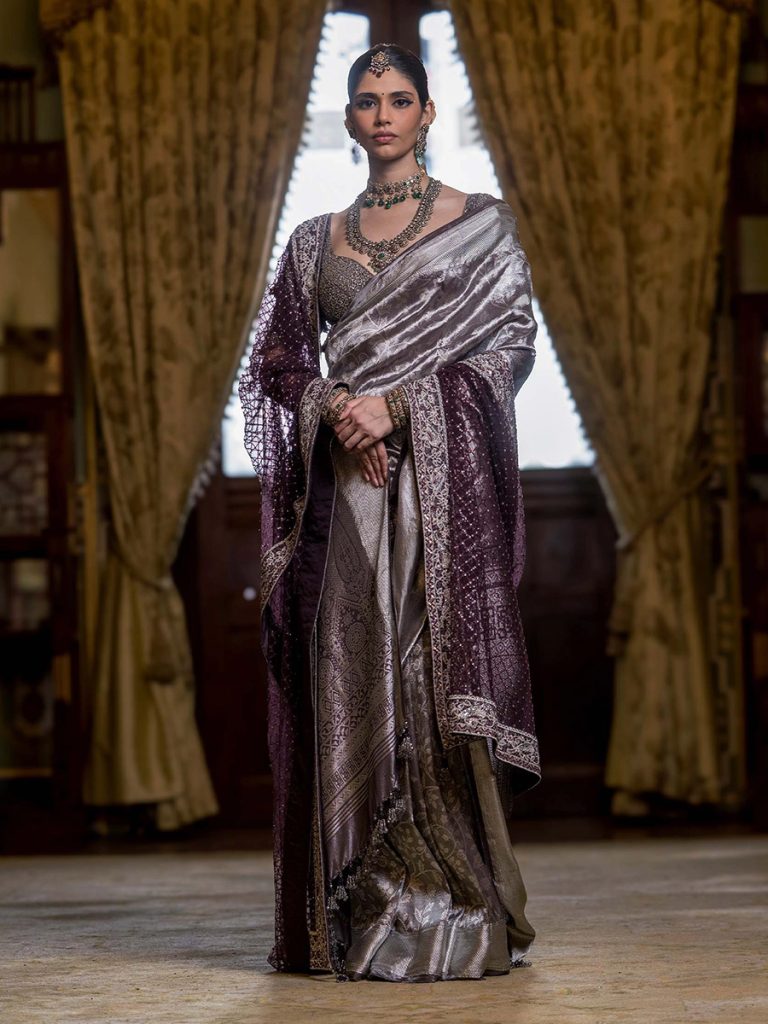
Silk is one of the most luxurious fabrics used for making sarees, especially wedding and bridal sarees. Made from fibres produced by silkworms, natural silk is prized for its strength, smoothness, and rich appearance. You can explore silk sarees in several variants, like Kanjivaram, Banarasi, Mysore, Tussar, and Chanderi, based on the occasion and setting of the event.
Cotton
Another natural and plant-based fabric that is valued for its breathability, absorbency, and everyday comfort. Cotton sarees are one of the most popular choices for everyday wear during hot and humid climates, as they allow for unrestricted airflow. Depending on the weave, the cotton may have a soft or structured texture, making it suitable for daily wear as well as elegant traditional events.
Chiffon
A lightweight, sheer fabric with a flowing, soft drape. Traditionally made from silk, more affordable variants made from polyester and other manufactured fibres are also available. The graceful movement and airy appearance make it a popular choice for festive sarees that look elegant and delicate. This fabric is best suited for evening parties, cocktail events, and festive gatherings, providing elegant contemporary looks.
Georgette
Georgette can be placed high up on the list when talking about saree fabrics. The lightweight fabric has a distinct, slightly crinkled and grainy surface that adds character and body to the saree. Traditionally, the fabric was made from silk, but most modern variants are made from polyester and synthetic fibres. When wearing a georgette saree, you can expect graceful movement and an easy-to-carry drape, making it perfect for almost any occasion.
Organza
Organza is a sheer, lightweight fabric that has a crisp structure. Similar to georgette, organza too is traditionally made from silk, but modern variants made from polyester and nylon are more common. Unlike other types of saree materials, organza is best for achieving a structured and voluminous drape, often adorned with cutwork borders, zari detailing, and zardozi embroidery.
Tulle
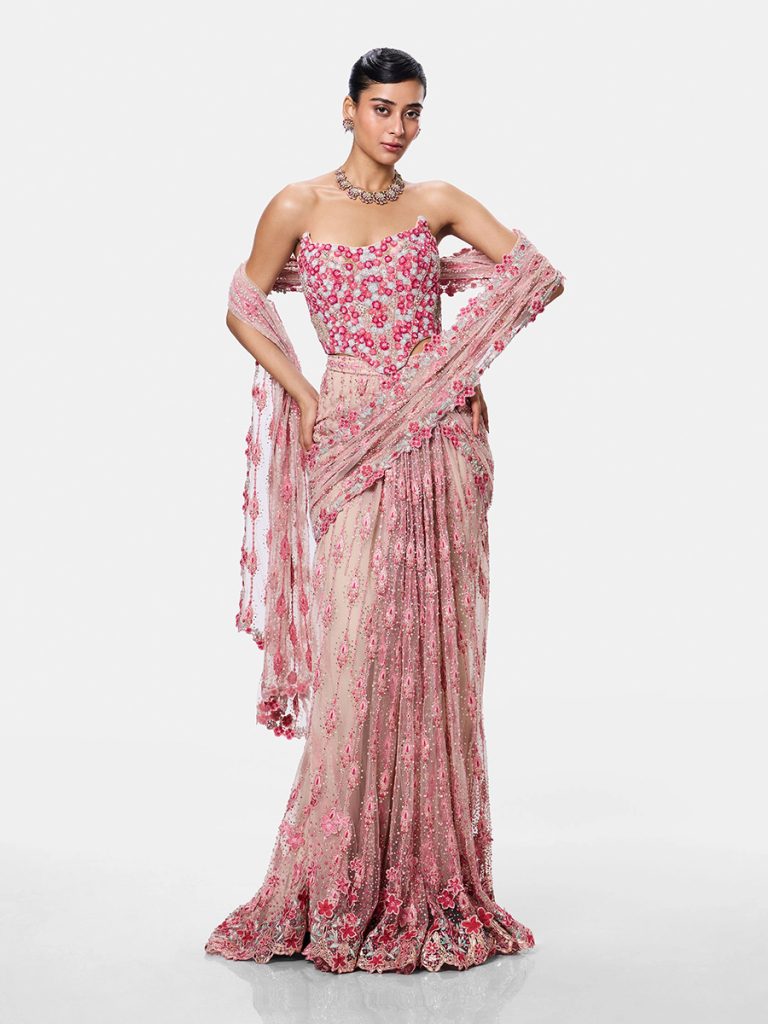
One of the most popular fabric choices for occasional and festive wear, tulle offers a dreamy, romantic base for designer wear sarees. The sheer, delicate fabric is surprisingly sturdy, offering the perfect base for heavy embroidery and embellishments. When paired with sequins, cutdana, crystals, and beadwork, tulle sarees create the perfect bridal trousseau essential.
Tissue
Tissue fabric is a luminous fabric made by weaving fine silk warp threads with metallic gold or silver zari weft threads. The lustrous fabric offers a regal look but has a delicate and airy feel that makes the saree lightweight, flowy, and unstructured. Traditionally made from 100% silk, variations made from cotton or linen are also popular for less extravagant, everyday wear sarees.
Satin
Contrary to popular belief, satin is not a fabric but a weave that is characterised by a highly glossy front surface with a dull back. It has a soft and flowy drape that gracefully clings to the body, offering a naturally slimming effect. The reflective surface catches light beautifully, making satin a glamorous choice for evening occasions like cocktail parties, sangeet nights, and reception parties.
Crepe
Though not the best fabric for a saree, crepe features an opaque and crinkled surface that adds visual interest. There are different variants of the fabric available, ideal for creating a suitable look. For instance, pure silk crepe or Mysore crepe is made of 100% silk and offers a luxurious look and feel. On the other hand, polyester or cotton crepe is more suitable for casual, everyday wear.
Velvet
Velvet is one of those types of saree material that is loved for its plush feel and rich look. Traditionally made from pure silk, modern iterations are often made from a mix of rayon, nylon, and a small percentage of pure silk. The heavy fabric is best worn during colder months and offers a hefty base for heavy embroidery and embellishments to enhance the saree.
Cotton-Silk
Cotton silk as a saree fabric combines the best of both comfort and elegance into one. Cotton ensures breathability and comfort, while silk adds a natural sheen and luxurious feel to the saree. The composition of the fabric allows for easy draping and is comfortable for long hours and warm weather.
Viscose
It is a semi-synthetic fabric made from natural wood pulp and plant cellulose that mimics the look and feel of silk or cotton at an affordable price. The fabric has a smooth and fluid drape that sits close to the body. It is super breathable, absorbent, and lightweight, making it ideal for warm weather.
Art Silk
Art silk is artificial silk made from man-made cellulosic fibres like rayon, polyester, or nylon. It has a smooth feel and a visible sheen, adding to the beauty of the saree without breaking the bank. The sarees made of art silk are lightweight, flowy, and easy to drape, making them popular for festive gatherings, office events, or casual wear. It is also much easier to care for art silk sarees when compared to natural silk sarees.
Best Fabric for Sarees
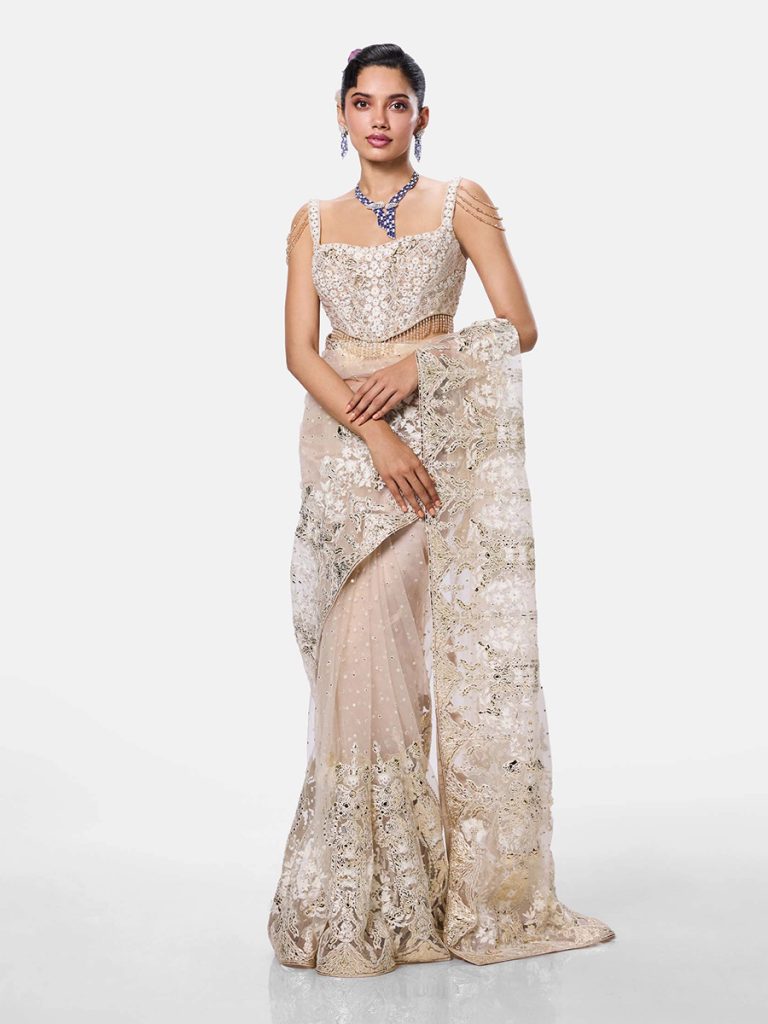 The best fabric for a saree is one that suits your requirements based on occasion, climate, and personal comfort.
By Season
- For summer: Lightweight, breathable fabrics are best suited for summer weddings, like cotton, linen, tulle, organza, chiffon, cotton silk, and tissue.
- For winter: For winter weddings, the best fabric choices would be silk, velvet, crepe, polyester, and heavy satin, as they trap air to keep you warm while offering a festive and grand look.
By Occasion
- Casual wear: Comfort is the priority when choosing a saree fabric for everyday wear. Some of the best types of saree materials to ensure maximum comfort are cotton, georgette, crepe, and chiffon.
- Festive wear: When dressing up for a festive occasion, the priority is to achieve a look that stands out while looking put together. The best fabrics to achieve that sort of a look would be silk, organza, velvet, georgette, or tissue.
FAQ’s
What is the difference between georgette and chiffon?
Georgette is slightly rough-textured, grainy, and heavier, with a crinkled appearance and a graceful drape. Chiffon, on the other hand, is smoother, lighter, softer, and more transparent, giving a delicate and flowy look.
Which type of saree is comfortable?
The most comfortable sarees are usually cotton, soft cotton-silk, linen, and lightweight chiffon or georgette. The best choice depends on the weather, how long you’ll wear it, and whether you prefer an easy or elegant drape.
What are the different types of saree materials?
Sarees are available in many different materials, from soft everyday wear to rich ones suitable for weddings. Each material differs in comfort, weight, texture, appearance, and ease of draping. Some of the popular options include cotton, chiffon, silk, georgette, tulle, crepe, viscose, and velvet.
Which type of saree is lightweight?
If you want a lightweight saree that is comfortable to wear for long hours, some of the best options are cotton, chiffon, georgette, organza, and crepe.